
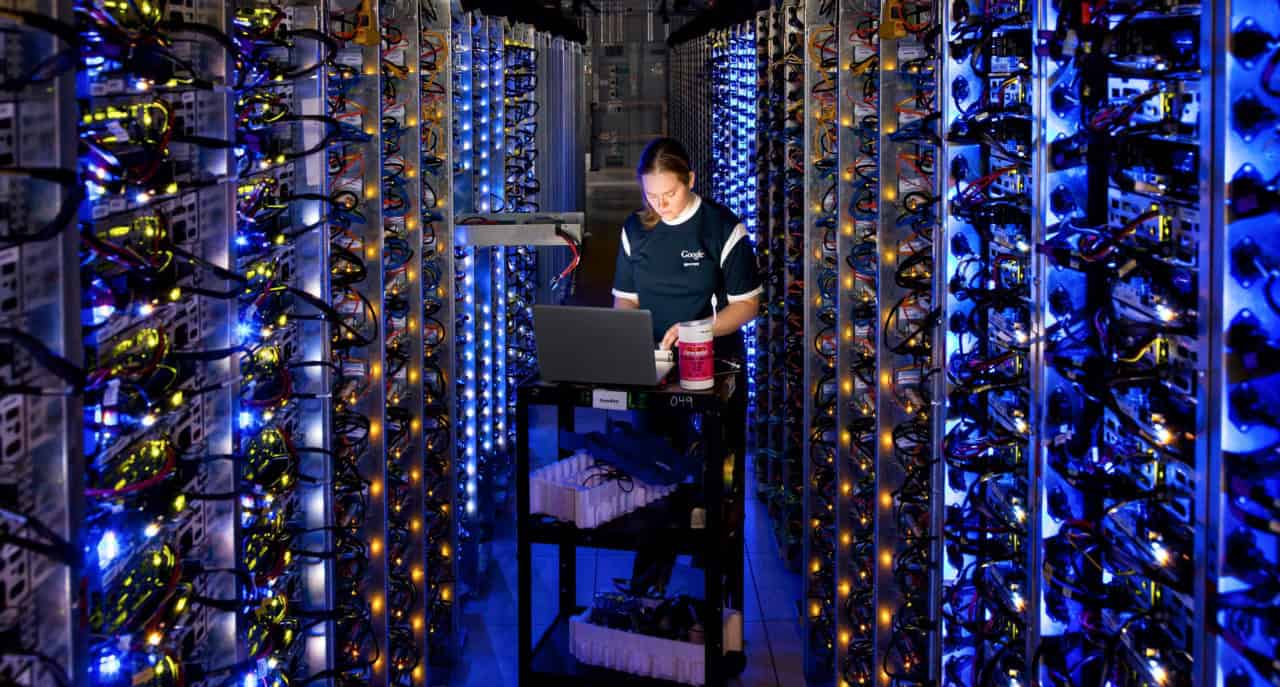

Issue 1 | AI Data Centers
When I read Mark Lyndersay’s question of why a data center was being planned in the first place, it resonated. There are reasons, clearly, but those reasons have not been well explained and the only thing that comes up if you look for that reason is under the cloak of Digital Transformation.
At the same time I was writing about social permission and Mark was asking that question, the State of New York was working towards a moratorium on data centers being built that are greater than 50 MW. In parts of Texas, drought conditions have caused water restrictions for residents while data centers operate.
Clearly, the concerns in Trinidad and Tobago regarding a data center do not exist in a vacuum. I read one local article that suggested ‘Not in my back yard’ as an almost illegitimate concern, optimistic of what a data center could mean for Trinidad and Tobago, without taking the present global context in consideration.
Certainly, data centers are an important part of many things, but they also come at a cost that must be addressed.
Some think the glass a fraction full, some think it a fraction empty, but the temperature of the air and water in the glass tell us much more about the future of that glass. There seems to be the danger of hot air and hot water.
And yet Mark’s question resonates: Why do it?
The key might be the Digital Transformation. It’s the latest iteration of modernization-speak that is standardized on many lips around the world, and one of the reasons is funding. Did you know that Trinidad and Tobago is part of Small Island Digital States (SIDS) 2.0?
It builds on SIDS 1.0, which was about connectivity.
What is it? From the UNDP:
Key Pillars of SIDS 2.0
Infrastructure: Develop a resilient digital infrastructure that supports broadband, mobile internet, and advanced wireless networks, ensuring widespread access to high-speed internet and digital services.
Government: Digitize public services and enhance government transparency and efficiency through integrated digital platforms and e-governance initiatives.
Regulation: Create a supportive legal and policy framework that promotes digital innovation while protecting citizens’ rights and fostering a safe digital environment.
Economy: Encourage the growth of digital businesses, support digital financial services, and build an innovation ecosystem that drives economic development and competitiveness.
People: Focus on digital skills development, digital literacy, and civic engagement to empower citizens and ensure that digital transformation benefits all segments of society.
These are not bad things at all to work toward. The World Bank also openly helps nations build AI data centers.
At a government level, an AI data center is not arbitrary. It’s a way to get funding for projects when funding is at issue. The incentive, in an altruistic world, is to assist people around the world to attain a level of standards. The incentive in a less altruistic world is to assist some to make money. Those two incentives, in the real world setting, can be synergistic.
Which is why government transparency is mentioned in the 2nd pillar of SIDS 2.0, and also where citizen privacy and surveillance is often at odds with national security. It’s a lofty goal that is hard won by balancing a lot of government issues, as much in those pillars are.
The new MOU for a data center seems a natural progression from a funding standpoint, given the TTD 23 million grant announced toward specific objectives of digital transformation, received by the previous administration. Whether it is sensible or not is a matter of social permission given the context of data centers themselves.
Trinidad and Tobago is not alone in the adoption of digital transformation in the Latin America and Caribbean region.
Similar Initiatives
Brazil is expected to spend more than BRL 23.03 Billion (USD 4.5 billion) before 2028 on multiple initiatives. That sets the tone. In just the LAC region alone, this is a big push for many nations.
The table below offers a sampling.
Comparative overview of project targets
| Country | Focus Area | Primary Funding / Architecture |
| Trinidad & Tobago | Government Interoperability, AI Academy, Tier-4 Data Centre (unrelated to MOU) | Blended EU Grant & CAF Development Bank |
| Brazil | Industrial Automation, 5G SA Deployment, Global Tech Diplomacy | Public-Private Investment Mix (BRL 186.6B) |
| Colombia | Rural Broadband Access, Cyber Defense, Workforce Literacy | State Budgets & MinTIC Partnerships |
| Guyana | Biometric National ID Rollout, Public Cloud Privacy | Consolidated National State Revenue |
| Sint Maarten | E-Government Licensing, Administrative Interoperability | World Bank National Recovery Program Bureau |
The projects in the table are largely about government efficiency and citizen access. Social permission is an easy sell.
The much discussed MOU is not a part of the table above. Guyana’s MOU for a data center is also not listed for similar reasons, though the reasons for the MOU are much more clear in the case of Guyana.
The funding for these projects is clear, as are the proposed benefits.
The AI Bubble
There has been a great push toward centralized AI models from companies that answer to shareholders. The marketing promises everything to everyone, yet has not really met those promises. You don’t actually need a subscription to use a Large Language Model. You can run one locally, on your computers.
The subscriptions to AI are to companies that use data centers, but it’s not necessarily the best way for most uses.
The AI marketing campaign has pushed frontier models, yet even in 2024 Amazon Web Services was cautious about what is best for businesses. The trend has been toward using different models for different things, much like using different shoes for different things.
You probably shouldn’t use tall boots to run a marathon. I’m not saying it can’t be done, and I’m certainly no expert, but I offer that most people intuitively know that without certification.
Factor in that world events beyond the AI bubble have driven up costs, such as the Strait of Hormuz, there are planning issues as well. An AI data center needs to be upgraded every 1 to 3 years, as opposed to regular data centers that generally have hardware replaced every 4 to 6 years.
LLM adoption may not have reached it’s peak, but with the token costs that mask water and electricity costs, building an AI data center is a bet. Will demand increase, or will local model usage become more prominent? Will the cost of GPUs go up, or will it go down? What will the world look like in 3 years? What will the economy look like?
With fires presently a severe problem on the planet right now, with wars strangling not just oil but other things needed to create the very chips that make AI plausible, how conservative is a bet on an AI data center?
We can’t predict the future. We can hope, but hope does not put out fires.
Back to Trinidad and Tobago
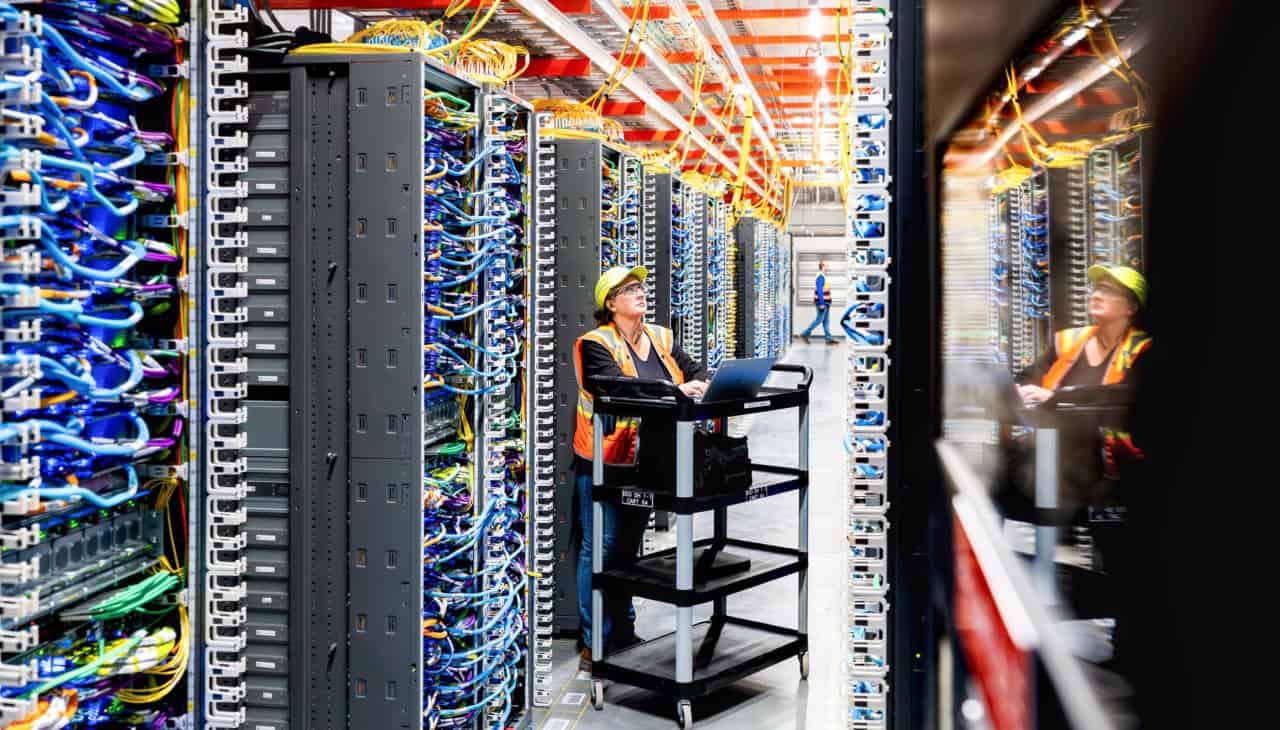
When it comes the present MOU in Trinidad and Tobago and it’s reasoning as to why, one reason is opportunity to avoid U.S. Regulation of a data center, which is as written above, problematic because of social permission. When a man’s home in Utah humorously identifies as a data center, we should probably pay attention.
The public needs better reasoning than, “economic diversification” when data centers by themselves do not diversify economies. They are extractive of real estate, water and electricity, and therefore, part of a negotiation with social permission. What do the people of Trinidad and Tobago get for a data center for the recurring costs it can incur?
While digital sovereignty is an obvious need when there is an issue of foreign exchange, software licensing costs haven’t really been spoken of. An AI data center could be a part of that, but that would show up through other endeavors as well. How much would the government save should they switch from Microsoft Office 365 to LibreOffice? From Outlook to alternatives?
That would be a less than subtle indicator of intent. Imagine, there’s software that does the same thing yet is not a part of a procurement process. Digital Transformation is not just about meeting a funding checklist, it’s about producing value for cost. Most people are familiar with reducing costs these days.
What connects a nation to the world is an issue of economics, of foreign exchange, of value and cost and implicitly of values and costs. Much of it for an island nation is through ships that transport goods. A data center is a deep harbor for such things, but it cannot exist in a vacuum and should not be solely extractive. There must be balance. And that balance is struck not just in a nation, but globally.
Editor’s note: About the Global Lense. Taran Rampersad, a frequent contributor to TechNewsTT since its inception, has stepped up to do a monthly roundup of technology developments from his perspective. He comes to this assignment from the perspective of a technologist with a clear eye on what is likely to prove most important to regional development.
About the author

Taran Rampersad has over three decades of experience working with technology, the majority of which was as a software engineer.
He is a published author on virtual worlds and was part of the team of writers at WorldChanging.com that won the Utne Award and an outspoken advocate of simplifying processes and bending technology’s use to society’s needs.
His volunteer work related to technology and disasters has been mentioned by the media (BBC), and is one of the plank-owners of combining culture with ICT in the Caribbean (ICT) through CARDICIS and has volunteered time towards those ends.
As an amateur photographer, he has been published in educational books, magazines, websites and NASA’s ‘Sensing The Planet’. These days, he’s focusing more on his writing and technology experiments. Feel free to contact him through Facebook Messenger.



















 In a US university film lab,...
September 7, 2026
In a US university film lab,...
September 7, 2026
 Declaring independence from mobile roaming
August 31, 2026
Declaring independence from mobile roaming
August 31, 2026
 Urgency, awareness needed to combat sextortion
August 24, 2026
Urgency, awareness needed to combat sextortion
August 24, 2026
 The silent, growing danger of ransomware
August 17, 2026
The silent, growing danger of ransomware
August 17, 2026
 How should a newsroom of the...
August 10, 2026
How should a newsroom of the...
August 10, 2026
 FNP’s halting stumble to dubious relevance
August 3, 2026
FNP’s halting stumble to dubious relevance
August 3, 2026
 Samsung’s big bet on AI
July 27, 2026
Samsung’s big bet on AI
July 27, 2026
 The data centre dilemma
July 20, 2026
The data centre dilemma
July 20, 2026
 How should business and government embrace...
July 13, 2026
How should business and government embrace...
July 13, 2026
 How influencer marketing works in the...
July 5, 2026
How influencer marketing works in the...
July 5, 2026
 Yes, a website is work. Yes,...
June 29, 2026
Yes, a website is work. Yes,...
June 29, 2026
 No more fire in these wires
June 22, 2026
No more fire in these wires
June 22, 2026
 What the heck is chip binning?
June 14, 2026
What the heck is chip binning?
June 14, 2026
 Solving the region’s journalism problem
June 8, 2026
Solving the region’s journalism problem
June 8, 2026
 Tambini to journalists: “Keep doing what...
May 31, 2026
Tambini to journalists: “Keep doing what...
May 31, 2026
 How do we unfetter journalism from...
May 25, 2026
How do we unfetter journalism from...
May 25, 2026
 What the Canvas hack tells us...
May 15, 2026
What the Canvas hack tells us...
May 15, 2026
 Ghost women in AI? Hardly!
May 10, 2026
Ghost women in AI? Hardly!
May 10, 2026
 IShowSpeed: Here and gone
May 4, 2026
IShowSpeed: Here and gone
May 4, 2026
 How TT journalists can turn modern...
April 26, 2026
How TT journalists can turn modern...
April 26, 2026