

CANTO, the leading trade association for the Caribbean ICT sector, concluded its 41st Annual Conference and Trade Exhibition this August, hosted at the Hard Rock Hotel & Casino in Punta Cana, Dominican Republic.
The four-day event brought together 611 attendees from 52 countries, including ministers, regulators, telecom operators, innovators, and development partners from across the Caribbean and beyond, under the theme “Elevate the Caribbean: From Connectivity to Global Competitiveness.”
Opening Ceremony
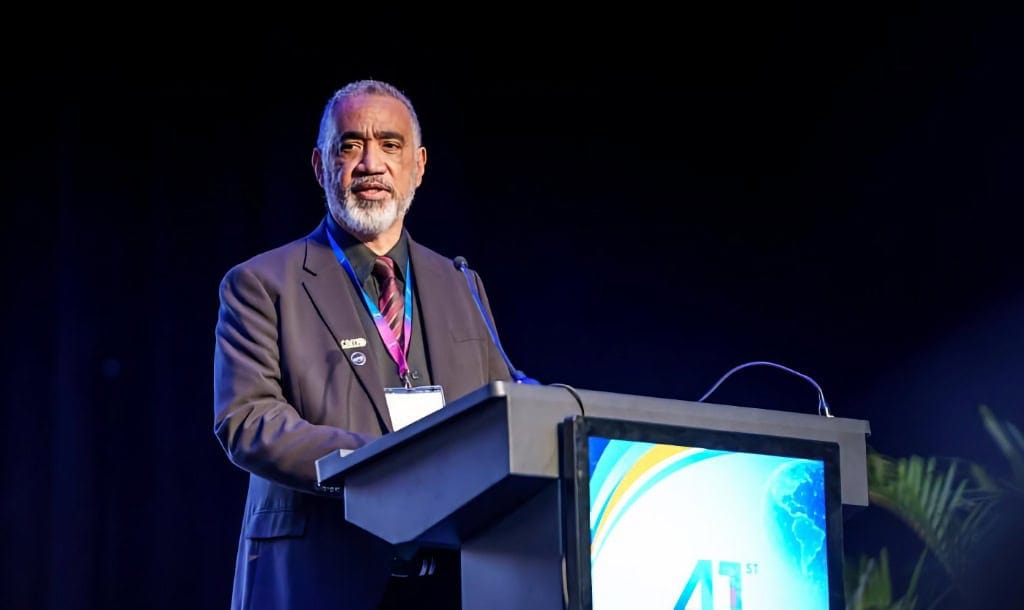
The conference opened with a powerful call to action from CANTO Chairman Dr. Delreo Newman, who challenged delegates to move beyond the achievements of the past.
“A cable landing on our shore is not competitiveness. A tower on a hill is not competitiveness,” Newman said. “Competitiveness begins when connectivity changes lives. When it lowers business costs, creates jobs, strengthens local enterprises, protects citizens and expands opportunity.”
He pressed the region toward “alignment,” describing CANTO’s role plainly: “CANTO must be more than a conference. It must be a convener and a policy leader, the place where speeches become solutions.”
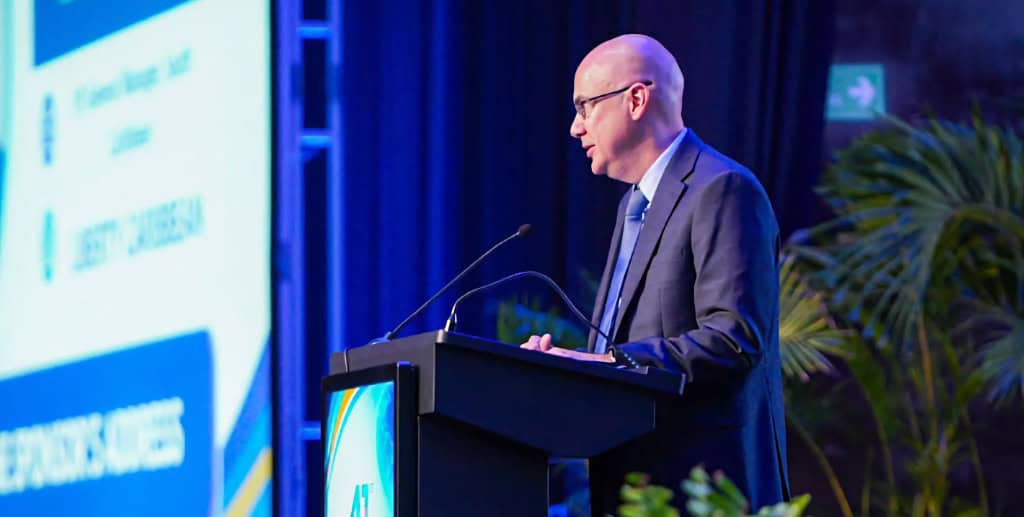
Delivering the Headline Sponsor address, Waldo Hooker, VP and General Manager, South Caribbean at Liberty Caribbean, echoed that sense of urgency while affirming the company’s long-term commitment to the region.
“We are not visitors to the Caribbean. We are OF the Caribbean,” Hooker said. “Our people live here, our customers live here, our families live here, and our commitment to this region is long-term and unwavering.” He urged delegates to treat the conference as a launchpad rather than a landing point: “Let us use this conference to do more than reflect on progress. Let us use it to accelerate it.”
Dr. Guido Gómez Mazara, President of INDOTEL and delivering the feature address, welcomed delegates back to the Dominican Republic for only the second time in CANTO’s history, and tied the conference’s theme directly to his country’s own digital ambitions, including a national strategy to double the size of the economy within a decade and a recently signed partnership with NVIDIA to build out AI infrastructure and training.
“Connectivity is no longer discussed in our country solely as a matter of infrastructure or social inclusion,” Gómez Mazara said. “It is discussed as a factor of national competitiveness.”
CANTO Secretary General Teresa Wankin set the tone for what would follow, reminding delegates that the value of the gathering lies in what it produces, not simply who attends it. “The success of CANTO 2026 will not be measured by the number of delegates in this room. It will be measured by what changes because we were here,” Wankin said.
Building digital capability
Day one carried delegates into “The Caribbean Digital Competitiveness Agenda – From Connectivity to Capability,” opening with an Economic Outlook on the Caribbean in the AI decade before moving into a CEO Dialogue on Powering Caribbean Competitiveness
There, Inge Smidts of Liberty Caribbean, Ray Collins of Liberty Networks, Marcelo Cataldo of Digicel Group, and Naji N. Khoury of ATN International traded candid perspectives on what it will actually take for regional operators to compete on a global stage, from infrastructure investment to talent development.
The conversation carried into the afternoon’s Ministerial Roundtable, “Building Together: Governments and Industry Shaping the Digital Caribbean,” where government leaders from Estonia, Curaçao, Jamaica, the Cayman Islands, and St. Vincent and the Grenadines pressed the case for closer collaboration between the public and private sectors on national digital priorities.
AI Transformation and Recognition
Day two shifted the conversation toward artificial intelligence under the theme “AI Transformation – Empowering Caribbean Competitiveness.”
Digicel Group CEO Marcelo Cataldo opened with a keynote on closing the digital divide through investment and inclusion, setting up a day of sessions that explored how AI is already reshaping subscriber experience, energy systems, and public services across the region.
A Regulatory Roundtable on future-proofing Caribbean telecom policy brought together regulators from Trinidad and Tobago, Jamaica, and the Turks and Caicos Islands to grapple with how policy frameworks need to evolve to keep pace with rapid technological change.
The day culminated in the Gala Dinner and ICT Ministerial Awards, where Senator, The Honourable Dominic Smith, Minister of Public Administration and Artificial Intelligence, Trinidad and Tobago, was recognized as this year’s honoree, having topped the scores across all award pillars, a distinction that reflected the breadth and depth of his contribution to advancing the region’s digital and AI agenda.
Partnerships for progress
The conference closed on day three under the theme “Partnerships for Progress – Uniting for Global Impact,” with sessions examining how AI applications are already transforming energy, finance, tourism, and public services across the Caribbean, and how infrastructure, energy, and investment must work in concert to build a more resilient region.
A panel on differentiated connectivity explored how operators can unlock new value beyond basic access, while a session on asset-light telco models looked at how partnerships and platforms are reshaping traditional operator business models. The conference formally closed with remarks from the Secretariat and the announcement of CANTO 2027, sending delegates off with a clear sense of where the region’s digital agenda goes next.
ITU agreement
CANTO and the International Telecommunication Union (ITU), the United Nations specialized agency for information and communication technologies, have signed a Joint Declaration of Intent formalizing cooperation on digital development across the Caribbean region.
The declaration was signed on August 11, 2026, at CANTO’s 41st Annual Conference and Trade Exhibition, held at the Hard Rock Hotel & Casino in Punta Cana, Dominican Republic, by Dr. Delreo Newman, Chairman of CANTO, and Dr. Cosmas Zavazava, Director of the ITU’s Telecommunication Development Bureau (BDT).
The five-year agreement establishes a non-binding framework for technical and institutional cooperation between the two organizations, built around the exchange of knowledge, coordination of technical initiatives, and direct support to Caribbean countries and stakeholders navigating the region’s digital transformation.
Under the declaration, CANTO and the ITU intend to collaborate across six key areas…
- Policy and regulatory harmonization aligned with the ITU’s G5 regulatory objectives
- Connectivity and infrastructure development, including broadband mapping and network deployment; cybersecurity and digital trust, including national cybersecurity strategies and Child Online Protection measures
- Resilience and disaster preparedness, including submarine cable resilience and climate-hardened networks
- Capacity building and digital skills, with a focus on empowering women and youth in the ICT sector
- Digital inclusion, ensuring no stakeholder across the public sector, private sector, or grassroots communities is left behind.




















 Urgency, awareness needed to combat sextortion
August 24, 2026
Urgency, awareness needed to combat sextortion
August 24, 2026
 The silent, growing danger of ransomware
August 17, 2026
The silent, growing danger of ransomware
August 17, 2026
 How should a newsroom of the...
August 10, 2026
How should a newsroom of the...
August 10, 2026
 FNP’s halting stumble to dubious relevance
August 3, 2026
FNP’s halting stumble to dubious relevance
August 3, 2026
 Samsung’s big bet on AI
July 27, 2026
Samsung’s big bet on AI
July 27, 2026
 The data centre dilemma
July 20, 2026
The data centre dilemma
July 20, 2026
 How should business and government embrace...
July 13, 2026
How should business and government embrace...
July 13, 2026
 How influencer marketing works in the...
July 5, 2026
How influencer marketing works in the...
July 5, 2026
 Yes, a website is work. Yes,...
June 29, 2026
Yes, a website is work. Yes,...
June 29, 2026
 No more fire in these wires
June 22, 2026
No more fire in these wires
June 22, 2026
 What the heck is chip binning?
June 14, 2026
What the heck is chip binning?
June 14, 2026
 Solving the region’s journalism problem
June 8, 2026
Solving the region’s journalism problem
June 8, 2026
 Tambini to journalists: “Keep doing what...
May 31, 2026
Tambini to journalists: “Keep doing what...
May 31, 2026
 How do we unfetter journalism from...
May 25, 2026
How do we unfetter journalism from...
May 25, 2026
 What the Canvas hack tells us...
May 15, 2026
What the Canvas hack tells us...
May 15, 2026
 Ghost women in AI? Hardly!
May 10, 2026
Ghost women in AI? Hardly!
May 10, 2026
 IShowSpeed: Here and gone
May 4, 2026
IShowSpeed: Here and gone
May 4, 2026
 How TT journalists can turn modern...
April 26, 2026
How TT journalists can turn modern...
April 26, 2026
 Reuters report on young news readers...
April 20, 2026
Reuters report on young news readers...
April 20, 2026
 The state of ransomware in the...
April 12, 2026
The state of ransomware in the...
April 12, 2026