


BitDepth 1571 for July 13, 2026
On June 30, at a keynote presentation and panel discussion on the topic “From Hype to Impact – Making the Business Case for AI and Innovation – A Conversation Among CEOs” hosted by the American Chamber of Commerce (TT Chapter), the conversation was no longer about why AI, but how.
Anton Alexander, a self-confessed evangelist for Amazon Web Services (AWS), made a persuasive case for a dramatic increase in AI adoption locally (the TT Government recently announced an MOU on July 10 for the development of a local data centre capable of deploying large language models).
Alexander was born in Point Fortin, and studied at the University of Maryland College Park, taking degrees in mathematics and computer science sequentially. He is part of Amazon’s Worldwide Specialist Organisation, covering clients across the globe with a specialty in US strategic accounts.
If his working experience with AWS, he said, “AI services train and help our solution architects and our internal teams sell and implement AI technology specifically focused on NVIDIA within AWS.”
“Externally, I support some of our largest customers, which include Salesforce, OpenAI, Anthropic, NVIDIA, Meta, and many more. I actively contribute to their source code. I do optimizations. I’m in tech business development, but I’m also very technical.”
Working as a consultant to the Saudi Arabian government, on their high performance computing workload, he went on to AI, eventually working on The Kingdom’s SDAIA Arabic LLM.
His work with Exxon on three-dimensional time-dilated studies of underground resources sped up discovery by 85 percent using seismic foundation models.
He also worked on LatAmGPT, a collaboration between Chile, Brazil and Venezuela that was trained at AWS and deployed as the first Latin American sovereign AI model.
He is a focal point for NVIDIA integration at Amazon and is the subject matter expert for the Department of Defense at Amazon.
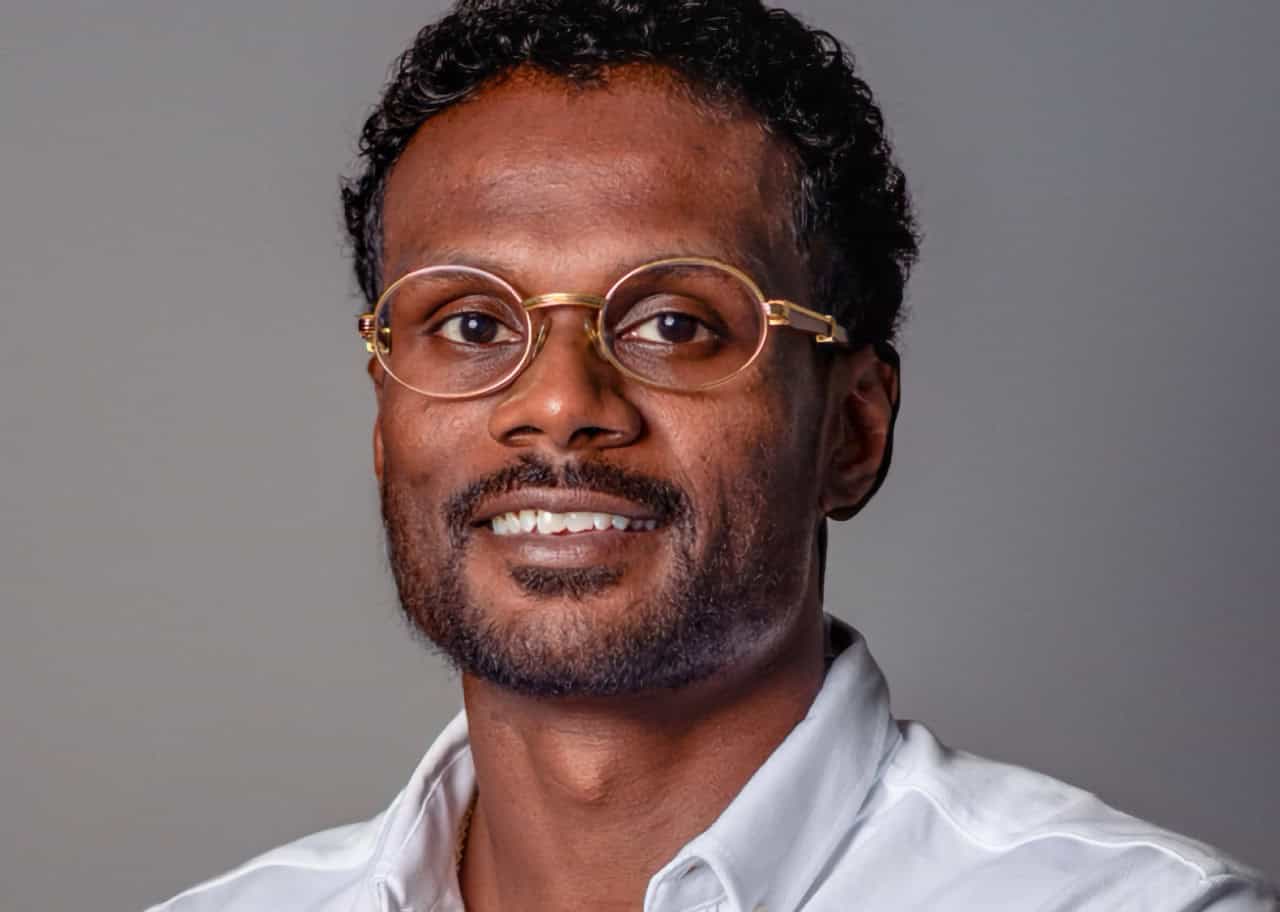
“What does it take as a business, as a leader, as a CEO, to implement AI into your organization? You need leadership commitment. You need the C-suite to see the benefits of AI. You need that corporate buy-in. You also need budget.”
“You have human capital, you have digital transformation, you have optimization of processes, you have agentic AI and humans. How well do humans and agentic AI work together? How can an agentic AI enhance the capabilities of a human? In America, most companies are adopting agentic AI.”
“You’ve seen many layoffs in companies because of the impact of AI. AI is optimizing processes. It’s allowing teams to be smaller, and it’s allowing us to move really fast.”
Ambikah Mongroo, Group Executive VP and Portfolio CEO, Integrated Retail Portfolio at the Massy Group noted that AI was deployed at the company to address specific business issues.
“Across our portfolio, you can find many AI solutions for business, but the real question is, what will add value? What is the problem we’re solving for? That’s the first question we need to ask. Where’s the friction? Where are the pain points? Where are the high impact areas that this can actually make a difference? That would be the starting point. That’s where we started.”
“We have stores, grocery business. Simple business, but complicated at the same time. But when you’re running a business that has 30,000 SKUs, we have a model for ordering, but if we don’t have the people on board with this technology, if we don’t get them involved, if they don’t see the value, it’s absolutely no use.”
“So I would start with what’s the problem, what are we solving for, and what is the impact? We can have all the nice-to-have technology. But if they don’t see the value, if they don’t see what this can do and how it can simplify the process, then it’s absolutely no use. There’s no wind there.”
“People have to be at the center of it. You don’t transform a business with technology alone. You need people as a driver.”
Where will the business find the biggest impact?
“Intelligent document processing [is where] businesses are seeing measurable returns,” Alexander said.
“[With] legacy document processing systems you would look at [information on] paper, and you would have to use your brain. You can have AI look at the document.”
“In fintech, I’m processing somebody’s application for a mortgage, in retail, I’m handling some type of form. In education, principals are filling out attendance and policy sheets.”
“Scan these documents, turn them from unstructured data into structured data, put it in databases, and allow [AI to] interact with these datasets.”
“In customer service or a call center, this AI agent has access to all the data, then another AI can talk to the human. So you don’t have to escalate to a physical human until it’s at a critical point. The AI could do most of the work as long as you have the data. So it starts with data.”
“It’s not just about digital transformation, but it’s about knowledge transformation. At Amazon, we have 12 leadership principles. One is [to] work backwards from the customer.”
“Make sure that your data is accurate. We talk to many of our customers about services around that.”
“The biggest challenge is clean data. Over time, we’ve built up a lot of data, but we don’t always manage to keep that clean. Your data storage is not a massive risk.”
Mongroo largely agrees with this position, noting that, “The cornerstone of everything is data.”

“You need to start thinking about data security, the resilience of your network, because you need to have access to the data continually. But if your data is not clean, then your starting point is off.”
“We have to be centered [on the] needs of the business, what will make us the organization of the future? What will ensure our employees are future ready for what’s required to pivot [through] all these geopolitical changes?”
“It’s one thing to see the hype and all the nice-to-haves, but in reality, where is it going to add value? That’s where I start. It has to add value, measurable value, and ultimately, be an enabler for employees. And the customers must experience it at the end of the process.”
How to create the business case for AI deployment?
“Trinidad can build these AI models,” Alexander said.
“They can host them. AWS is the perfect platform. We can own our data. We can build chat bots, local AI models that exist locally and speed up government services and products by using AI, but what are the challenges?”
“Some of it is the understanding the value. Quantifying AI, even for a financial analyst [is difficult]. Very few people in the world can quantify the fiscal value of AI. They would love to, but it’s hard to do. We work with our customers to help them do that”
“AI “is” scary. There’s risk when it comes to ethical use cases, people voicing concerns. There’s technical risk, if the AI goes down [impacting the] reliability, resiliency of the AI services.”
“It’s easy to set up your business case for a capital investment, a new warehouse, a new store,” Mongroo said.
“[These are] all physical things, but I think the same sort of framework is a starting point. However, AI investments need a broader lens because the benefit you have short-term. You’re building a new warehouse with automation, reduced on-time delivery cycle times. Those are the easy things [to] quantify.”
“Investing in AI, there’s a benefit that comes as you scale, as you create capability, and it’s very difficult to establish that from day one. So I do think the lens looking into investments has to be slightly different from a capital investment. Same governance framework.”
“We start with the customer. We know from our records what customer’s main issues or questions are and that’s what we start to automate. Many customers want to know their balance at the end of the month, so we need to make sure that that’s easily accessible instead of having them call. The customer is where we start, and then we optimise and make sure that we train our models to answer them.”
What are the next steps?
“Why do governments come to us?” Alexander asked, rhetorically.
“Why do the biggest customers in the world want to train their models on AWS? Because we give them the freedom to invent. You can trust AWS. We are very secure. We have a shared responsibility model. We help maximize our value, working with our customers to make sure that they get the most out of AI.”
“We have a partnership with OpenAI. We have a partnership with Anthropic. The key premise of Amazon is choice. We’re not married to one model provider. It’s more like dating with us, it’s not marriage.”
“I’m really excited to see what Trinidad can do. I believe in us. I believe in our resiliency. I believe in our education. I believe in our values and our moral compass right within the corporate world. I hope that my speech here motivates you guys, and especially our business leaders, to drive more AI adoption. Let’s be the leaders, not only the Caribbean, in the world.”
“AI deployment is a management issue,” Mongroo said, “but I think the board is responsible for ensuring the strategy is met, whether it’s three years, five years–where are we going? The board should be asking, how is AI part of that strategy, what is the group doing from that perspective?”
“It’s not to decide how it’s to be deployed, who it’s to be deployed to or in what parts of the business, but to ensure it’s lined up in terms of strategy, that’s where I would place it from a board perspective. The alignment has to be there.”


















 The silent, growing danger of ransomware
August 17, 2026
The silent, growing danger of ransomware
August 17, 2026
 How should a newsroom of the...
August 10, 2026
How should a newsroom of the...
August 10, 2026
 FNP’s halting stumble to dubious relevance
August 3, 2026
FNP’s halting stumble to dubious relevance
August 3, 2026
 Samsung’s big bet on AI
July 27, 2026
Samsung’s big bet on AI
July 27, 2026
 The data centre dilemma
July 20, 2026
The data centre dilemma
July 20, 2026
 How should business and government embrace...
July 13, 2026
How should business and government embrace...
July 13, 2026
 How influencer marketing works in the...
July 5, 2026
How influencer marketing works in the...
July 5, 2026
 Yes, a website is work. Yes,...
June 29, 2026
Yes, a website is work. Yes,...
June 29, 2026
 No more fire in these wires
June 22, 2026
No more fire in these wires
June 22, 2026
 What the heck is chip binning?
June 14, 2026
What the heck is chip binning?
June 14, 2026
 Solving the region’s journalism problem
June 8, 2026
Solving the region’s journalism problem
June 8, 2026
 Tambini to journalists: “Keep doing what...
May 31, 2026
Tambini to journalists: “Keep doing what...
May 31, 2026
 How do we unfetter journalism from...
May 25, 2026
How do we unfetter journalism from...
May 25, 2026
 What the Canvas hack tells us...
May 15, 2026
What the Canvas hack tells us...
May 15, 2026
 Ghost women in AI? Hardly!
May 10, 2026
Ghost women in AI? Hardly!
May 10, 2026
 IShowSpeed: Here and gone
May 4, 2026
IShowSpeed: Here and gone
May 4, 2026
 How TT journalists can turn modern...
April 26, 2026
How TT journalists can turn modern...
April 26, 2026
 Reuters report on young news readers...
April 20, 2026
Reuters report on young news readers...
April 20, 2026
 The state of ransomware in the...
April 12, 2026
The state of ransomware in the...
April 12, 2026
 Digital döstädning
April 5, 2026
Digital döstädning
April 5, 2026