

Artificial intelligence has become one of the most debated technologies in the Caribbean. Discussions about the infrastructure needed to power AI, including proposed data centres, have raised understandable questions about energy consumption, privacy, and the broader impact of this technology on society.
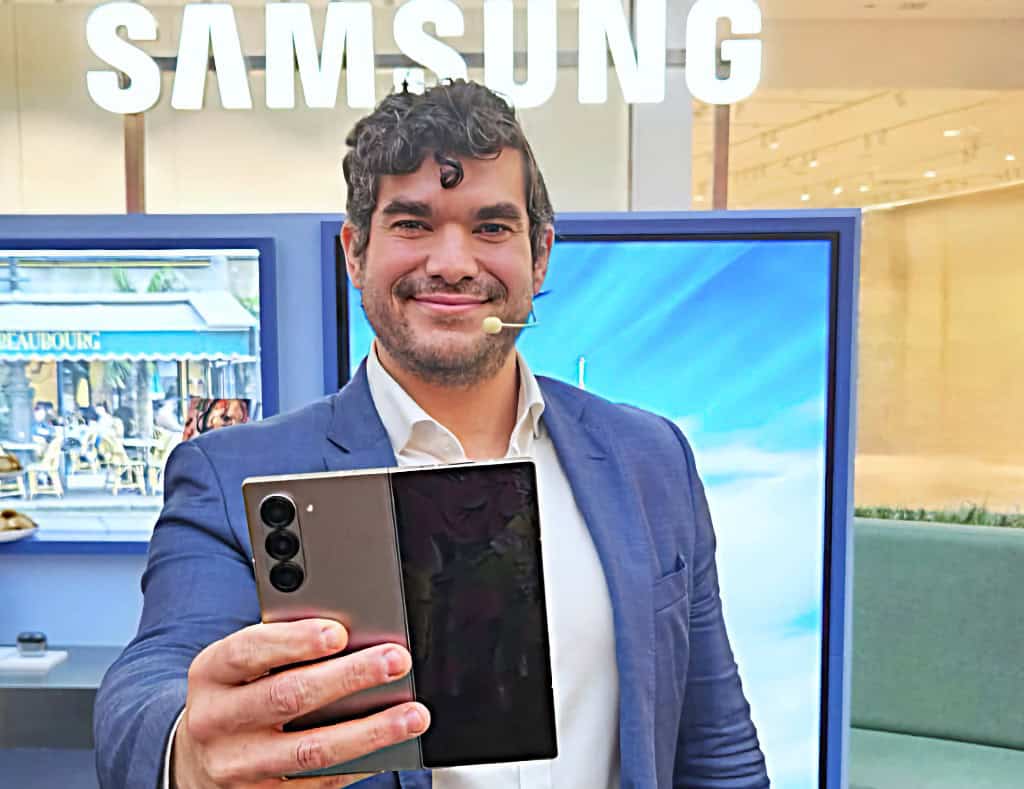
While that AI debate continues to unfold, there is one characteristic that is always discussed: Will it make everyday life easier? At the recently held Galaxy Unpacked 2026 in London, that is the philosophy Samsung showcased. The conversation shifted away from AI as a standalone feature and toward AI as an invisible assistant that understands context, anticipates needs, and works across devices rather than inside individual applications.
“The next stage of AI isn’t about adding more features to a smartphone,” says Jon Criscione, Regional Head of MX for Samsung Central America and the Caribbean. “It’s about creating experiences where the device understands what you’re trying to accomplish and helps you complete the task with fewer steps.”
AI that works before you ask
For years, smartphone innovation focused on adding more apps and giving users more choices. Today’s challenge is different.
“People no longer want to jump between multiple applications to complete a simple task. They expect technology to connect information, understand intent and help them move naturally from one activity to another,” Criscione said.
Samsung calls this the move toward agentic AI which is capable of coordinating multiple actions on a user’s behalf rather than responding to one isolated command at a time. During Galaxy Unpacked, Samsung executives described this as the industry’s transition from feature-based experiences to goal-driven experiences, where users simply describe what they want and the device orchestrates the necessary steps.
For example, organizing a weekend in Tobago. Instead of opening separate searches for accommodation, ferry schedules, to save locations, check the weather, and eventually message friends, Galaxy AI can help organise much of that workflow while keeping information connected across the device. Therefore, the experience becomes more about completing a task.
Why foldables make AI more practical
Samsung believes foldables are particularly well suited to this new generation of AI because of the way people naturally interact with their larger, flexible displays.
On the Galaxy Z Fold8 Ultra, users can review AI-generated summaries while keeping original documents open side by side, compare recommendations without switching screens, or edit content using Galaxy AI tools while maintaining a full view of the original material.
The Galaxy Z Flip8, meanwhile, brings AI to quick, everyday interactions. Users can access contextual information, manage notifications and complete common tasks directly from the FlexWindow without unfolding the device, making AI feel less like a destination and more like a natural part of daily routines.
“The real innovation isn’t that AI can answer questions,” Criscione explains. “It’s that it becomes part of the experience instead of interrupting it. Foldables create more opportunities for AI to work naturally because they give users more space to interact with information without constantly changing context.”
Trust matters as much as intelligence

As AI becomes more personal, trust becomes just as important as capability. Samsung argues that smartphones occupy a unique position because they already contain much of a user’s daily life—from calendars and photos to messages, preferences and routines. That makes privacy a fundamental requirement rather than an optional feature.
According to Jay Kim, Corporate EVP at Samsung Electronics, Galaxy AI continues to be built around principles of transparency, user choice, and data protection, with many AI experiences processed directly on the device and users maintaining control over how their information is used. “Consumers shouldn’t have to choose between useful AI and privacy,” says Kim. “As AI becomes more personal, protecting personal data becomes even more important.”
From technology to everyday value
The debate around AI will undoubtedly continue. Questions about infrastructure, regulation and sustainability deserve serious discussion. But for consumers, the technology will ultimately succeed or fail for a much simpler reason. Not because it can generate an image or summarize a document. But because it quietly helps people save time, reduce friction, and accomplish everyday tasks more naturally.
For Samsung, that is where the future of AI begins—not inside a data centre, but in the moments when technology understands people well enough to become genuinely helpful.



















 In a US university film lab,...
September 7, 2026
In a US university film lab,...
September 7, 2026
 Declaring independence from mobile roaming
August 31, 2026
Declaring independence from mobile roaming
August 31, 2026
 Urgency, awareness needed to combat sextortion
August 24, 2026
Urgency, awareness needed to combat sextortion
August 24, 2026
 The silent, growing danger of ransomware
August 17, 2026
The silent, growing danger of ransomware
August 17, 2026
 How should a newsroom of the...
August 10, 2026
How should a newsroom of the...
August 10, 2026
 FNP’s halting stumble to dubious relevance
August 3, 2026
FNP’s halting stumble to dubious relevance
August 3, 2026
 Samsung’s big bet on AI
July 27, 2026
Samsung’s big bet on AI
July 27, 2026
 The data centre dilemma
July 20, 2026
The data centre dilemma
July 20, 2026
 How should business and government embrace...
July 13, 2026
How should business and government embrace...
July 13, 2026
 How influencer marketing works in the...
July 5, 2026
How influencer marketing works in the...
July 5, 2026
 Yes, a website is work. Yes,...
June 29, 2026
Yes, a website is work. Yes,...
June 29, 2026
 No more fire in these wires
June 22, 2026
No more fire in these wires
June 22, 2026
 What the heck is chip binning?
June 14, 2026
What the heck is chip binning?
June 14, 2026
 Solving the region’s journalism problem
June 8, 2026
Solving the region’s journalism problem
June 8, 2026
 Tambini to journalists: “Keep doing what...
May 31, 2026
Tambini to journalists: “Keep doing what...
May 31, 2026
 How do we unfetter journalism from...
May 25, 2026
How do we unfetter journalism from...
May 25, 2026
 What the Canvas hack tells us...
May 15, 2026
What the Canvas hack tells us...
May 15, 2026
 Ghost women in AI? Hardly!
May 10, 2026
Ghost women in AI? Hardly!
May 10, 2026
 IShowSpeed: Here and gone
May 4, 2026
IShowSpeed: Here and gone
May 4, 2026
 How TT journalists can turn modern...
April 26, 2026
How TT journalists can turn modern...
April 26, 2026