


BitDepth#1578 for August 31, 2026
Roaming on a mobile plan has been a non-starter for more than two decades, but it isn’t clear that enough local travelers are aware of the alternatives.
Well into the third decade of the 21st century, telecommunications providers hold onto antiquated notions of revenue generation related to long distance calls – long neutered by over-the-top VOIP (Voice over Internet Protocol) apps – and demanding a premium to remain connected to the internet while traveling.
Most of that revenue is probably coming from people who simply forgot to turn off the roaming option on their mobile phones, since nobody would willingly sign up to pay extortionate fees to connect when there are free WiFi access points scattered everywhere.
The regional challenge
In the Caribbean, connectivity is limited to just a few regional telecommunications players.
The dominant companies are Digicel, active in 25 markets in the Caribbean and Pacific regions, and Liberty Latin America (operating as Flow or Liberty Caribbean), active in 17 markets.
Despite that relative homogeneity of service, the Declaration of St George’s, an agreement signed in February 2022, which promised to reduce roaming rates within the region, remains an unkept promise to regional customers.
The plan targeted reductions of up to 70 percent on existing roaming rates, and while there are inter-island regulatory issues that need to be addressed, it remains astonishing that not even two islands could sign an agreement in the interests of regional harmony and more cost-effective inter-island communication.
Regionally, the only effort at lowering roaming charges has come from a new startup, Nimble, a MVNO (Mobile Virtual Network Operator) project of the WiPay group announced in 2025.
My short history of roaming avoidance
My own spirited effort to avoid roaming charges began around 1999 or so, when being able to place a phone call while visiting the US. Now this was before smartphones or even mobile phones that weren’t locked down to regional networks.
The first solution was a third party phone from Virgin Mobile, which operated an MVNO service that allowed you to buy a phone (some decent devices were offered, but I went with a cheap burner, the Kyocera Marbl) get assigned a phone number, and for a small fee every month, keep that number whether you used the phone or not.
When traveling, you bought minutes and had a working phone in the US.
That worked for around five years from 2003 onward, burning through a couple of battery replacements.
Virgin slowly shrank the business before closing it in 2020, but I’d discovered a travel SIM service before then and the Marbl was dead.
Travel SIMs offered the same deal, but you kept your phone and services and the fees could be paid online.

Eventually that service went away, right around the time Samsung began offering the option of an electronic SIM or e-SIM in its Gear S2 smartwatch.
The first iPhone to have an e-SIM was the XS model in 2018. Since 2022, all iPhones sold in the US have removed the SIM tray, leaving an e-SIM as the only way to activate the device as a phone.
Many other smartphone manufacturers have followed this lead, mostly on their high-end models, but adding the e-SIM chip is a no-brainer, so most modern smartphones, even those with a SIM tray, can also connect via an eSIM.
For device manufacturers, it’s one less hole to leave open on the device, one less port that liquids can penetrate and one less point of vulnerability on the protective shell.
An unlocked smartphone represents the ideal dovetailing of the MVNO business and customer freedom of choice, since most devices can accommodate multiple e-SIMs.
Some phones that are locked on their physical SIM slot can accept an unlocked e-SIM, but the risk is largely pointless in 2026.
The idea of a locked smartphone is becoming as absurd as roaming charges while traveling, a relic of the old telecoms hegemony that milked customers at every point that they stumbled past the restrictions of their plan.
How does this work?
I recently returned from the hinterlands of South America and my second use of a travel e-SIM.
E-Travel’s SIM worked well for the itinerary in 2025 but this year I tried Airalo, which improved the experience with a dedicated app that simplified the installation of its service.
Be assured though, that even the manual installation of a travel e-SIM is a straightforward procedure that’s well within the capabilities of the average phone user.

Most modern smartphones, even those with a physical SIM tray, will also accept an e-SIM. That includes current models of Samsung’s A series line of budget devices (review specifications throughly before purchasing).
Both of these travel data services are MVNOs, buying transmission capacity and time from carriers on the wholesale market. Most networks carry a substantial reserve capacity to allow for normal, incremental expansion of their customer base as well as the occasional peak demand on their services.
Most providers design their networks so that there is a reserve capacity of at least 20 percent, but the global standard is 40 percent.
It’s possible for a customer to buy voice connection time, text messaging as well as data connectivity, but this is 2026, and both services are teetering on the edge of irrelevance compared to the onslaught of over-the-top (OTP) services.
WhatsApp commands a staggering three billion monthly active users, followed by China’s WeChat with 1.4 billion and Facebook Messenger, with 1 billion.
It’s arguable that if WhatsApp didn’t insist on an active phone number for device verification, voice plans wouldn’t just be underutilised, they would functionally disappear.
For most modern smartphone users, receiving a call or responding to a text message is less a carrier function than it is a social media platform service.

For younger users, the communications model fragments even further, with Discord representing the most common communications platform among teenagers, but it also takes some effort to keep up with what a teenager uses to communicate with peers.
Some of those conversations and message threads are taking place on platforms that last for shockingly brief service periods.
But I digress, and a data plan with WhatsApp or other OTP connectivity is an acceptable communications baseline for travel.
Carrier hopping in South America
Because MVNO’s buy their connection time based on transient, limited use and according to geography, it’s sensible to review the promised coverage offered by the multitude of plans on offer from any provider.
For this trip, it wasn’t clear that there was a connection option that covered an itinerary that ranged from the Amazon river to the Rupununi grasslands.
Without the assurance of full coverage on any single sub-plan, I chose the world option, which tries to connect wherever you are in the world for the duration of the plan, in this case, 15 days.
In practice, you can only connect where there is actual service. On long journeys, the device will light up with multiple carriers as it hops from network to network – it’s the nature of the beast.
Across large swaths of my travel time, there was only scattered, semi-permanent habitation and as a consequence, no carrier-based coverage, but that’s not the same as no coverage at all.
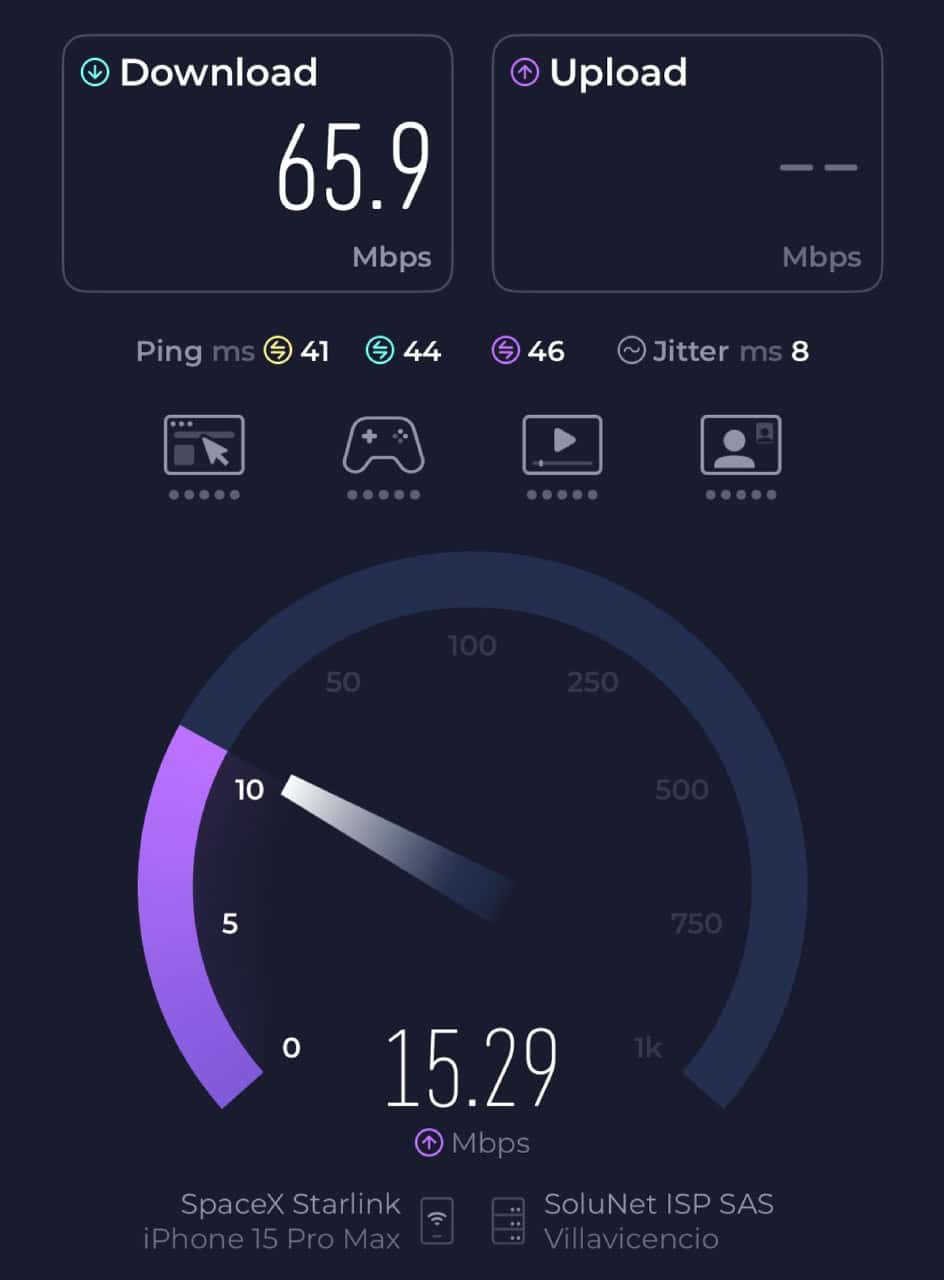
At the Ararinha Lodge on Lake Ararinha, a surprisingly comfortable if rough and tumble facility on the banks of a major Amazon tributary, Starlink connectivity was available, suggesting that the early promise of Low Earth Orbit (LEO) connections is well positioned to break through the old deadlocks of land-based infrastructure that limited digital connectivity.
An 11-hour drive from Manaus to Boa Vista in Brazil, maintained mobile Starlink connectivity throughout.
Recommendations
The MVNO business is volatile and competitive. It is possible to find widely varying pricing for data-only coverage from multiple travel e-SIM providers.
If you travel at all, even only once a year, consider e-SIM capabilities when choosing your next phone and avoid the issues of carrier locking by buying an unlocked device, which, happily, also makes you a bit of a free-agent \when it comes to choosing your provider locally.


















 Declaring independence from mobile roaming
August 31, 2026
Declaring independence from mobile roaming
August 31, 2026
 Urgency, awareness needed to combat sextortion
August 24, 2026
Urgency, awareness needed to combat sextortion
August 24, 2026
 The silent, growing danger of ransomware
August 17, 2026
The silent, growing danger of ransomware
August 17, 2026
 How should a newsroom of the...
August 10, 2026
How should a newsroom of the...
August 10, 2026
 FNP’s halting stumble to dubious relevance
August 3, 2026
FNP’s halting stumble to dubious relevance
August 3, 2026
 Samsung’s big bet on AI
July 27, 2026
Samsung’s big bet on AI
July 27, 2026
 The data centre dilemma
July 20, 2026
The data centre dilemma
July 20, 2026
 How should business and government embrace...
July 13, 2026
How should business and government embrace...
July 13, 2026
 How influencer marketing works in the...
July 5, 2026
How influencer marketing works in the...
July 5, 2026
 Yes, a website is work. Yes,...
June 29, 2026
Yes, a website is work. Yes,...
June 29, 2026
 No more fire in these wires
June 22, 2026
No more fire in these wires
June 22, 2026
 What the heck is chip binning?
June 14, 2026
What the heck is chip binning?
June 14, 2026
 Solving the region’s journalism problem
June 8, 2026
Solving the region’s journalism problem
June 8, 2026
 Tambini to journalists: “Keep doing what...
May 31, 2026
Tambini to journalists: “Keep doing what...
May 31, 2026
 How do we unfetter journalism from...
May 25, 2026
How do we unfetter journalism from...
May 25, 2026
 What the Canvas hack tells us...
May 15, 2026
What the Canvas hack tells us...
May 15, 2026
 Ghost women in AI? Hardly!
May 10, 2026
Ghost women in AI? Hardly!
May 10, 2026
 IShowSpeed: Here and gone
May 4, 2026
IShowSpeed: Here and gone
May 4, 2026
 How TT journalists can turn modern...
April 26, 2026
How TT journalists can turn modern...
April 26, 2026
 Reuters report on young news readers...
April 20, 2026
Reuters report on young news readers...
April 20, 2026