


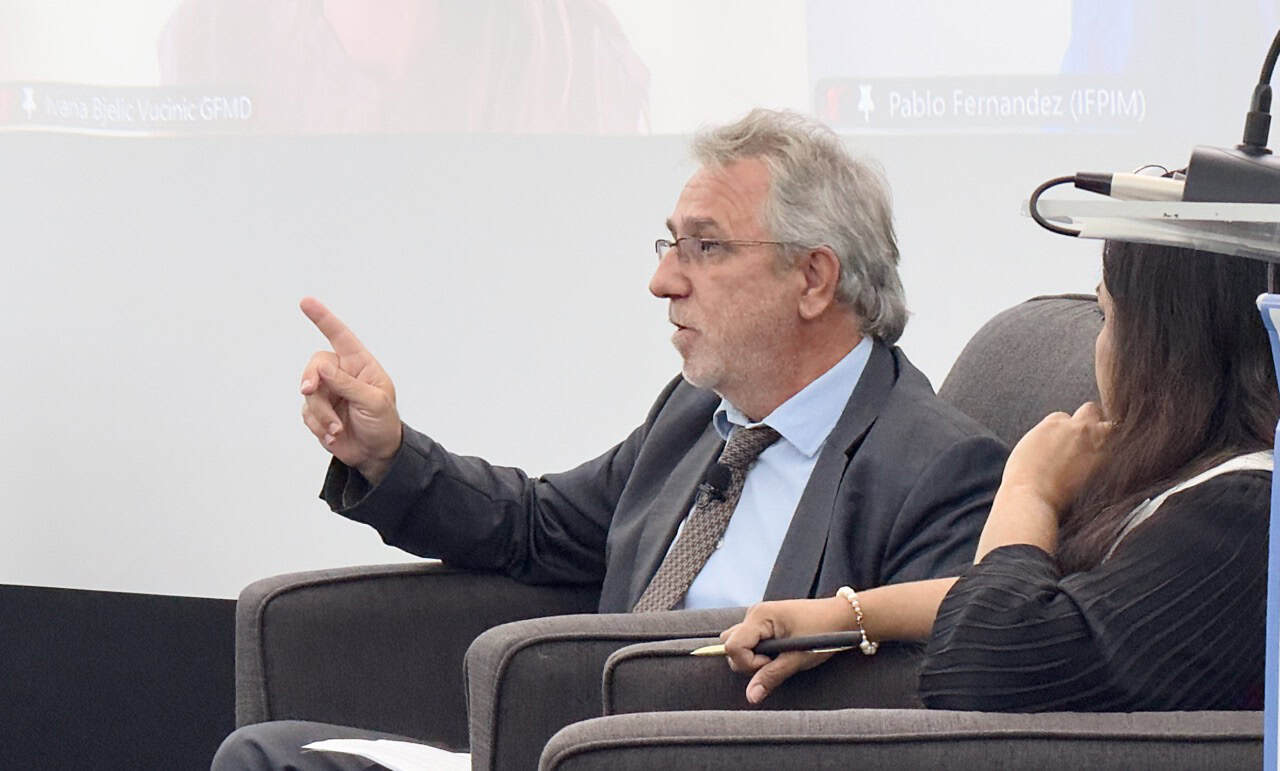
Above: Professor Daniel Tambini.
BitDepth 1565 for June 01, 2026
“Russia spends US$2 billion to pay for trolls, disinformation agents and to spread fake news around the world,” said Guillaume Pierre, the French ambassador to Trinidad and Tobago.
“Russia is today one of the biggest financial inputs in content creation, but this content is pure manipulation.”
Pierre was speaking on the first day (May 28) of last week’s Media Institute of the Caribbean summit on media viability at the Chamber of Commerce. He has a particular empathy for journalism in Trinidad, having served an internship as a journalist at Radio 6:10 am after leaving school.
He also expressed concern about the trend to concentration of media power in the hands of wealthy individuals.
Specifically, “The extraordinary concentration of media power around Vincent Bolloré, and the implication this has for pluralism, democratic debate, and the future of journalism.”
Bolloré is said to have the tenth largest fortune in France and he’s used his wealth to build an influential media empire in Europe.
“This man controls C News, a rolling news channel that has become France’s most-watched cable news network, Europe One, one of the country’s historic radio stations, Paris Match, an iconic weekly magazine read for generations by French families (since sold to Bernard Arnault), Le Journal de Dimanche, which is France’s leading newspaper on Sunday and the Canal Plus Group, a big TV group with an entire ecosystem of entertainment and content that reaches tens of millions in France and across the French-speaking world, including the Caribbean.”
“Reporters Without Borders and numerous French observers have warned that this degree of concentration is unprecedented in modern French media, from production and distribution of audiovisual content to news, radio, print, publishing and even advertising. The concern is not merely economic concentration. The concern is ideological concentration.”
“Critics argue that [these] outlets are increasingly promoting a political narrative which is based on nationalism, identity politics, anti-immigration rhetorics, and cultural polarization.”
“When media ownership is being used to systematically reshape the political culture through editorial pressure, intimidation, strategic influence over cultural institutions, the structural transformation of the information landscape in which an immense private wealth can increasingly shape what citizens see, hear, debate, and ultimately believe.”
The survival of independent journalism as a primary source of information was high on the agenda at the MIC summit, and it’s an issue that Professor Damian Tambini, Distinguished Policy Fellow in the Department of Media and Communications at the London School of Economics, has considered in his book, Media Freedom.
“I see media freedom not as an absolute right, but something that also involves positive decisions by the state to support the media, Tambini said.
“[It’s] not just about getting the state out of the equation, it’s also about measures which are necessary for the state, through public policy to create sustainable media systems.”
“That’s rooted in a particular legal and constitutional tradition and history which has deep roots and a lot of legitimacy globally. There are lots of international standards to support that idea of the state supporting the media, but that support is often abused, so it has to be based on real trust that the media does indeed serve the public interest as opposed to the interest of the government.”
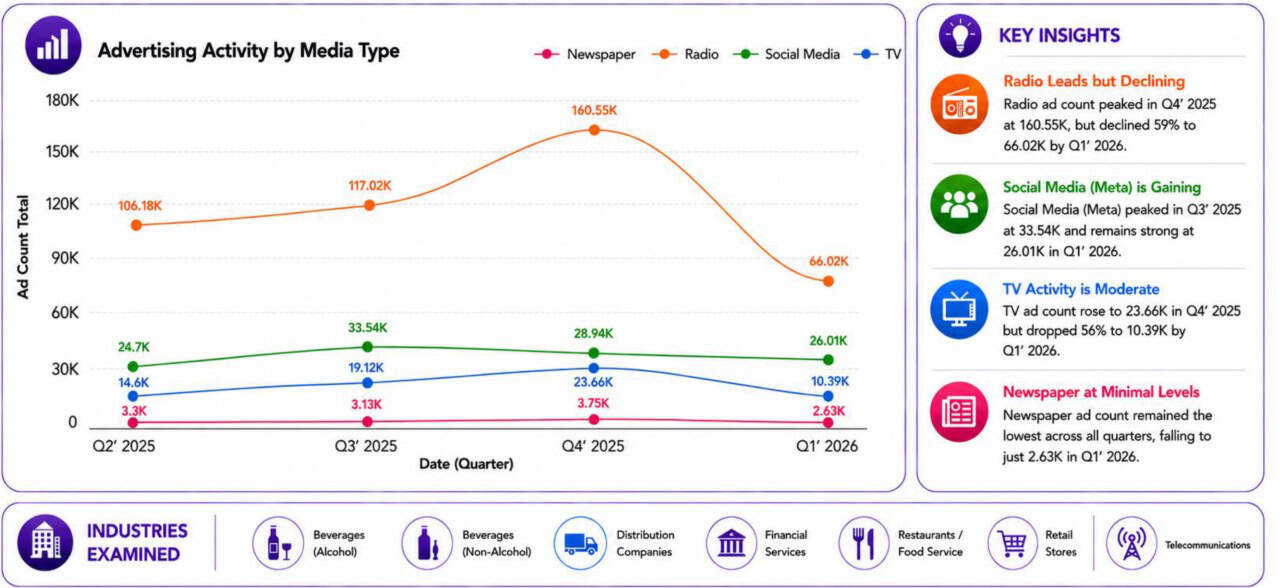
“But if we look at the data, the problem is that there is not that there is no money, the problem is that the money is not flowing into quality journalism and domestic production necessarily. Where is that revenue flowing to and is it flowing to quality trusted journalism? Is it flowing to domestic production or is it going abroad?”
“In these discussions that people are having around the world about the squeeze on journalism and news sustainability, the news, we very often talk about social media platforms. The flow of advertising revenue that previously served domestic media, is going abroad mainly to US players and this is true of OTT streamers. The Caribbean region is not as dominated by US players as are other regions of the world. The most Netflix dominated place in the world is Australia.”
More than 50 percent of incoming bandwidth into Trinidad and Tobago is attributable to streamed content and is dominated by Netflix.
While Tambini notes that there is some demand for Caribbean content and some investment in creating it, the short history of domestic production funded by streaming services also locks in consumers to the platforms, creating outflows of money that favor them.
It can safely be said that in Trinidad and Tobago, with a 64.4 percent social media adoption rate and widespread addiction to feeds, social media is both dominant and necessary, empowering platforms to set the price and terms of engagement.
The challenge is only amplified when considering the impact of search and what Tambini describes as “social intermediaries,” the platforms that harvest original journalism, building their audiences while sharing a pittance in revenue sharing where that money is available at all.
Tambini urges a consideration of the very different approaches that Europe and the US have taken to platform regulation.
The knee-jerk responses of a decade ago, which resulted fake news laws and attempted to criminalise certain forms of content sharing contravened accepted laws protection freedom of expression.
“We’ve also seen a lot of ad hoc emergency governance. I had the interesting experience of sitting on the UK’s disinformation task force during the COVID pandemic and experienced rather opaque and ill-defined cooperation between government and platform to try to define what is disinformation and how informal mechanisms could be used to bring down disinformation. That is clearly also highly problematic when it comes to freedom of expression, as are internet shutdowns.”
Tambini points to the European Union’s Digital Services Act, which insists on the kind of self-regulation and accountability that search services and online platforms have stoutly resisted or threatened to leave entire countries over.
While any form of control runs the risk of infringing on democratic rights, UNESCO and the UN Global Digital Compact are considering the EU’s framework as an approach to the overwhelming and largely uncontrolled distribution of information globally by these online services.
Additional threats come from the consolidation of media companies and their vulnerability to being bought out by industrial interests. That creates complicated relationships when those interests seek to align with governments for profit and the result is a further undermining of the idea of media working in the interests of the public.
“I would argue that it’s necessary to take positive measures to create the conditions for a more broadly healthy, sustainable media ecosystem. Not for supporting hand-picked media houses that the government thinks are conducive to its interests, but for supporting plural and decentralised but sustainable media systems.”
“There’s increasing discussion [about] various forms of subsidies, support for distribution, particularly an ongoing debate about prominence not only for public service media,”
Tambini notes important discussions about journalism and the identification of trusted media outlets through systems like the Journalism Trust Initiative to identify, verify and support news producers that describe themselves as media so that they can be protected from having their news demoted or being deplatformed entirely.
“[There are] more familiar supports for the media such as tax breaks are other ways in which policy can create this environment for positive media freedom in the competitive relationship between dominant platforms and their price setting in the distribution of media.”
“Australians have introduced their bargaining code, which empowers media to bargain collectively, effectively undermining that competitive power of platforms to set price and control access to consumers. There are several ways in which policymakers are beginning to try to support traditional media in their grappling with the new environment of platforms. That’s partly about competition and market structure, but it’s also about setting standards of behaviour and rules.”
Despite acting like publishers, social media platforms have insisted on limiting their liability and evading their responsibility to provide a safe environment.
Projects like the Digital Services Act are a first step to creating audit and transparency mechanisms that might work on these services to reduce the harms they promulgate that are only now being acknowledged in the courts and the wider society.
“I side with the international human rights approach reflected in the standards of Article 19 of the Universal Declaration of Human Rights. Under those standards, there is more scope for supporting the media and that’s why I argue for a more systemic approach, trying to take proactive measures to update what I call the social compact for the media.”
“Privileges that have acted as really huge subsidies, like access to electromagnetic spectrum, the airwaves, no longer deliver the same regulatory support as they once did. I argue that we need to look at new privileges for the media, prominence being one of them.”
“But along with this comes a structural interpretation of freedom of expression and a new kind of constitutional approach. Fundamental to this is much clearer legal and constitutional separation between media and the state and greater public awareness of that. It’s very important that the public not see the media as part of the state.”
What are these privileges? Tambini identifies them as “legal privileges, source protection, various forms of protection from liability, various public interest defences in media law, as well as distribution and other support,” along with the traditional guard rails of professional ethics, conflict of interest disclosures and the separation of editorial and advertising, but notes that media must be ready to make the case for them.
“When I speak to journalists and media executives, I very often hear what can we do? My argument is that you can’t fix this on your own. This is also an issue of market structure, antitrust, regulation and law. One of the challenges is in updating the social compact for the media, the idea that the media is autonomous, but they have certain responsibilities to serve not the government in that authoritarian model, but they have responsibilities to serve the public.”
“The answer is not a simplistic approach to media literacy which holds that media literacy means teaching people to trust the media more. You’ve just got to keep doing what you’re doing and underline the importance really of high quality, genuinely independent journalism and explain what you do to your users with the platform that you still have. Explain why what you do is different to influencers, is different to social media companies.”

















 The silent, growing danger of ransomware
August 17, 2026
The silent, growing danger of ransomware
August 17, 2026
 How should a newsroom of the...
August 10, 2026
How should a newsroom of the...
August 10, 2026
 FNP’s halting stumble to dubious relevance
August 3, 2026
FNP’s halting stumble to dubious relevance
August 3, 2026
 Samsung’s big bet on AI
July 27, 2026
Samsung’s big bet on AI
July 27, 2026
 The data centre dilemma
July 20, 2026
The data centre dilemma
July 20, 2026
 How should business and government embrace...
July 13, 2026
How should business and government embrace...
July 13, 2026
 How influencer marketing works in the...
July 5, 2026
How influencer marketing works in the...
July 5, 2026
 Yes, a website is work. Yes,...
June 29, 2026
Yes, a website is work. Yes,...
June 29, 2026
 No more fire in these wires
June 22, 2026
No more fire in these wires
June 22, 2026
 What the heck is chip binning?
June 14, 2026
What the heck is chip binning?
June 14, 2026
 Solving the region’s journalism problem
June 8, 2026
Solving the region’s journalism problem
June 8, 2026
 Tambini to journalists: “Keep doing what...
May 31, 2026
Tambini to journalists: “Keep doing what...
May 31, 2026
 How do we unfetter journalism from...
May 25, 2026
How do we unfetter journalism from...
May 25, 2026
 What the Canvas hack tells us...
May 15, 2026
What the Canvas hack tells us...
May 15, 2026
 Ghost women in AI? Hardly!
May 10, 2026
Ghost women in AI? Hardly!
May 10, 2026
 IShowSpeed: Here and gone
May 4, 2026
IShowSpeed: Here and gone
May 4, 2026
 How TT journalists can turn modern...
April 26, 2026
How TT journalists can turn modern...
April 26, 2026
 Reuters report on young news readers...
April 20, 2026
Reuters report on young news readers...
April 20, 2026
 The state of ransomware in the...
April 12, 2026
The state of ransomware in the...
April 12, 2026
 Digital döstädning
April 5, 2026
Digital döstädning
April 5, 2026