

BitDepth#1575 for August 10, 2026
At a webinar on July 01, FT Strategies explored the findings of its Future Newsrooms Study with a discussion about the current state of journalism news gathering and the steps that are urgently needed to take it into an increasingly uncertain future.
The study, described by FT’s Lisa MacLeod, a co-author of the work, is “a global benchmark of how newsrooms are changing, what they are prioritizing and where they are going next.”
Usefully, 43 percent of respondents are from the Latin American region, and while the Caribbean experience isn’t explicitly called out, the broad shape of newsroom dysfunction, confusion and uncertainty seem universal.
“I don’t think I’d realized how little attention is given to training of any sort in newsrooms, but structured training, which is really key to building confidence and capabilities in newsrooms, is just not present in the vast majority of newsrooms,” MacLeod said.
A commitment to mission-focused training is one element of the approaches suggested to move the needle in reversing the decline in interest in primary source reporting.
In considering the discussion, I’ve singled out some key issues that need to be dealt with locally and in the region to address the diminishing reach and impact of primary source reporting.
Addressing the audience
“The issue is that if we are simply optimizing for what we currently do, then we have a problem,” noted Gina Chua, Executive Director, Tow-Knight Center CUNY and Executive Editor-at-Large, Semafor.
“What we are then, is a buggy whip factory that has learned to turn out horse buggy whips much faster and cheaper. That’s great, except the world has turned to cars. If we don’t start thinking about how you serve the car driving audience, then it doesn’t matter how fast you turn out buggy whips or how cheaply they come out.”
Defining meaningful strategy, identifying both the audience and their needs should shape the distinct editorial value guiding newsroom approaches.
The gaps identified in diminishing audience trust and the capabilities and skills required in the newsroom to address those shortfalls are significant.
“To really restore confidence in newsrooms going into the future, newsrooms need to redefine some of their core assumptions,” MacLeod said.
“We’ve moved from a mass market era of control distribution, to thinking about search intent and very useful answers on search engines, a platform era, and now what we are describing as a community era.”
“The thesis here is that when generic content becomes much easier to produce, the advantage that we have shifts to what is harder to replicate, and that is original journalism and trusted relationships and [building] communities, the kind of communities that give audiences a good reason to return to our platforms.”
“[We must define] who the newsroom is reporting for, what news user needs it serves and what is the distinctive editorial value in newsrooms.”
“We are a broad national news outlet that reaches half of the population every day,” said Gard Stiero, Editor-in-Chief and CEO, Verdens Gang, the second largest print newspaper in Norway.
“It’s difficult to build a community around that. We can engage the users more and we can have several services that we can [use to] communicate with them in different ways, but for me, the most important thing right now is to understand what kind of unique content is most important for us, what is distinct for our brand, and double down on that.”
“Because I think that when we’re discussing unique content and audio reporting, that can be a lot. You’d have to understand what you can do that really serves your audience’s needs and be really good at that instead of doing a lot of stuff.”
Regional view: Caribbean media houses remain stuck in the funnel mode of news distribution, assessing a daily news menu and distilling from the available options a news presentation that is both disturbingly similar across outlets and often out of sync with both popular sentiment and the questions that news consumers are actually asking.
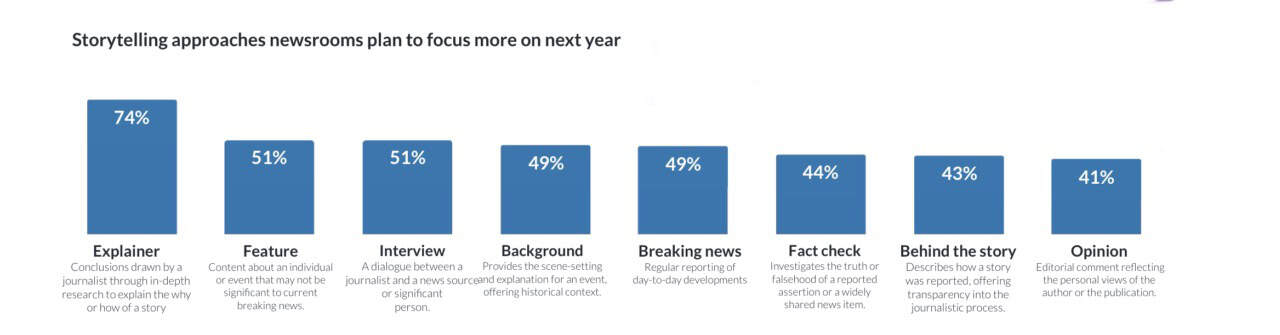
Editors need to commit to more in-depth, generalist explainers that address current affairs issues with fewer pontifications from experts keen to justify their well-earned degrees with stuffy broadsides of academia. Journalists will probably need to push for this from the ground up.
Shaping the news
“The word audience will go out of style, because I think you’re going to serve communities instead of audiences,” said Chua.
“The other side of it is original content [but] the two are not necessarily connected. You can do great original content and have zero community. There are some business models around that.”
“The idea to have enough voice, have enough standing in a community that people want to see what you have, although you are not directly serving them, because you are turning out things that you think are valuable.”
“The other strategy is to know your audience so well, to know your community so well, that you’re actually serving them with what they need, and I don’t know that it matters [then] if what you’re serving them with is entirely created by you.”
“If you know this community needs [specific information,] you could serve them by going out and getting that information for them.”
Chua warns that this adjustment has a definite timeline and newsrooms must move quickly to craft their news packages in a form that aligns with modern news consumer expectations.
“I think we have two years, maybe three, to get with the program and the pace of change is just terrifyingly slow. We’re very focused on ourselves [when] we should be focused on the products people want. If we create the products, I’m not sure that the newsroom will follow or the organization will follow, but if we don’t create the products, it doesn’t matter what we do.”
Chua’s Semafor, which publishes six editions globally, breaks out the structure of its long form stories into presentations that offer discrete entry points, Facts, Analysis, Counterargument and Related stories, giving the reader multiple facets to consider.
It’s one exploration of the concept of liquid content, reporting that flows into different distribution jars and takes the shape suitable to that channel, usually assisted by AI tools.
“If you already knew the facts, you could just skip to our analysis. If you didn’t know the facts but you hated our analysis, you could just read the facts. If you wanted to know what the counterargument was, we have that. As opposed to our breathless, perfect prose.”
The approach is a response to the reality that AI can create a serviceable narrative and that journalism time might better spent working on clearly articulating facts with an audience-focused presentation.
“It’s an unpicking of the entire, not just container, but the entire product that we have spent the last 150 years making and we really have to grapple with that as a concept.”
“If people want articles, I will give them articles and I can give them long articles, short articles and give them how much text they want,” said Stiero

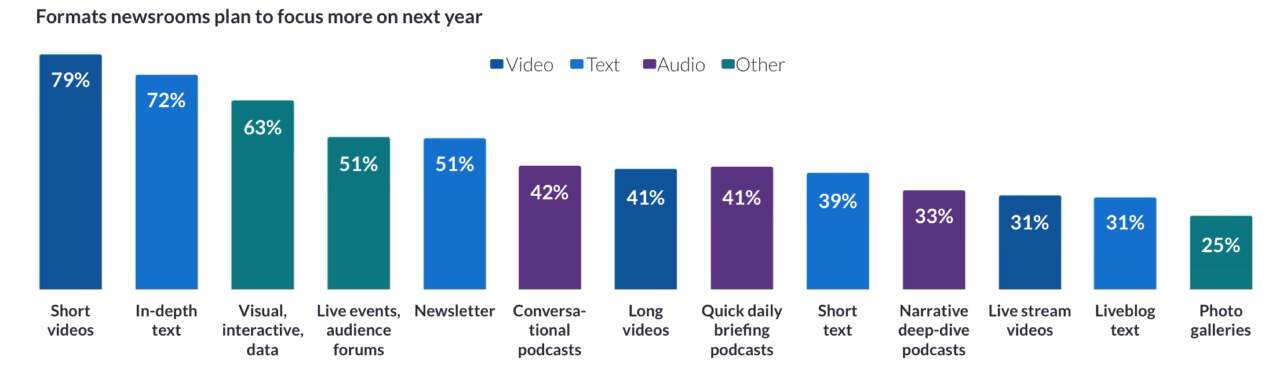
“The problem is that we structure our journalism around that format, but why should the article be the mother of all formats?”
“Journalists, when they’re out in the field, they think in articles, and then they come back with articles, but that’s not what we need anymore.”
“Good storytelling could be in every format you want. We need structured data so we can reformat it. That could be through a chat interface, that could be audio, that could be video. That is the real change for the journalists who went into this profession, because they love to write.”
“There may be a room for you in some newsrooms, but we have to go back to what is journalism about. It’s about getting the facts, getting the facts that people try to hide and then bringing it to the public and setting it in context. The products we deliver in the future will be nothing like what we do today.”
Regional view: This may be the most difficult thing to change in newsrooms, but the seeds of rethinking how news is presented won’t come from media managers who rarely understand the process or even editors who have a career’s worth of doing journalism a particular way.
Change will have to begin as skunk works projects by journalists, who should feel a strong urgency to master new methods of presenting primary source reporting.
Journalists are the living engines of the news resource, the photographers, reporters and videographers who record the reality before them but who have been programmed to think of the edited segment or published story as the end product rather than as one expression of news presentation. The change, as Stiero explains lower down is unlikely to come from the editorial leadership, no matter how clear the need to change becomes.
Engagement trumps reach
I’ve argued in this space for more than a decade that closing online comments sections by local media houses, most often because of an unwillingness to commit resources to moderating them, is not just a relic of an age of one directional media discourse, it was an act of deliberate audience engagement self-mutilation.
Phoebe Connelly, formerly Director of Next Gen Audiences, The Washington Post and currently a student of organisational and social psychology, considers the comment space dynamic, “There will be the people who are active in the comment section, who are replying, who are in the Substack thread, vocally offering suggestions, and then there’s just people who are lurking.”
“[You need to] think about the wide group and the hyper-specific group and the interplay between those, creating a space where people can drop in, can observe.”
“I think there’s ways of engaging and creating space for that that are really interesting, and I do think that’s a space for the talkers to talk and the listeners to listen.”
“We often are so afraid of focusing just on the talkers that we forget that the lurkers are there to listen to the talkers. So thinking about those dynamics and creating a healthy space for that can engage the people that are coming to you.”

Chua explains how reaching communities rather than a monolithic audience will become a reality.
“I think the future is, with apologies to everybody who’s trying to grow big, is anti-scale. The future is super-serving. You can super-serve 100 million different audiences, and good for you if you can do that, but if you don’t super-serve specific audiences and figure out how you can chain them together, it’s not going to work.”
“The goal of reach, historically, has been to amortize your cost over as many people as possible, and that drives your margin. In the future, your margin is going to be driven by a smaller group of people that really care about you. If you can chain multiple different audiences together with some synergies between them, good for you.”
Regional view: The media will never connect with its audience as a monolithic institution, no matter how grand and pervasive it believes its brand to be. Trust is given to people, not buildings or corporate suites.
People respond to other people and engage with their journalism based on that connection. It’s always been that way, but the multimedia characteristics of digital delivery have driven a clear wedge between the concept of a journalism brand and journalists as personalities.
YouTube channels stand or fall based on the connection that audiences have with the people presenting. It’s no longer enough for the audience to divine the character of the journalists they are following through sophisticated literary osmosis. The audience demands clear and unequivocal indicators of who they are and what they stand for.
This is not an easy bar for career journalists to vault or even feebly crawl under. Radio has proven to be the most resistant to audience drift among all media forms and I suspect that it’s because radio is all about perceived character and the allure of being spoken to (or shouted at).
Without video to offer visual cues or written words to ruminate over, radio soars or falters based on the ability of its most successful presenters to create an intimate presence for its listeners.
That persistent and undeniable radio connection offers a gateway example for journalists to understand how outreach to the regional audience might be shaped.
Content creators and newsroom rockstars
Gina Chua is realistic about the relationship between content creators and traditional media.
“To get really cynical about it, you’re using them and they’re using you and for the time that you both use each other, then it’s a fair exchange; more or less. I think the broader issue that newsrooms have to think about is not the pay structure, but the two-tier structure that this creates.”
“Newsrooms have historically been, for better or for worse, relatively egalitarian structures. Union contracts have been built around the idea of equal work for equal pay.”
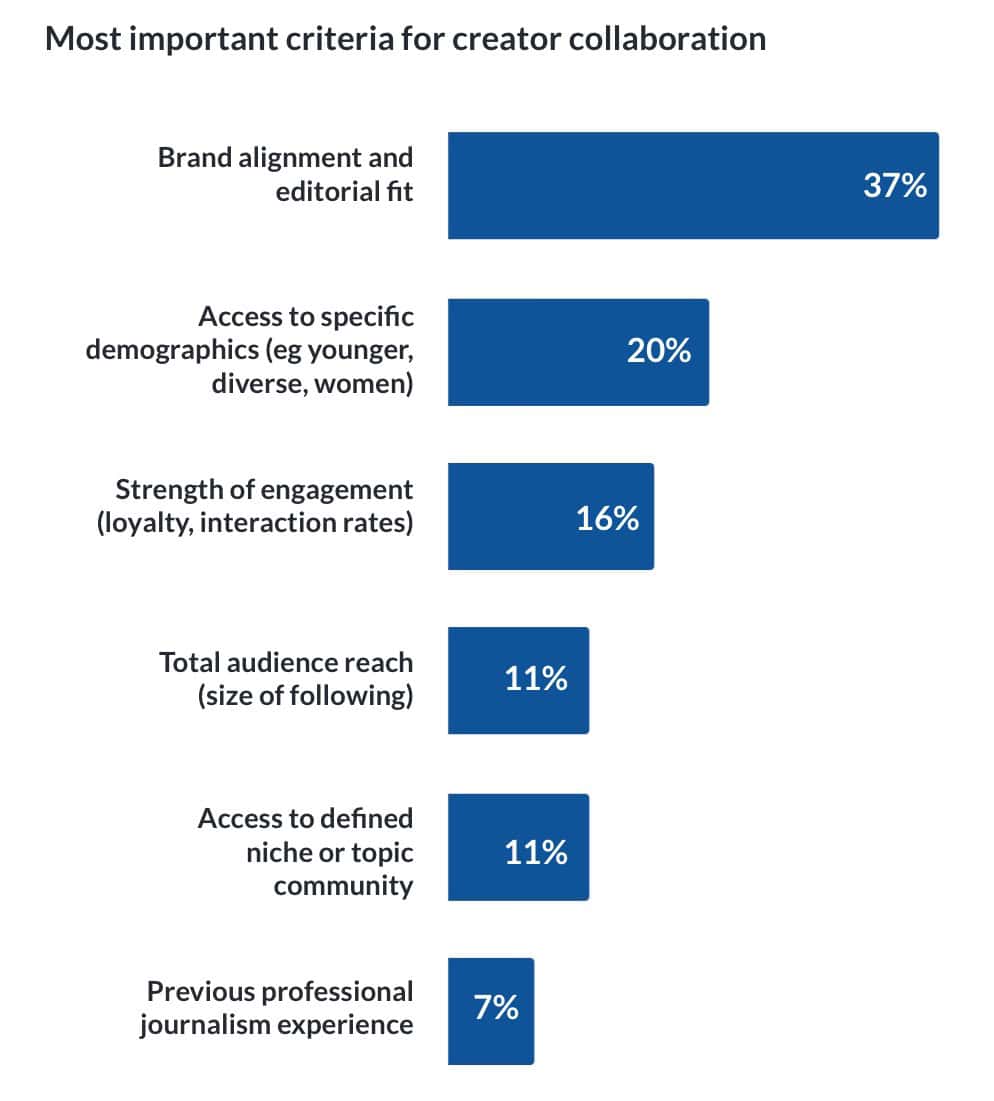
“[But] we’re moving from the era [equivalent to] contract movie film studios where you just paid your stars. They were just hired hands.”
“We’re moving to the studio model, where people try to get Brad Pitt or George Clooney, and they become much more independent players. So there is a structural change coming to newsrooms, and we have to confront that head on.”
“This is where I think voice authenticity really matters, and I don’t know that you can just create it. It’s not like you can simply say this person’s going to be a film star. Some people have charisma, some people don’t. You can train, you can build for it, but as you can see from Hollywood, not everyone makes it.”
Gard Stiero advocates more robustly for giving journalists a chance to step up.
“It’s both an opportunity and a threat for us. We try to partner up with the creators that are connected to our brand that can help us to connect to the broader audience. I try to partner up, but the problem is that I don’t really understand what I can offer them.”
“They have their business, they have their audience, they are production companies in themselves. So we have to understand what can we offer them to want to be a part of our organization.”
“At the same time, when it comes to some of our reporting, I want our reporters and our brand to be in the center of that reporting. When it comes to the core of our journalism, I want to up-skill our reporters to understand what they can learn from creators to communicate better with the audience than they do today.”
“I see this as an opportunity, a new way of connecting with the audience that we can learn from the creators. What do they do well? They are not doing original reporting, they are using our content. They are just presenting it in better ways than we are able to.”
Connelly urges newsrooms to keep the core value proposition of their work at the forefront of collaborations with content creators.
“What is it that your newsroom is doing that you can contribute, whether that’s your own people disseminating it as creators or [using] outside creators? If you lose sight of that core value proposition, that’s where creative programs go awry.”
“Hires or collaborations that never connect to the core value, which is why people are going to pay you in the first place and that’s where I think these experiments or full programs fall apart.”
Regional view: This hasn’t been much of an issue in the region. Influencers and content creators are hobbled by challenges getting monetized on platforms and growth opportunities have been limited.
The interactions I see seem to head in the opposite direction, with online creators jumping onto traditional media to get a boost from their dwindling but available audiences to kickstart their own wider online presence.
As with every major shift in media in the region, we can expect this evolution to be a temporary situation, which gives us time to think through how these collaborations can work to our mutual benefit. Will we do that? I doubt it.
We’re probably going to wait until the region begins to monetize more effectively and develop major breakout stars that completely overwhelm traditional media’s ability to compete.
How to create newsroom change?
Gard Stiero, who leads a major print and online publication, is sober about the challenges that journalists face in moving media houses to meaningful change as well as the difficulties that forward-thinking media managers face in refocusing career journalists.
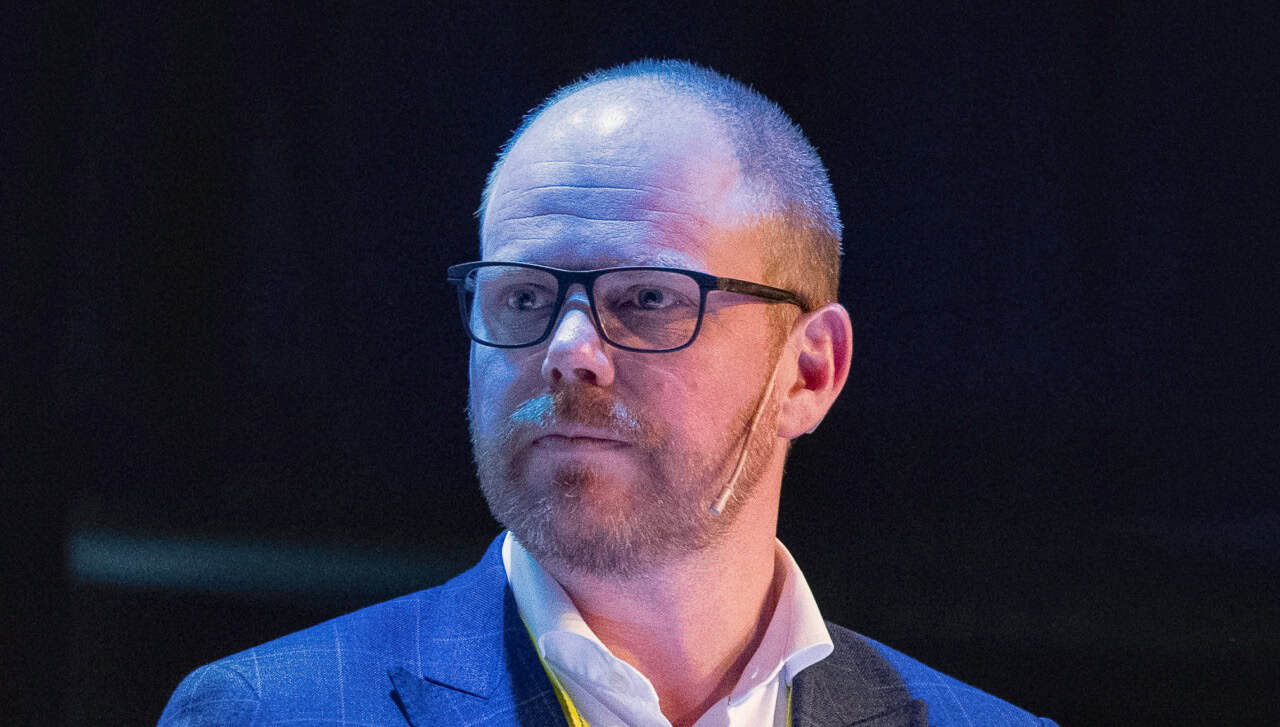
“It takes time and reporters are skeptical. They are critical. That’s what it means to be a reporter, in my opinion. First, I think that we have to understand that technology now changes exponentially, but organization changes quite slowly, and the bigger the gap between the possibilities of technology and the organization, the more vulnerable we are for changes. There is a lot to do.”
“We have an expression in Norwegian, and it’s probably the same in English, the fish rots from the head and down. That’s the same for news organizations, so you have to start with top management.”
“If you want to change an organization, you have to ask top management to be clear on the road that lies ahead and there must be room for friction and disagreement, because that’s what creates trust in an organization, where there’s room for disagreement.”
“What we are doing here is to break down silos between the teams because the team structure for the future doesn’t really make sense anymore. Breaking down the silos between product and newsroom has been really important for us to make collaboration between teams possible.”
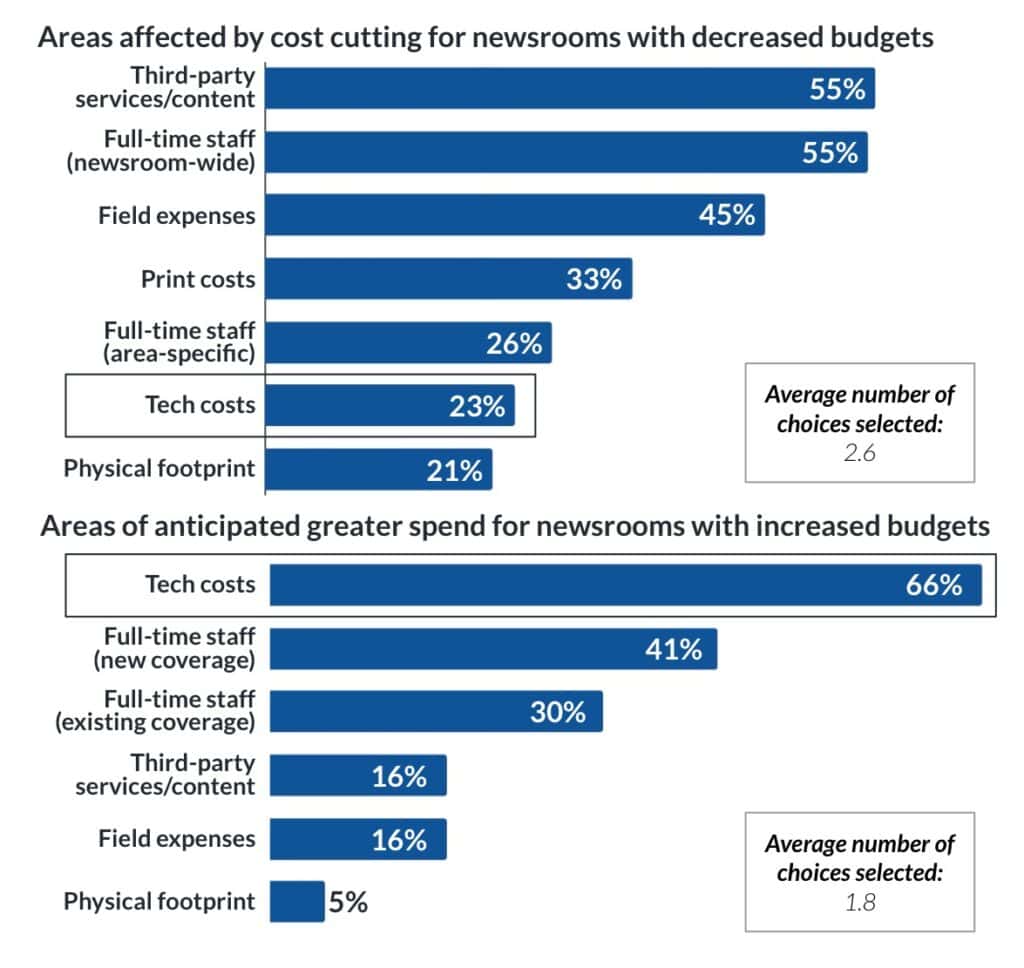
“We have been setting up different teams, we call them speed boats, that work ahead of the newsroom, they are working freely to seize [new opportunities]. What can the future be like? Then they can come back to the ‘tanker,’ the newsroom, and show what is possible with AI. This is what we can do in the future.”
Phoebe Connelly, who speaks like a journalist who has grappled with the practicalities of creating newsroom change, said, “In my experience, the blocker is usually that we feel like we have to get it exactly right, as opposed to just experimenting and jumping into it.”
“We can waste a lot of time building studios, buying the best cameras, as opposed to, and this is something that keeps coming up, this idea of hybrid teams, of taking people who have the existing video production skills, pairing them up with whoever has the scoop, the fact, the detail that you want to get to audiences, and then figuring out how fast you can get it out there.”
“I do have a lot of faith in saying, let’s be willing to experiment. You can always say, we don’t want to publish this.”
Regional view: Milking the sickly cow is not a long term strategy. It’s unlikely to prove robust even in the medium term. The running mistake that regional media houses seem comfortable making is to assume that the media problems of developed nations aren’t our problems.
That approach was supported by the slow adoption of broadband, particularly mobile broadband, which gave traditional media outlets a grace period that offered the illusion of protection.
But slow infrastructure development is not a plan, it was, in fact, a buffer of time, which gave media houses a chance to build a bridge between the solid and profitable traditional media of the past and the uncertain, mercurial future that was visibly destroying long-established media properties globally.
Gard Stiero runs a big newspaper that used to be much bigger, and he does so fully aware that the market won’t support many instances of that model.
The future of regional media will belong to clearly established verticals of specialty reporting, delivered by recognised and trusted personalities.
Despite the growth of AI garnished search engines and LLM answer engines, trusted information has to come from somewhere and without journalism, gathering independent information accountably, the wellspring of knowledge that we have come to depend on is at risk of being drowned in a flood of hallucination and misinformation.
The report is available here.
A post answering additional questions raised during the webinar and expanding on the discussion is here.


















 Urgency, awareness needed to combat sextortion
August 24, 2026
Urgency, awareness needed to combat sextortion
August 24, 2026
 The silent, growing danger of ransomware
August 17, 2026
The silent, growing danger of ransomware
August 17, 2026
 How should a newsroom of the...
August 10, 2026
How should a newsroom of the...
August 10, 2026
 FNP’s halting stumble to dubious relevance
August 3, 2026
FNP’s halting stumble to dubious relevance
August 3, 2026
 Samsung’s big bet on AI
July 27, 2026
Samsung’s big bet on AI
July 27, 2026
 The data centre dilemma
July 20, 2026
The data centre dilemma
July 20, 2026
 How should business and government embrace...
July 13, 2026
How should business and government embrace...
July 13, 2026
 How influencer marketing works in the...
July 5, 2026
How influencer marketing works in the...
July 5, 2026
 Yes, a website is work. Yes,...
June 29, 2026
Yes, a website is work. Yes,...
June 29, 2026
 No more fire in these wires
June 22, 2026
No more fire in these wires
June 22, 2026
 What the heck is chip binning?
June 14, 2026
What the heck is chip binning?
June 14, 2026
 Solving the region’s journalism problem
June 8, 2026
Solving the region’s journalism problem
June 8, 2026
 Tambini to journalists: “Keep doing what...
May 31, 2026
Tambini to journalists: “Keep doing what...
May 31, 2026
 How do we unfetter journalism from...
May 25, 2026
How do we unfetter journalism from...
May 25, 2026
 What the Canvas hack tells us...
May 15, 2026
What the Canvas hack tells us...
May 15, 2026
 Ghost women in AI? Hardly!
May 10, 2026
Ghost women in AI? Hardly!
May 10, 2026
 IShowSpeed: Here and gone
May 4, 2026
IShowSpeed: Here and gone
May 4, 2026
 How TT journalists can turn modern...
April 26, 2026
How TT journalists can turn modern...
April 26, 2026
 Reuters report on young news readers...
April 20, 2026
Reuters report on young news readers...
April 20, 2026
 The state of ransomware in the...
April 12, 2026
The state of ransomware in the...
April 12, 2026



Big Bird,
I scanned the article, so will not claim to have read it cover to cover.
But I did want to make a point..
I do believe that the future of journalism resides in taking sides!
,, or put another way, laying out your colours.
A clear statement of your values and the filters (like need democracy) through which you view / process world events.
Folks can agree or disagree with you but it makes it easier to digest your content, through your “exposed lens”.
In today’s world of AI generated everything, source of truth and impartiality are dead, values >> belief rules.
So trying to do journalism, as was created, would be a mistake..
.. in my opinion.
I’ve written about this several times, most recently here: https://technewstt.com/bd1518-the-journalism-challenge-to-come/
The changes that must be made are so pervasive, so sweeping and so alien to the status quo that it’s unclear how anything that needs to be done will ever get done.