


Above: AI photograph generated by Nano Banana.
Pending…
This is the fourth article about Digital Public Infrastructure published by Nicole Greene on her Substack. The first article is here. along with the second and third. Pending… is published with her permission.
The quiet rebuilding of how money moves
Inclusion looks like a small business that can accept payment from anyone, on any device, without paying a fee that costs more than the sale.
Auntie Dee opens the parlour on the corner at dawn. By six in the morning she has roast and fried bake done, fillings ready, the kettle on. By mid-morning the breakfast trade has rolled through. The afternoon brings children from school hungry for fudge and tamarind balls, and workers going home wanting a cold soft drink. She closes when the supplies are gone or the day is done.
She does not have a card terminal. The terminal would cost her more than the modest margin on a roast bake can carry: the rental, the merchant account, the percentage that comes off every sale. Everybody knows to bring cash. The occasional customer who forgets, or runs short, has to leave and come back, send someone to an ATM, or simply go without.
Trinis have invented a workaround for businesses with more lead time. The maker selling craft from home, with occasional pop-ups at UpMarket, will accept a screenshot of a bank transfer as proof, hold the goods until the funds clear. The delay is accepted as the cost of doing business.
This does not work for Auntie Dee. A transfer sent to her account this morning will not arrive for days. She is on the far side of even the workaround.
The third pillar
In September 2023, under India’s G20 presidency, the world’s twenty largest economies issued the New Delhi Declaration and, with it, the first multilaterally agreed definition of what core public digital infrastructure should look like.
The G20 did not name payments as a pillar by accident.
With India’s UPI as the proof case in front of it, the group had concluded that foundational digital identity, real-time payments, and data exchange/interoperability, taken together, were the conditions under which financial inclusion for the underserved actually became possible. The absence of any of the three reproduced the patterns of exclusion that decades of incremental policy effort had failed to dislodge.
Brazil kept the agenda when it hosted the G20 in 2024. South Africa carried it again in 2025. The countries that have not yet built the third pillar are watching the train pull out from a station they have not yet built tracks into.
Trinidad and Tobago has been inside that station for some time, and it is beginning to lay the tracks.
The friction we have learned to live with
A cheque written on one branch of a commercial bank takes four working days to clear at another branch of the same bank. Cheques between two different banks take longer. The Bankers Association and the Central Bank launched the Electronic Cheque Clearing System in February 2023 with an explicit target of reducing the cycle from four working days to two.
In Trinidad and Tobago, at present, a cheque written on one branch of a commercial bank takes four working days to clear at another branch of the same bank. Cheques between two different banks take longer.
Interbank electronic transfers, the ACH rail you use when you transfer to a recipient at another bank, are faster. Roughly twenty-four hours, on a good day. Not on weekends or on public holidays, of which we have no shortage. ATMs are expected to run out of cash on a long weekend – that is an unwritten rule.
LINX, our local debit network, is the closest thing the country has to a public retail payment rail. Debit card transactions accounted for 57.6 per cent of the country’s electronic payments in 2024, and Q3 2025 alone saw about 15.7 million LINX transactions. What LINX cannot do is reach beyond the physical merchant terminal, or cross borders. Many local businesses struggle to accept payment from potential online customers, and T&T cannot seem to move past a static brochure-website landscape.
The Central Bank operates a real-time settlement system for high-value interbank transfers. SWIFT is in place for cross-border transfers, used mostly by businesses and citizens who can absorb the fees. None of this is the rail Auntie Dee at the parlour can use, or the freelancer collecting a fee from a client overseas, or the small grocer in San Fernando trying to settle with a supplier on a Saturday afternoon.
What is missing is a public retail real-time payment rail.
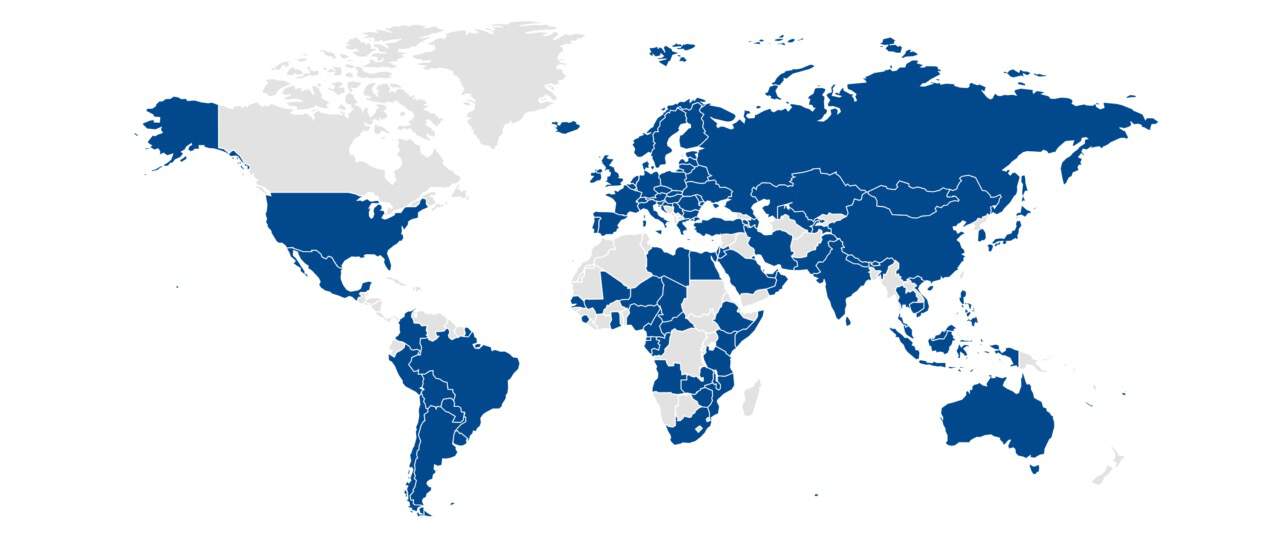
The World Bank’s running map of fast payment system deployments shows the gap shrinking each year. Most of South America has built one. Most of Europe. Most of Asia. Most of southern Africa. The blank spaces, the countries that have not yet deployed retail real-time payments, are clustered in places: parts of the Caribbean, parts of Central America, scattered patches of West Africa and the Pacific, a few outliers elsewhere. Trinidad and Tobago sits inside that cluster.
What is actually being built
Most people in T&T do not yet know that the rail is coming. Not because the work has been hidden, but because the work, until very recently, has been technical, intermittent, and reported in places most citizens do not read.
In October 2024, then-Governor of the Central Bank, Dr Alvin Hilaire, presented the project publicly at the Trinidad and Tobago Stock Exchange’s Capital Markets Conference. The next month, the Central Bank published a Public Education Series Note that named the gap explicitly: what is missing is a nationwide fast payments system allowing for easy, secure and almost instantaneous transfer of funds (PDF). The Note announced a pilot targeted for the first half of 2025 and full functionality by year-end.
Around the same time, the National Payments Corporation of India, the public-purpose body that operates UPI, signed a strategic agreement with the Government of the Republic of Trinidad and Tobago (GoRTT) to deploy a UPI-modelled platform in country.
In November 2025, after the sixty-fifth biannual meeting of the CARICOM central bank governors in Curaçao, Trinidad and Tobago was named as one of four jurisdictions piloting CAPSS, the CARICOM Payment and Settlement System. CAPSS is a regional cross-border real-time rail, modelled on the African PAPSS system, designed to let citizens and businesses send money between participating Caribbean countries instantly in their domestic currencies, removing the need for US-dollar intermediation in day-to-day transactions. The pilot includes the Bahamas, Barbados, Trinidad and Tobago, and the ECCU.
In December 2025, current Governor Larry Howai outlined the Bank’s strategic roadmap to 2030. Included (PDF) are UPI-based instant payments, full CAPSS rollout, operationalisation of the Payment Systems and Services Bill, and fully digital payments system by 2035.
That Bill is in public consultation as you read this. The window opened on the 16th of March, 2026. It closed yesterday.
The consultation is the moment the country decides not whether to build the rail, but how, and on what terms, and under whose rules.
What the rail actually is
In plain English..
- The rail is not a wallet or an app.
- It is the public infrastructure underneath.
- It lets money move instantly between accounts.
- It makes low-cost digital payments possible at everyday scale.
- The apps people use will sit on top of it, not replace it.
To understand what is being decided, it helps to know what is being built.
A real-time public payment rail is a piece of public infrastructure, built and governed by the state or by a public-purpose body operating under state mandate, that lets any account holder send and receive money to and from any other account holder in the country, almost instantly, at zero or near-zero cost, using simple identifiers like a phone number, a national ID, or a QR code instead of card numbers or proprietary app credentials.
Think about it like this.
- You and I live at the addresses we choose: a phone number, a national ID, a QR code generated on our phone.
- The state manages the address book and runs the delivery network: the registry that knows which address lives at which bank account, and the routing layer that moves the payment between banks.
- The banks hold the money in our accounts. They settle between themselves through the rail.
The state runs the post office. It does not hold the money. It does not see what is bought. The role it plays is comparable to the role the postal service plays: addresses and delivery, not contents.
A few clarifications, because the conversation gets crowded
A real-time public rail is not a Central Bank Digital Currency. A CBDC is a different thing: digital cash, issued directly by the central bank, sitting on your phone instead of paper notes in your wallet. The Bahamas issued the world’s first widely deployed CBDC, the Sand Dollar, in 2020. India is piloting the e-Rupee. Nigeria has the eNaira.
CBDCs are an interesting and separate conversation. The rail being discussed here does not create new money. It moves the money you already have, between the accounts you already use, faster and more cheaply than before.
It is not cryptocurrency. There is no blockchain. The system is sovereign-backed and runs on existing bank accounts.
It is not Apple Pay, Zelle, Venmo, or WiPay. Those are private apps, each one running on private rails. They are useful, but each one is a walled garden. Visa and Mastercard are card networks that take interchange fees on every swipe. PayPal and Stripe are payment processors that layer further fees on top. None of them is the rail underneath. The rail underneath is what we do not yet have.
What the world has already learned
Two countries have moved through every stage of this experiment in front of the rest of us, and the results are now a matter of public record.
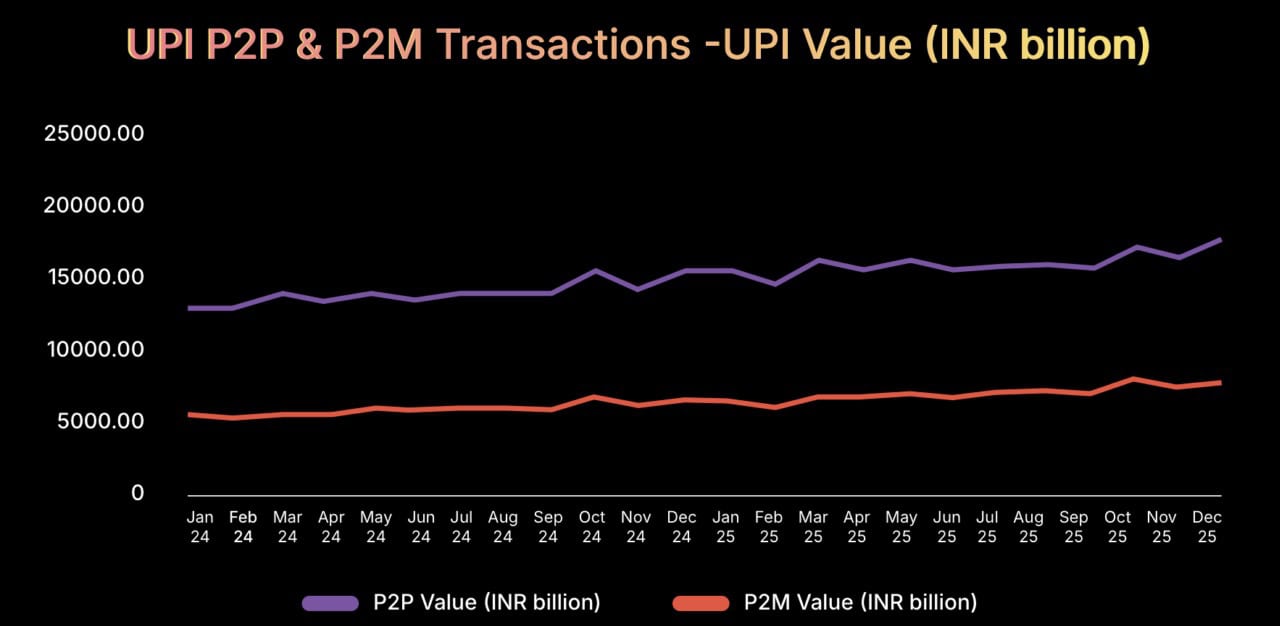
India launched UPI, the Unified Payments Interface, in 2016. By 2025, the system was processing roughly 228 billion transactions a year, moving the equivalent of more than three trillion US dollars through the country’s retail economy. Over 731 million merchant QR codes had been deployed, many of them paper print-outs taped inside the windows of street vendors and market stalls. The average transaction size, as of 2025, was about fifteen US dollars. UPI now accounts for roughly 85 per cent of India’s retail digital payment volume.
Brazil launched PIX in November 2020. Five years from launch, PIX had reached approximately 93 per cent of Brazil’s adult population. Industry estimates put PIX near 80 billion transactions in 2025, while official Brazilian Central Bank data reported BRL 28 trillion moved through PIX by October 2025, with around 170 million adult users and more than 20 million companies.
Inside Brazil, PIX has become the dominant retail payment rail by transaction volume, displacing both card networks and cash for everyday use. It is free to consumers. Merchants pay a fee of roughly one-third of one percent, compared with the two to three percent typical of card networks.
Two consequences of these rails matter most for a country like ours.
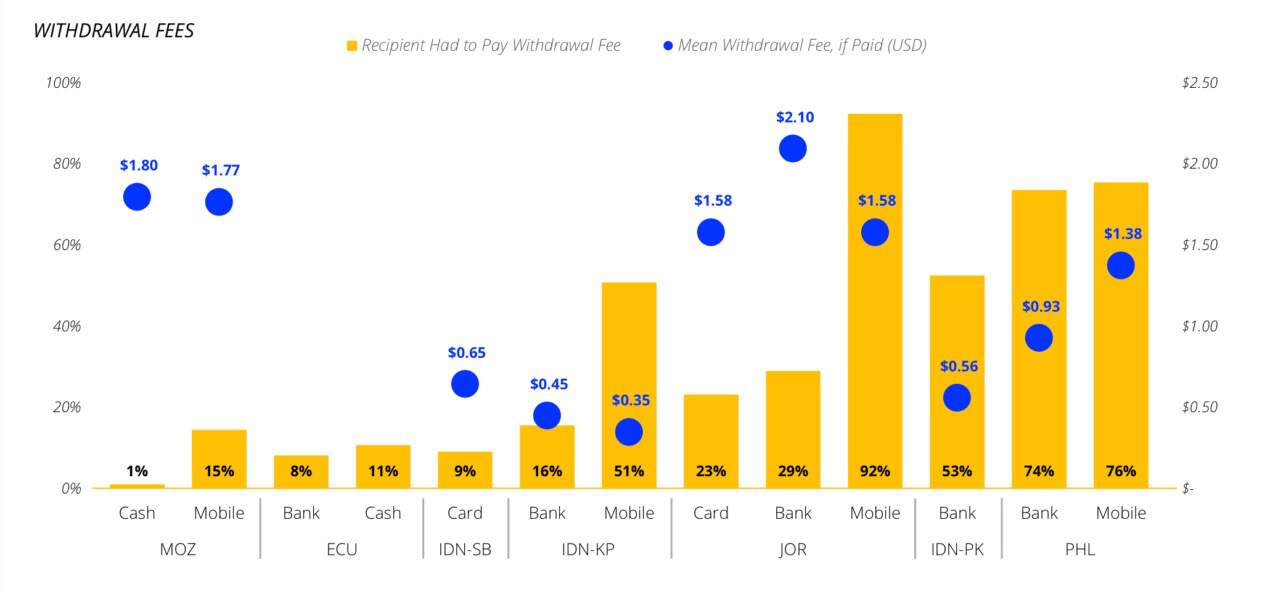
The first is the speed at which the state can reach its own people in moments of crisis. India’s Direct Benefit Transfer infrastructure reached roughly 200 million bank accounts during the COVID pandemic, most of them belonging to women, within days of the disaster declaration.
Brazil’s Auxílio Emergencial paid relief to about sixty-eight million people, roughly one-third of the population, many of them previously unbanked. The World Bank’s G2Px Initiative documents 865 million people in developing countries opening their first formal financial account specifically to receive a government payment, a doorway into the formal financial system that would have been considerably harder to walk through under any older regime.
For a hurricane-prone region, this is not a small detail. Where the rails are pre-built and citizens are pre-enrolled, emergency funds reach affected populations within hours of a disaster declaration, not weeks.
There is no version of disaster response in which slower money serves the citizen better. The single most compelling civilian case for public payment infrastructure in a small island state is that we cannot afford the alternative the next time a Category 4 storm makes landfall.
The second is what happens to small businesses and the informal economy when the cost of accepting digital payment is no longer prohibitive. Before UPI, India had roughly ten million card-accepting merchants. Today there are 731 million UPI QR codes in circulation.
The new acceptance points are not large retailers – they are micro-businesses for whom a card terminal was never financially viable. Brazilian small businesses surveyed by Fundação Getulio Vargas reported revenue uplifts of 15 to 20 per cent after adopting PIX, primarily because they could finally accept digital payments without the terminal cost structure that had kept them on cash-only economics.
Resistance
If a public real-time payment rail is so plainly useful, why does it provoke unease?
For the same reason any large piece of public infrastructure that touches money provokes unease. Payments touch trust and trust touches memory. The memory in many parts of the world includes states that have overstepped boundaries, creating distrust and lingering unease.
People assume that a state-run payments rail must mean a state that watches every transaction. The Indian and Brazilian rails are designed precisely to avoid this. The state runs the address book. The banks hold the money. The state does not see what was bought, only that a transfer occurred between two accounts. The architecture matters here as much as the law.
Payment metadata – who paid whom, when, how much – must be created and held under regulatory, legal, and audit conditions that mirror those that govern bank records today. Privacy law, access controls, audit logs and independent oversight will be critical to get right.
The Indian rail is governed by India’s evolving data-protection regime. Brazil’s PIX sits inside the country’s General Data Protection Law, which came into force in 2020 and modelled itself on the EU’s GDPR. The European Union, layering its Digital Identity Wallet regulation on top of GDPR and PSD2, is building a framework where payments, identity, and data exchange are governed together rather than in fragmented silos.
Trinidad and Tobago’s Data Protection Act has been on the books since 2011. Fifteen years later, it remains partially proclaimed. Only Part I and selected sections of Part II have been operationalised. The remaining sections, including the consumer rights and enforcement mechanisms that would give the law teeth, await proclamation. A Senate motion has called on the Government to proclaim the rest. The motion has not yet produced action.
A real-time payment rail without a fully proclaimed and enforceable data-protection regime is not a deployment any responsible regulator should approve. The legislative scaffolding has to come first, or come in parallel.
Some of the unease is also cultural and religious, and deserves more seriousness than technologists sometimes grant it. In parts of the Caribbean, as elsewhere, suspicion of any system that connects bank accounts to phones to government registries can be tied to questions of spiritual meaning and apocalyptic concern.
Resistance is a form of vigilance. Successful adoption relies on an architectural response, not a dismissive one.
What determines whether it works
The same qualities that make a real-time public payments rail a tool of inclusion, also make it a tool of risk. A transfer that goes in seconds, in error, also goes in seconds. Fraud that scales with adoption is fraud that, in the absence of safeguards, scales to the entire population.
The places where it has worked are the places that built scaffolding alongside the rails.
Brazil designed fraud reversal into PIX from launch. The Special Return Mechanism, known by its Portuguese acronym MED, lets banks reverse transactions where there is strong evidence of scam or user error. Night-time transaction limits cap exposure during the hours when people are most vulnerable. Participating institutions report fraud through standardised channels.
India has been visibly tightening its scaffolding after scaling, the harder and more expensive sequence. The Reserve Bank of India established a Central Payment Fraud Information Registry that uses machine learning to monitor transaction patterns. The National Payments Corporation of India mandated that beneficiary names, the actual name on the receiving bank account, must be displayed to the sender before confirmation. The pull feature, which had allowed a stranger to request a payment from another user and which had become a known fraud vector, was discontinued in 2025.
Five things determine whether a rail like this delivers inclusion or replicates exclusion on faster wires.
- A fully proclaimed Data Protection Act, with the consumer rights and enforcement provisions the partially-proclaimed Act presently lacks. Without it, the rail runs on architecture without law.
- Fraud reversal designed in from launch, on Brazil’s MED model. Not retrofitted three years after the first wave of scams.
- On-ramps for the unbanked and underbanked. The Trinidad and Tobago International Financial Centre (which no longer formally exists) estimates that at least 25 percent of the population is underbanked, drawing on the National Financial Inclusion Survey 2023. A rail that requires a smartphone, a bank account, and digital fluency to use will not reach the people the inclusion argument is built around. Brazil’s Caixa Tem app, India’s Jan Dhan inclusive bank-account programme, and the deliberate design of zero-fee acceptance points are not optional features. They are the inclusion.
- Merchant support for Auntie at the parlour and the doubles vendor in Curepe. The QR sticker at the stall, basic training, and access to a phone that can run the wallet. Without these, the rail reaches the people who already have card terminals and misses the people who do not.
- Accessibility for older Trinidadians, people with visual or motor impairments, and people without smartphones. Fast is not fair if the design assumes a particular kind of user.
These are not optional features that follow deployment. They are conditions of legitimate deployment, and they are what a Bill in consultation should address before it leaves consultation.
The Caribbean dimension
There is a regional dimension worth naming briefly, because it sits on the same agenda.
CAPSS, when it goes live, is designed to let a small business in Port of Spain pay a supplier in Bridgetown in seconds, in a transaction that feels to both parties like a local-currency transfer. It will let a daughter in Nassau send money home to her mother in Roseau without paying cross-border remittance fees that, at international averages, run into double digits. It will let the Caribbean common market actually operate as a common market for small transactions, not just for large freight.
This is what Singapore and Thailand built bilaterally in 2021 with PayNow and PromptPay. It is what India and Singapore built between UPI and PayNow in 2023. It is what the Bank for International Settlements is building multilaterally through Project Nexus. CAPSS is the Caribbean version of that approach.
It also depends entirely on what each participating country does with its own domestic rail and governance scaffolding. Regional infrastructure is only as strong as its weakest link.
The architecture, completed
A digital economy needs three things working at once: a way to know who someone is, a way to share what is known about them without giving away more than was asked, and a way to move value once the questions are settled.
The countries that have built all three are running a different kind of economy than the ones that have built one or two. Most of the difference is invisible. None of it is small.
Auntie Dee does not know any of this. She is still working in cash.
She will not be the last woman in T&T selling breakfast to a community heading to work and school. She might be among the first who never has to send anyone away for forgetting a wallet.
About the author

Nicole Greene is a strategic communications professional and GovTech specialist based in Trinidad and Tobago. Her work focuses on Digital Public Infrastructure (DPI) – the foundational digital systems that allow modern states to recognise, transact with, and serve their citizens – and the communications conditions that determine whether those systems are adopted, trusted, and used.
She is the founder of Women in GovTech Caribbean and the author of ADAPT (Adoption-Driven Adaptive Planning for Transformation), a communications-readiness framework for DPI implementations. Her four-part DPI series examines the architecture beneath digital government. She writes from Port of Spain, and her work can be found at nicolegreenett.substack.com.
This is the fourth and final article in a four-part series on Digital Public Infrastructure. The first, “The Invisible Architecture,” introduced DPI and the global movement behind it. The second, “The Architecture of Agreement,” examined data exchange. The third, “Proof of Life,” examined foundational digital identity. This piece completes the overview of the architecture – digital payments as public infrastructure for a digital economy.



















 In a US university film lab,...
September 7, 2026
In a US university film lab,...
September 7, 2026
 Declaring independence from mobile roaming
August 31, 2026
Declaring independence from mobile roaming
August 31, 2026
 Urgency, awareness needed to combat sextortion
August 24, 2026
Urgency, awareness needed to combat sextortion
August 24, 2026
 The silent, growing danger of ransomware
August 17, 2026
The silent, growing danger of ransomware
August 17, 2026
 How should a newsroom of the...
August 10, 2026
How should a newsroom of the...
August 10, 2026
 FNP’s halting stumble to dubious relevance
August 3, 2026
FNP’s halting stumble to dubious relevance
August 3, 2026
 Samsung’s big bet on AI
July 27, 2026
Samsung’s big bet on AI
July 27, 2026
 The data centre dilemma
July 20, 2026
The data centre dilemma
July 20, 2026
 How should business and government embrace...
July 13, 2026
How should business and government embrace...
July 13, 2026
 How influencer marketing works in the...
July 5, 2026
How influencer marketing works in the...
July 5, 2026
 Yes, a website is work. Yes,...
June 29, 2026
Yes, a website is work. Yes,...
June 29, 2026
 No more fire in these wires
June 22, 2026
No more fire in these wires
June 22, 2026
 What the heck is chip binning?
June 14, 2026
What the heck is chip binning?
June 14, 2026
 Solving the region’s journalism problem
June 8, 2026
Solving the region’s journalism problem
June 8, 2026
 Tambini to journalists: “Keep doing what...
May 31, 2026
Tambini to journalists: “Keep doing what...
May 31, 2026
 How do we unfetter journalism from...
May 25, 2026
How do we unfetter journalism from...
May 25, 2026
 What the Canvas hack tells us...
May 15, 2026
What the Canvas hack tells us...
May 15, 2026
 Ghost women in AI? Hardly!
May 10, 2026
Ghost women in AI? Hardly!
May 10, 2026
 IShowSpeed: Here and gone
May 4, 2026
IShowSpeed: Here and gone
May 4, 2026
 How TT journalists can turn modern...
April 26, 2026
How TT journalists can turn modern...
April 26, 2026