
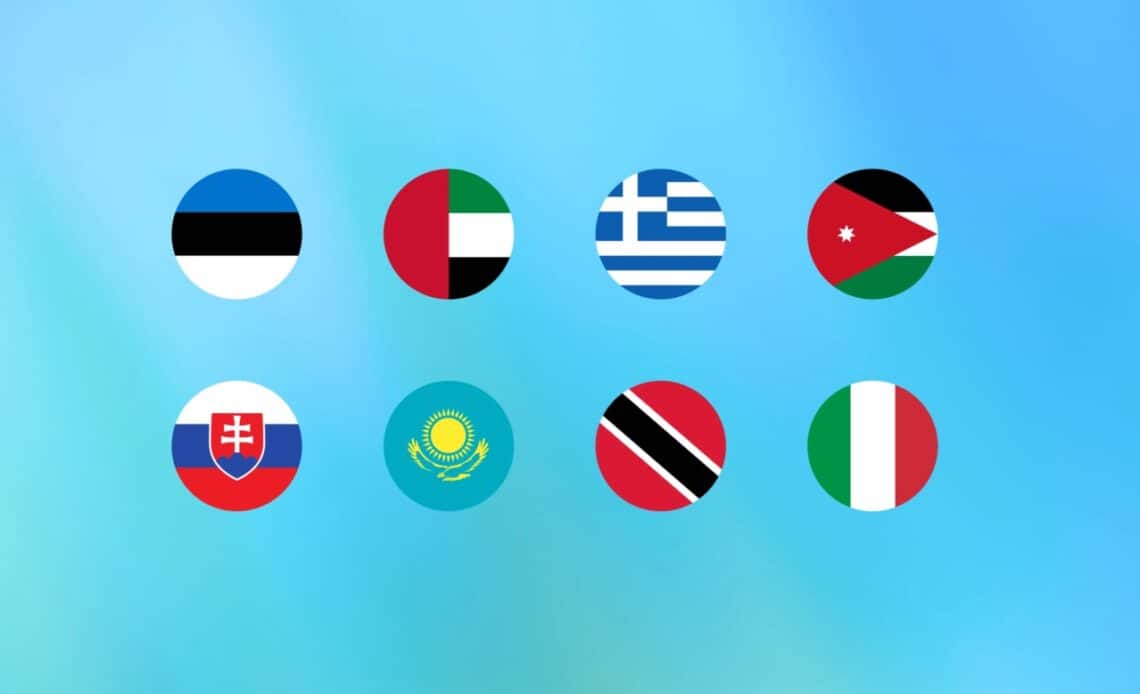
Above: Image courtesy OpenAI.
OpenAI announced a new Education for Countries initiative as part of its OpenAI for Countries initiative, an effort to build “democratic AI” that is modeled on its Stargate project an America focused investment in AI infrastrcuture that it announced earlier in January in partnership with Oracle and Softbank. The project has started with a supercomputing campus in Abilene, Texas.
The first cohort of the Education for Countries outreach is composed of Estonia, Greece, Italy’s Conference of University Rectors (CRUI), Jordan, Kazakhstan, Slovakia, Trinidad & Tobago, and the United Arab Emirates.
“We will work with governments and university consortia to bring AI into education systems to personalize learning, reduce administrative burden, and prepare students for the workforce,” OpenAI said in a statement released today.
“AI tools like ChatGPT Edu have already been deployed nationwide in Estonia, across public universities and secondary schools, reaching more than 30,000 students, educators, and researchers in its first year. Longitudinal research partnerships are also underway, such as a large-scale study with the University of Tartu and Stanford, to measure how AI affects learning outcomes among 20,000 students over time.”
“As AI is introduced at scale, rollouts typically follow a phased approach, starting by equipping educators with the tools and training they need to lead AI use in classrooms. In higher education, ChatGPT Edu is already available to students. In high schools, student access begins through small pilots developed in close collaboration with local leaders, to ensure safety and alignment with local curricula.”
“These pilots are paired with ongoing work by OpenAI to strengthen protections for young people who use ChatGPT, including age-appropriate model behavior improvements and developing AI literacy content for educators with trusted partners like Common Sense Media.”
The full statement on the Education for Countries project is here. OpenAI’s statement on AI for Countries is here.
















 The state of ransomware in the...
April 12, 2026
The state of ransomware in the...
April 12, 2026
 Digital döstädning
April 5, 2026
Digital döstädning
April 5, 2026
 The garbage infesting my in-box
March 30, 2026
The garbage infesting my in-box
March 30, 2026
 TSTT’s payments problem (updated)
March 30, 2026
TSTT’s payments problem (updated)
March 30, 2026
 Is Apple’s Neo the One?
March 22, 2026
Is Apple’s Neo the One?
March 22, 2026
 Privacy and your travel information
March 15, 2026
Privacy and your travel information
March 15, 2026
 TATT announces ambitious three-year strategic plan
March 9, 2026
TATT announces ambitious three-year strategic plan
March 9, 2026
 Samsung’s S26 leans in hard on...
March 1, 2026
Samsung’s S26 leans in hard on...
March 1, 2026
 A 2026 manifesto for Carnival
February 23, 2026
A 2026 manifesto for Carnival
February 23, 2026
 A hiss from a rose
February 15, 2026
A hiss from a rose
February 15, 2026
 News is a niche until it’s...
February 9, 2026
News is a niche until it’s...
February 9, 2026
 FT’s second Next Gen News report...
February 9, 2026
FT’s second Next Gen News report...
February 9, 2026
 Ransomware report notes fourth quarter 2025...
February 2, 2026
Ransomware report notes fourth quarter 2025...
February 2, 2026
 Hands-on with Apple’s Creator Studio as...
January 30, 2026
Hands-on with Apple’s Creator Studio as...
January 30, 2026
 Apple flirts with subscription software
January 26, 2026
Apple flirts with subscription software
January 26, 2026
 So long, and thanks for all...
January 19, 2026
So long, and thanks for all...
January 19, 2026
 Cyberedge reports on cybersecurity trends
January 12, 2026
Cyberedge reports on cybersecurity trends
January 12, 2026
 Samsung’s ZFlip 7 shows steady improvement
January 5, 2026
Samsung’s ZFlip 7 shows steady improvement
January 5, 2026
 Digital New Year’s resolutions
December 29, 2025
Digital New Year’s resolutions
December 29, 2025
 WiPay announces new strategy for services,...
December 22, 2025
WiPay announces new strategy for services,...
December 22, 2025
Sounds like the old Microsoft strategy.
Get it into the schools, get students used to it, students leave schools and go to work where they eventually want to use the same tools.
After all what else do they know?
..today a lot of public administration (globally) is running on Microsoft,
Unless of course an administration has concerns about sovereignty of their information and their ability to influence their supplier (Microsoft).
I guess TnT’s population size and established schooling organization makes it ideal candidate.
.. much like it was for Cambridge Analytica.