
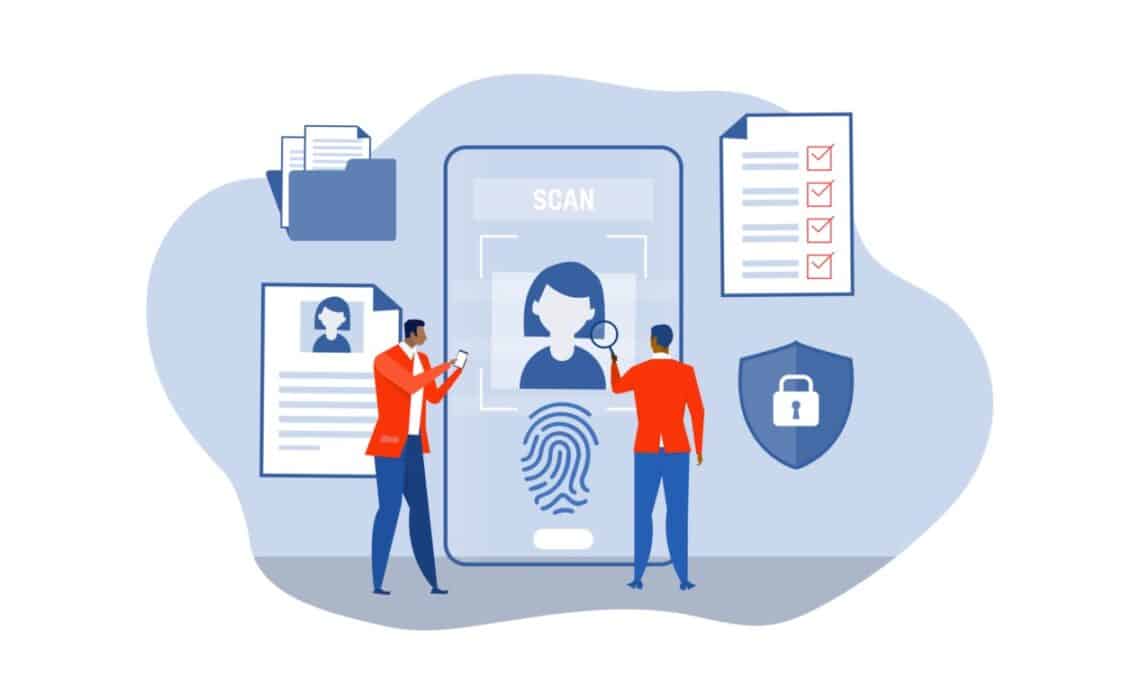
Above: Illustration by enjoys/DepositPhotos
Don’t choose the most popular name in the list of KYC tool choices. Every business has varied risks, consumers, and regulatory requirements. The needs of a fintech startup that is able to onboard thousands of users a day will be completely different from those of a niche marketplace or online game platform.
It’s worthwhile to step back before signing a contract to assess what’s really important to your business.
Begin with your compliance reality
Depending on the location and type of customers, KYC requirements vary. Other businesses require simple identity checks, and some businesses are subjected to stringent AML and counter-terrorist financing regulations.
When you are crossing borders, it becomes even more complicated. Regulations vary according to business geography and change more frequently than some businesses would predict. An effective KYC tool must help you to remain compliant without having to manually update it and implement workarounds.
Find a provider who supports flexible verification workflows that match global regulatory standards and the ability to sustain required audits.
Go beyond basic background checks
The vast majority of KYC tools claim to verify identities, but it’s important how they do it. There are solutions that are very manual, and there are those that offer automated document and biometric verification.
The most valid tools normally incorporate:
- Verification of the ID documents issued by the government.
- Liveness and facial matching.
- Proof or affirmation of residence.
- Limited services verification on the basis of age.
For multiple-country users, worldwide requirements must be effectively met. An application that works efficiently in a native country and fails to identify international identities will cause tension and slowdowns.
Consider fraud along with compliance
The first error businesses make is thinking of KYC as a checkbox exercise. Identity authentication is among the best fraud prevention tools that you can deploy.
Fraud attempts today are much more advanced with the use of fake IDs. deepfakes, synthetic identities, and account takeovers becoming more widespread. This is why one should consider selecting a KYC solution that is actively focused on fraud pattern recognition, not just document verification.
Artificial intelligence-based fraud identification, duplicate identities, and real-time risk rating can be visibly different, particularly in high traffic platforms.
Customer experience can’t be ignored.
Conversion is as well as security. Delays or a disorganized verification process may drive away honest users prior to the completion of onboarding.
Ask yourself:
- What is the time taken by the user in verification?
- Does it have a mobile-friendly process?
- Does it provide users with clear instructions on each step?
The most appropriate KYC tools can ensure that they remain secure without an intrusive experience. The quicker checkout and the minimal number of retries tend to lead to an increased number of completions and customer satisfaction.
Your KYC tool must be scalable
Your KYC solution must be capable of expansion even if you are small today. Switching later may be expensive and disruptive.
- Scalability is not about volume only. It also includes:
- Assistance to new countries and regions.
- Multi-language verification processes.
- Risk increases in levels of flexibility of verification.
- Cloud systems tend to be more efficient in managing expansion with no performance problems.
Check integration and technical flexibility
Your KYC tool must integrate into your current systems with little resistance. This is particularly necessary in the case of SaaS platforms, fintech applications, and marketplaces that have custom onboarding processes.
Look for:
- APIs and SDKs that are well-documented.
- Well-defined implementation manuals.
- Integrates with your existing technology stack.
A solution that is developer-friendly can save weeks of engineering efforts and save the long term maintenance headaches.
Put data security into practice
Personal data processed by the KYC providers is very sensitive, so security is a key factor. Ensure the platform has rigid data protection policies and adheres to applicable privacy laws.
Ask about:
- Encryption and safe storage of data.
- Regional and privacy compliance with GDPR.
- Information storage and destruction laws.
- Effective security measures are effective not only in securing your users, but also your brand name.
- Cost vs real value.
Pricing models vary widely. There are providers who pay on a per-verify basis; some provide tiered subscriptions; and others are a hybrid of the two.
Consider value as opposed to just looking at cost. A tool that minimizes fraud, lessens issues with compliance, and increases the onboarding speed slightly will give a far greater payoff in the long run.
Select a provider with a track record
Finally, consider the company you are doing business with. An reliable KYC provider must be reputable, receptive, and youthful within your business sector.
Common examples of established systems, such as Shufti, are usually selected due to their extensive global reach, high flexibility in terms of verification and fraud prevention solutions, as well as due to constant product innovations and support.
Final thoughts
No single KYC verification tool will work best for every business. Make choices based on your regulatory requirements, exposure to risk, customer experience objectives, and expansion strategies.
Considering these factors is worthwhile, and in this way, you will be able to choose a KYC solution that can not only ensure compliance but also facilitate easier on–boarding and future business expansion.
About the author

Alice Potter
Alice Potter is an analyst. She takes seminars on marketing and technology. She is passionate about new gadgets. She likes to travel in her free time.