

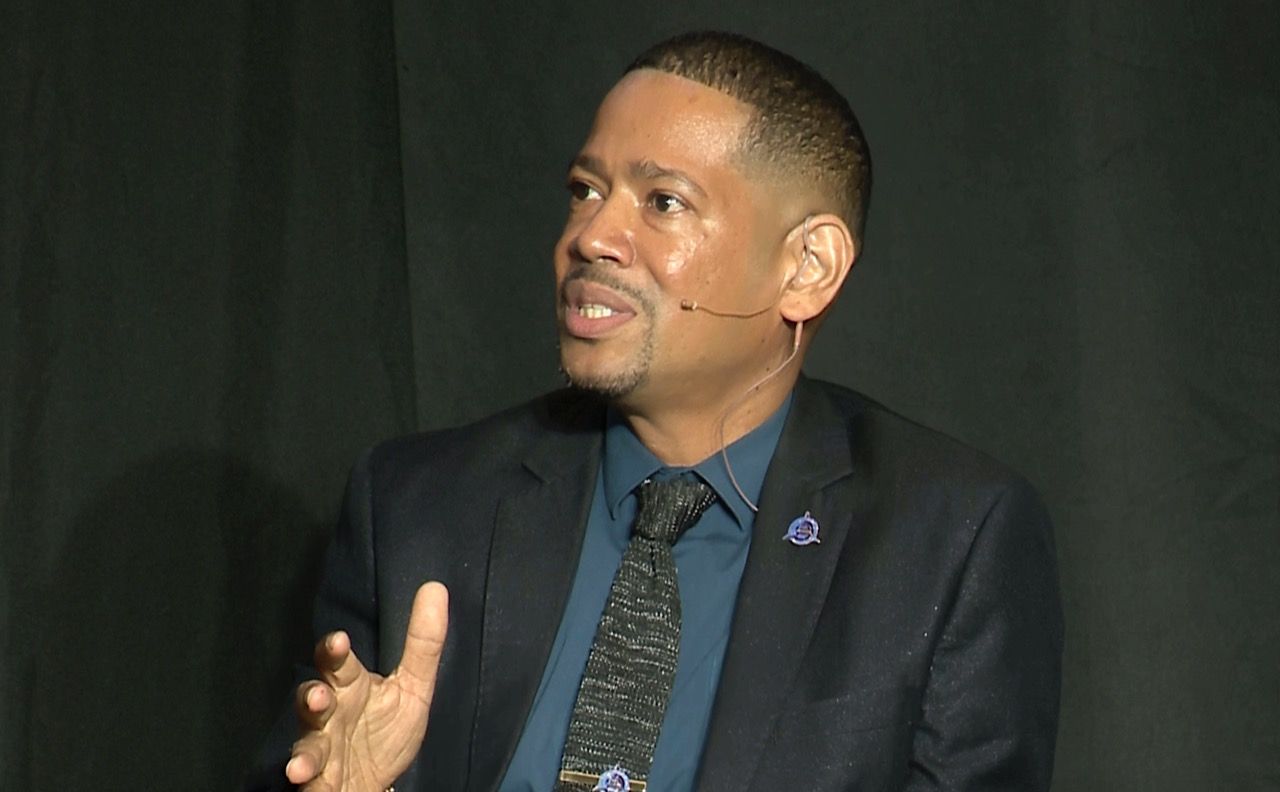
Above: TSTT’s Acting CEO, Keino Cox. Photo courtesy TSTT.
BitDepth 1556 for March 23, 2026
Let me say right up front. I was wrong; this is my problem. I made it happen.
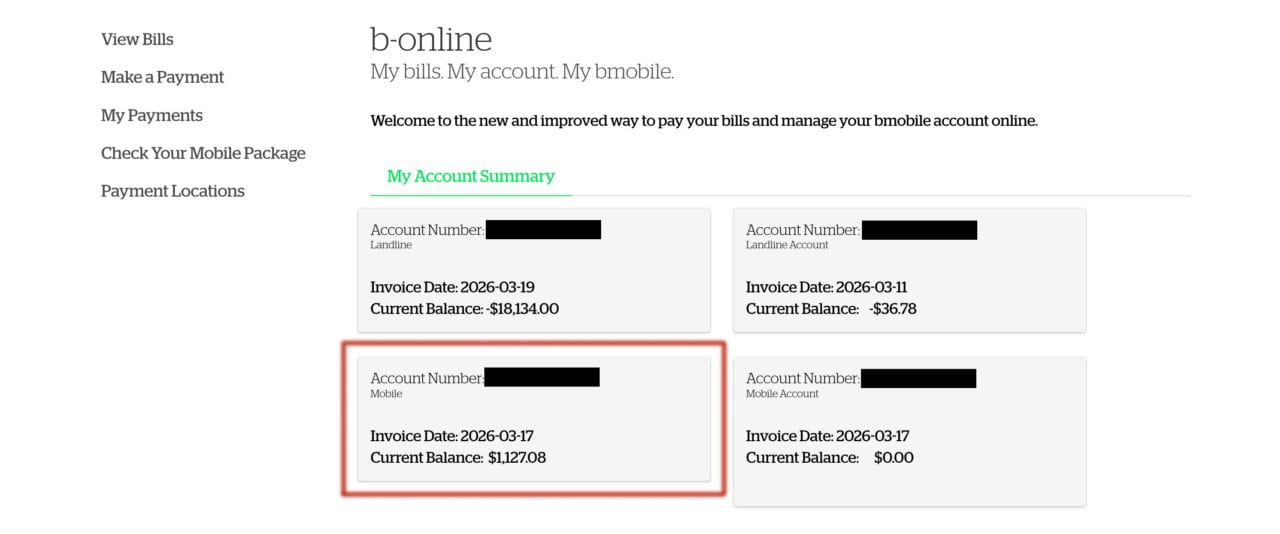
My mobile phone was cut for a few hours last week because I failed to make a payment on my account.
This has happened to me around fifteen times over the last ten years.
I forget. Or think I paid the bill. TSTT, indeed every provider, deserves to be paid for the service they provide.
Also? Getting reconnected is a lot easier than it used to be. I don’t have to show up at an outlet in person with a bill to sort things like this out.
But is it as good as it should be? In this year of our Lord 2026, post-Covid?
Nowhere near where it should be, in my experience.
Six years ago, I began an investigation into the problems plaguing TSTT’s billing systems. After almost a year, the company responded to specific questions regarding its software back-end and promised that issues with uncredited payments would be cleared up within six months.
Now I’m beginning to wonder if whatever was done to manage the more egregious issues wasn’t just a plaster on a sore that’s beginning to ooze pus again.
Over the years since, I’ve settled into a rhythm with my TSTT payments, even when I do make payments on time. I make the payment, send a screenshot of the onscreen payment details, and email it to a dedicated email address that the company has set up for that.
That’s always been vaguely unsettling to me. An email address that confirms electronic payments for a human viewer in a system that is purportedly digital.
Something along the way seems to have collapsed in what should be an efficient, all-digital payment and verification loop.
It’s a stupid system, but over the last year, TSTT has managed to make the process even worse.
It seems that there are now scam artists who fake that digital receipt, so TSTT now requires that electronic payments from a banking app must include the bank’s logo.
But what does that tell us about TSTT’s payment reconciliation systems that simple, small money fraud doesn’t show up in a matter of days for official attention?

My bank’s app does not have a logo present on a receipt that I can screen capture. For last week’s reconnection, TSTT demanded that the transaction be screen captured in a full browser (something that my bank has also made a maddening experience).
Then there’s a wait on the phone because the customer service representative apparently doesn’t have a computer that can open a PNG file.
The thing is, it isn’t clear how a bank’s logo is a defence against digital forgery, since anyone capable of mocking up a fake digital receipt can certainly toss a bank’s logo into that mix.
It’s a security precaution that serves only one real-world purpose, to apply bus brake pad level friction to an already broken process.
To be clear, I pay for all my utilities using the same banking app with only one exception, the Digicel account that I maintain for an underage child. The Digicel prepaid system is also broken.
All I can do is resend top-ups to that phone. I cannot initiate a new payment with a different amount to that device on that account.
At some point, DigicelTT was advertising for IT talent capable of tackling that problem, so perhaps one day it will get fixed. But it’s not a deal breaker, it’s just an annoyance.
But annoyances, built up inexorably over time, are what cost companies customers.
TSTT continues to play a defensive game with the customers it has, as if there are no alternatives available. Four consecutive managing directors of Digicel offered to port my number over to their service. I never took up the offer, not because I’ve been a TSTT customer for 35 years but because every service has its problems.
Eight years ago, a Flow truck basically took up residence on my street in St James to figure out why I was getting dial-up upload speeds on a fibre broadband connection.
Nobody else noticed the problem because they weren’t uploading much more than Google requests and the occasional email (this is a sedentary neighbourhood).
The experience is also different with TTEC and WASA, which have two-month and three-month billing cycles respectively, a forgiving span of time for fragile memory.
Flow sends multiple reminder emails about upcoming payment deadlines.
TSTT mostly stays quiet and just cuts customers off when one payment behind becomes two. Which is, y’know, a choice, but it’s one that takes nothing into account beyond a meter running out.
To the machine that cuts out service on a clock, the customer is not a person, they are a number that’s fallen into arrears.
To the hapless customer service representatives who answer *100, they are angry voices demanding answers.
For the record, I never quarrel with customer service people, my ire is reserved for the nitwits who saddle them with cobbled together systems that turn their working lives into a living hell of clumsy account information confirmations that they know, in their hearts, are an affront to the very idea of customer service.
What are TSTT’s options to address this pain point for their customers? Like every service that’s hoping to make their cash flow digital, they would prefer to have those transactions happen through their payment portal.
There are still people who are more comfortable making their payments in person, at a cashier, and getting a physical receipt, but there’s a far greater share who want to deal with all their bills in their bank’s app in one brutal gouge every month.
Mobile phone apps allow you to create templates that once tested, work every time and make the rapid-fire diminishing of one’s bank account seamless, if not painless.
TSTT does send notifications that their bills are due, but I get at least four of them, three from accounts that have been closed for years and continue to shamble along as zombie presences in the company’s payments architecture.
I cannot offer useful conjecture about why TSTT’s payments system is so dramatically and painfully behind the very shallow curve established by every other utilities company in this country, but it is.
Its failings are patched over by an expensive human resource deployment that chases after emails and frets about missing logos as certifications of payment.
What is clear is that when a company makes it troublesome to give it money, it is creating a problem that cuts to the heart of its business purpose.
Customers aren’t the problem here; a faulty, penalty-laden idea of customer service is. Every business has choke points and road bumps, but taking money from the punters should never be one of them.
















 TSTT’s payments problem
March 30, 2026
TSTT’s payments problem
March 30, 2026
 Is Apple’s Neo the One?
March 22, 2026
Is Apple’s Neo the One?
March 22, 2026
 Privacy and your travel information
March 15, 2026
Privacy and your travel information
March 15, 2026
 TATT announces ambitious three-year strategic plan
March 9, 2026
TATT announces ambitious three-year strategic plan
March 9, 2026
 Samsung’s S26 leans in hard on...
March 1, 2026
Samsung’s S26 leans in hard on...
March 1, 2026
 A 2026 manifesto for Carnival
February 23, 2026
A 2026 manifesto for Carnival
February 23, 2026
 A hiss from a rose
February 15, 2026
A hiss from a rose
February 15, 2026
 News is a niche until it’s...
February 9, 2026
News is a niche until it’s...
February 9, 2026
 FT’s second Next Gen News report...
February 9, 2026
FT’s second Next Gen News report...
February 9, 2026
 Ransomware report notes fourth quarter 2025...
February 2, 2026
Ransomware report notes fourth quarter 2025...
February 2, 2026
 Hands-on with Apple’s Creator Studio as...
January 30, 2026
Hands-on with Apple’s Creator Studio as...
January 30, 2026
 Apple flirts with subscription software
January 26, 2026
Apple flirts with subscription software
January 26, 2026
 So long, and thanks for all...
January 19, 2026
So long, and thanks for all...
January 19, 2026
 Cyberedge reports on cybersecurity trends
January 12, 2026
Cyberedge reports on cybersecurity trends
January 12, 2026
 Samsung’s ZFlip 7 shows steady improvement
January 5, 2026
Samsung’s ZFlip 7 shows steady improvement
January 5, 2026
 Digital New Year’s resolutions
December 29, 2025
Digital New Year’s resolutions
December 29, 2025
 WiPay announces new strategy for services,...
December 22, 2025
WiPay announces new strategy for services,...
December 22, 2025
 Old Mac, new OS
December 15, 2025
Old Mac, new OS
December 15, 2025
 Regional cybersecurity faces fire
December 8, 2025
Regional cybersecurity faces fire
December 8, 2025
 Unfinished symphonies
December 1, 2025
Unfinished symphonies
December 1, 2025