

- • TATT is an Independent regulatory body for telecommunications and broadcasting sectors in Trinidad and Tobago
- • South Korea is the only country that has successfully implemented legislation mandating OTT providers to pay a fee
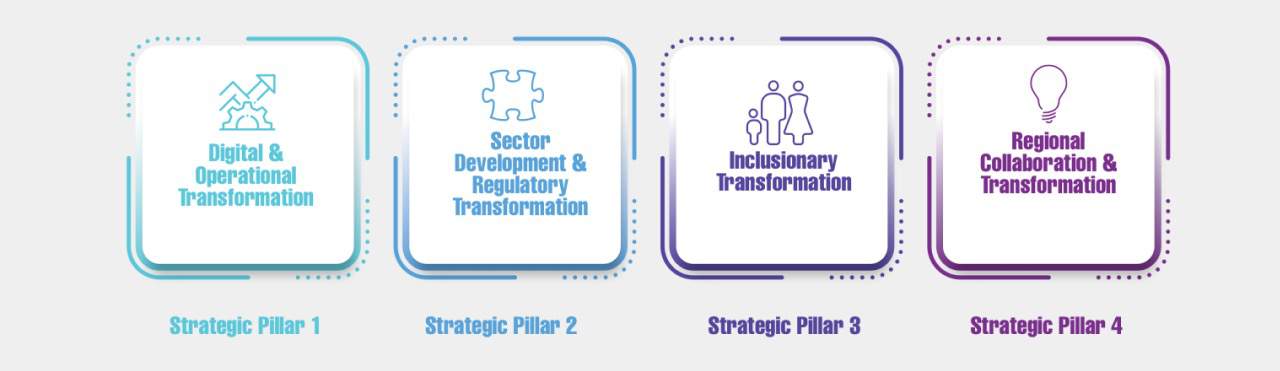
- • Digital Inclusion Strategy to expand digital access, reduce divides, and strengthen skills in all communities.
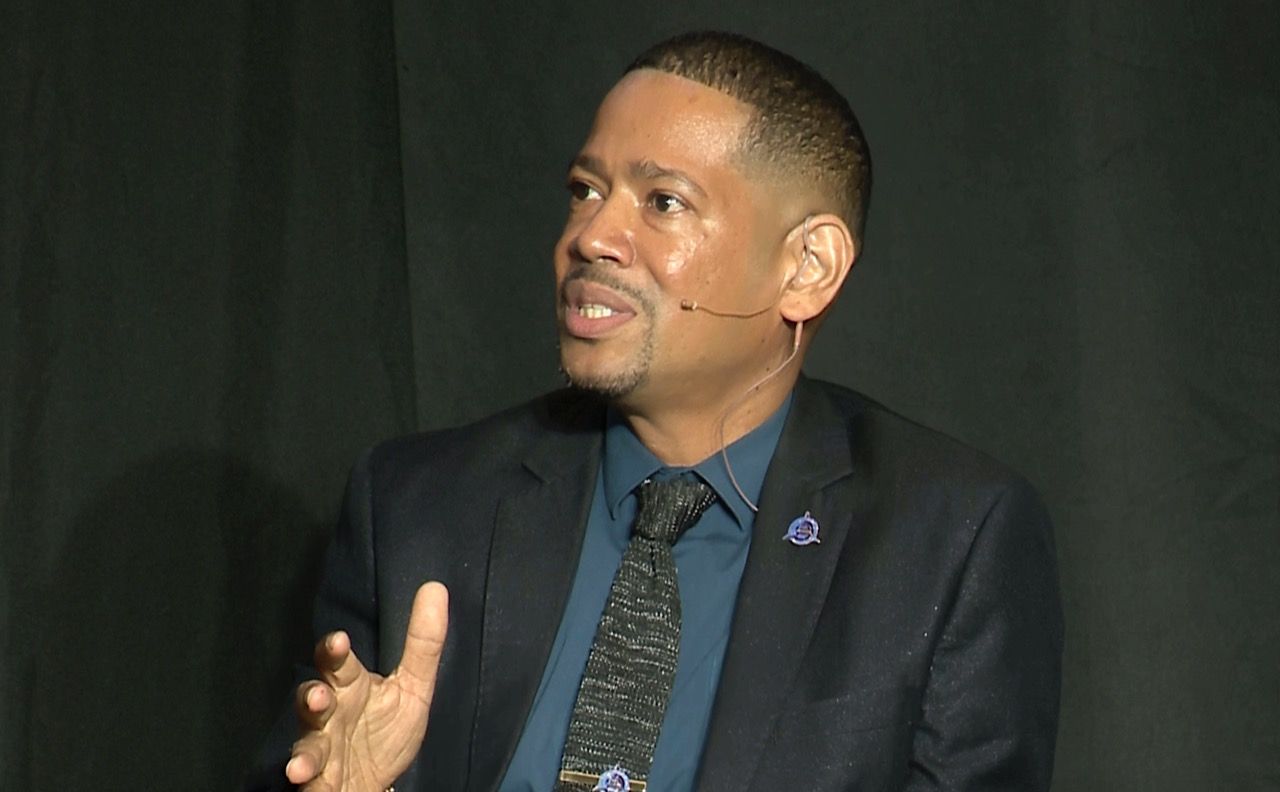
Above: TATT CEO Kurleigh Prescod
BitDepth 1553 for March 09, 2026
In considering TATT’s 2025-2028 strategic plan, the sixth such plan prepared by the state agency, it’s worth beginning with an understanding of its role.
According to the uncontested Wikipedia entry for the authority, “The Telecommunications Authority of Trinidad and Tobago (TATT) is the independent regulatory body for the telecommunications and broadcasting sectors, established in July 2004 under the Telecommunications Act 2001. It manages national spectrum and numbering resources, sets industry standards, and promotes competition to ensure reliable, affordable, and accessible communication services.”
TATT does not do so based on its own whimsy. It is, along with other state agencies, an executor of the broad goals of the government in power.
It may act with some degree of independence, because its operations are deeply technical and explaining every action it takes to Cabinet would take an eternity, but if the board changes when a new government is elected to office, then that independence is, inevitably, slaved to, at the very least, broad government directives.
This new three-year strategy includes the expected scope of its operations, overseeing licenses and concessions, managing the country’s broadcast spectrum, revising and updating technical standards and policy, acting on behalf of consumers while educating them on their rights, some degree of market regulation and competition rules oversight, certification of equipment and ensuring compliance, dispute resolution and enforcement.
Historically, TATT has had limited success in some of these goals. Some disputes have led to robust push-back, even in the face of court rulings in the authority’s favor.
The authority’s two-decade-old arguments for a fee from over-the-top (OTT) providers has consistently drawn a blank, but it remains on the strategic agenda.
The only country that has successfully implemented legislation mandating that OTT providers pay a fee for offering their services in their dominion is South Korea and several providers simply packed up their servers and left.
The concern is real, since most broadband bandwidth in TT is consumed by Netflix, which is decidedly not chill from TATT’s perspective on broadband as a resource.
A new, or more likely renamed initiative is TATT’s Digital Inclusion Strategy (DIS).
The strategic plan states: “Through the Digital Inclusion Strategy, access will be expanded, digital divides reduced, and skills strengthened in all communities, including marginalised and disadvantaged groups to promote a digitally intelligent society. TATT will also ensure and enhance inclusive stakeholder engagement.”
TATT’s Universal Service Fund (USF) was established to address part of this strategy by providing broadband internet access to communities that are underserved by commercial providers because the cost of connecting them is prohibitive.
That concern has largely been OBE, or overtaken by events as military minds say, with the widespread availability of low-Earth-orbit telecommunications arrays, most publicly those of Starlink.
These connections are not hampered by difficult terrain (though they can be stymied by both local bad weather and disagreeable solar activity).
TATT has barely dented the $137.84 million in its USF as by September 2025.
It is unclear whether that’s because the authority has been chronically unable to get providers to establish connections in geographically difficult regions at any reasonable price or because the problems caused by limited connectivity are simply not as challenging as they once were.
The DIS may be a way to turn those substantial coffers to a use that might be broadly applicable to the rationale for the establishment the fund, which is comprised of required contributions from local telecommunications providers.
Other strategic initiatives seem a bit of a stretch. There has been little to persuade me of the need for a switch to Digital Terrestrial Television (DTT), a project that’s being field tested at TV6.
Eighteen months ago, TATT announced its intention to switch from established analog free-to-air television broadcast protocols to DTT, which promises higher definition video and cleaner sound quality.
Most recent flat-screen televisions are capable of receiving these signals and older systems with an HDMI connector can be adapted to accept the digital signal.
This might seem to offer local tv broadcast operations an opportunity to gain some marketshare, but that would depend almost entirely on reception, not from the televisions, but from customers who already have access to high quality signals delivered by fibre that they are already paying for.
There would seem to be a window of opportunity for sports fans who wish to see events that are purchased for the region by a broadcast house and are blocked on cable or online and fans of local news presenters who can now argue about whether their preferred presenter has attempted to cover a skin blemish with make up.
Not really seeing the Netflix, Disney and Amazon crowd giving a damn about DTT.
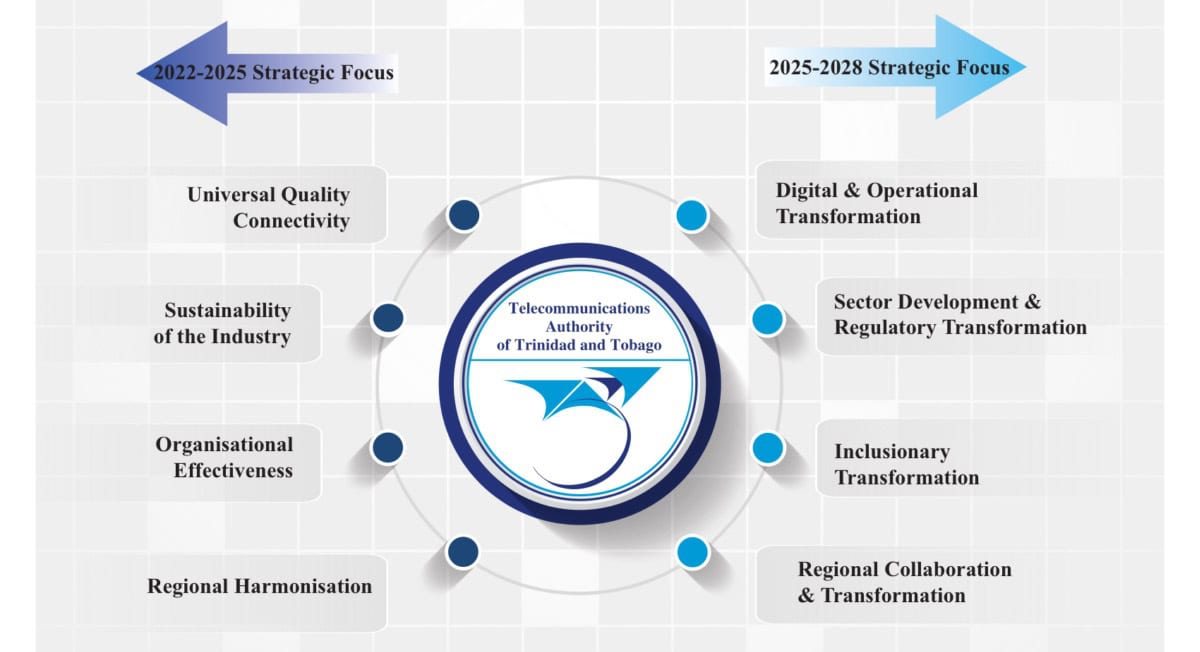
Also unclear is a stated commitment to adoption of AI initiatives, a practical political move by a state agency that reports to the Ministry of Public Administration and Artificial Intelligence.
But apart from demonstrating strategic alignment or as less buzzword savvy readers might intuit, blowing smoke up the minister’s butt, it’s hard to see exactly how TATT is positioned to do anything about the vague, scattered plans to implement AI floating about other than offer well-intentioned but meaningless support.
Clearly buoyed by their collaboration with PwC, the strategic document is riddled with the sort of meaningless verbosity that such high profile collaborations seem to demand.
A summary statement notes, “A future-ready, agile TATT and advanced technology adoption will enable streamlined processes and smoother digital infrastructure upgrades. Thought leadership supports evidence-based policy development and modernisation of legislation. These improvements enhance regulatory oversight and foster innovation through sandboxes.”
“Accelerated by growth in AR/VR hardware, the creator economy, and blockchain rights is driving decentralised media like Web3, XR, and the Metaverse to reshape content creation and interaction. This raises challenges in content moderation, digital rights, immersive safety, and cross-border enforcement.”
Which is broadly agreeable, though specifically gibberish. As a statement, it reads as if someone wantonly flung a Lego box of buzzwords into sentence structures until they click into place.
We do want a future-ready, agile TATT doing most of those things, but mostly doing what it is already committed to doing and legislatively mandated to do, with greater efficiency, more decisive commitment and a robust effort to deliver results that are meaningful to the customers whose interests they are expected to protect.
TATT is being led by its most knowledgeable CEO since John Prince, and while we disagree vigorously on the value of DTT and fixed number portability, I look forward to seeing how he manages these ambitious expansions of the ambit of TATT within the narrow scope of its role as a regulator.



















 Is Apple’s Neo the One?
March 22, 2026
Is Apple’s Neo the One?
March 22, 2026
 Privacy and your travel information
March 15, 2026
Privacy and your travel information
March 15, 2026
 TATT announces ambitious three-year strategic plan
March 9, 2026
TATT announces ambitious three-year strategic plan
March 9, 2026
 Samsung’s S26 leans in hard on...
March 1, 2026
Samsung’s S26 leans in hard on...
March 1, 2026
 A 2026 manifesto for Carnival
February 23, 2026
A 2026 manifesto for Carnival
February 23, 2026
 A hiss from a rose
February 15, 2026
A hiss from a rose
February 15, 2026
 News is a niche until it’s...
February 9, 2026
News is a niche until it’s...
February 9, 2026
 FT’s second Next Gen News report...
February 9, 2026
FT’s second Next Gen News report...
February 9, 2026
 Ransomware report notes fourth quarter 2025...
February 2, 2026
Ransomware report notes fourth quarter 2025...
February 2, 2026
 Hands-on with Apple’s Creator Studio as...
January 30, 2026
Hands-on with Apple’s Creator Studio as...
January 30, 2026
 Apple flirts with subscription software
January 26, 2026
Apple flirts with subscription software
January 26, 2026
 So long, and thanks for all...
January 19, 2026
So long, and thanks for all...
January 19, 2026
 Cyberedge reports on cybersecurity trends
January 12, 2026
Cyberedge reports on cybersecurity trends
January 12, 2026
 Samsung’s ZFlip 7 shows steady improvement
January 5, 2026
Samsung’s ZFlip 7 shows steady improvement
January 5, 2026
 Digital New Year’s resolutions
December 29, 2025
Digital New Year’s resolutions
December 29, 2025
 WiPay announces new strategy for services,...
December 22, 2025
WiPay announces new strategy for services,...
December 22, 2025
 Old Mac, new OS
December 15, 2025
Old Mac, new OS
December 15, 2025
 Regional cybersecurity faces fire
December 8, 2025
Regional cybersecurity faces fire
December 8, 2025
 Unfinished symphonies
December 1, 2025
Unfinished symphonies
December 1, 2025
 Do you know who your child...
November 24, 2025
Do you know who your child...
November 24, 2025