

- Danielle Dieffenthaller was known for her professionalism, sharp wit, and dedication to her craft
- She created the television series Westwood Park which ran for seven seasons
- Successful syndication equires a large number of episodes for syndication
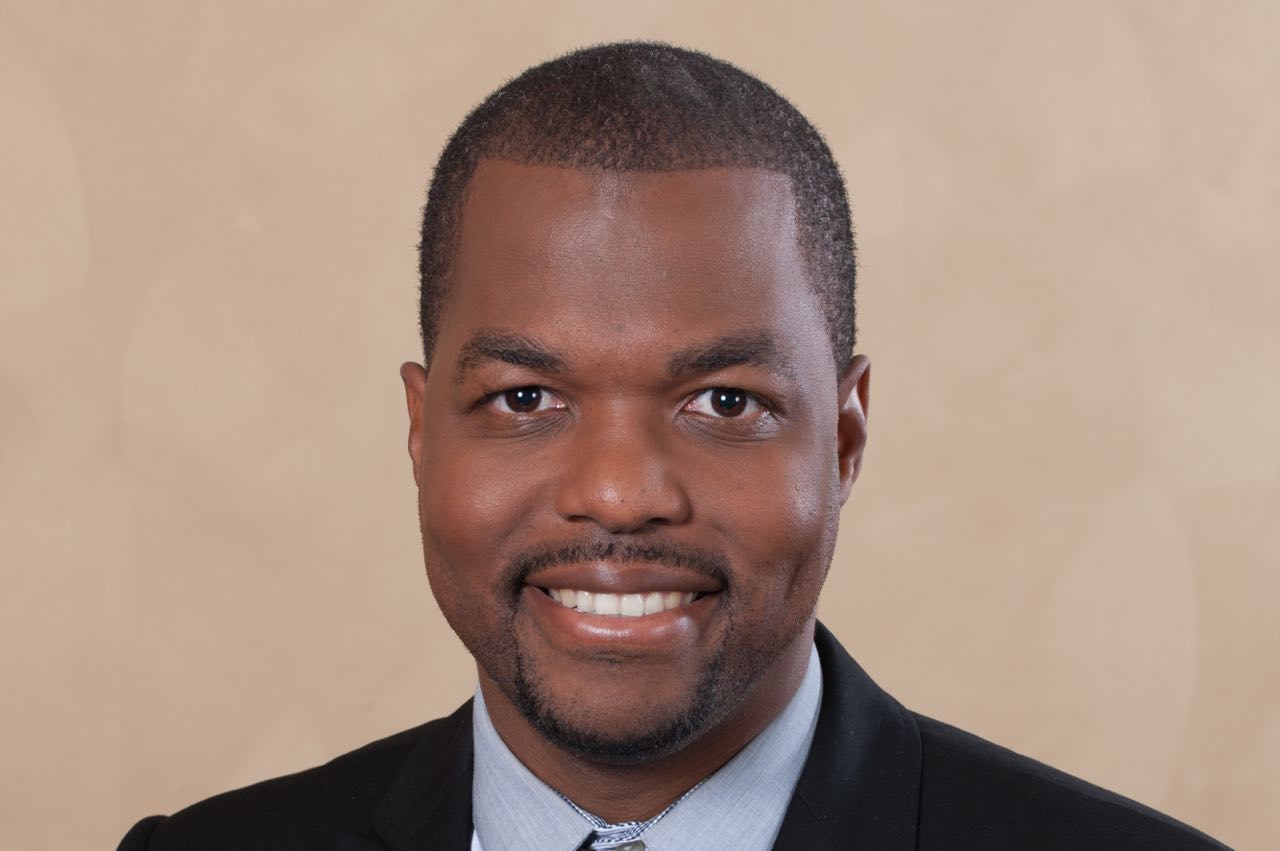
Above: Danielle Dieffenthaller photographed at her home in July 2020 by Mark Lyndersay.
BitDepth 1539 for December 01, 2025
On November 22, Danielle Dieffenthaller, filmmaker, passed away after years of battling renal failure.
There’s been a well-earned outpouring of reminiscing about her life and impact and while I knew Dieffenthaller for more than 40 years, we weren’t friends in the truest sense of the word.
There was only one occasion, when I visited her home on the eve of a major fundraiser to assist with her treatment, when I met her in the context of her family.
Otherwise, I only knew Dieffenthaller in the context of her work, my every memory of her being one surrounded by either camera or lighting equipment or bulky videotape editing equipment.
Over those years, I was a colleague working on Banyan productions, a service provider delivering a script for a production, a client commissioning video production work and finally, a photojournalist photographing her for a story.

At each point, in every interaction, she was the same Danielle Dieffenthaller, gracious and mannerly, sharp of tongue, unwavering in her dismissal of foolishness and unwilling to consider anything that demanded less than her best.
I photographed her at her home for a Newsday Trini to the Bone story in July 2020.
By then, she had already been recognised by the Anthony N Sabga Awards committee as a 2019 Arts and Letters laureate, the closest this country has ever come to offering a genius award that supports and honors useful work being actively pursued.
The award was a rare reversal of the national trend to ignore and belittle artists who remain here, doing necessary work. Her last major production, The Reef, a witty crime drama at a Tobago hotel ran for just one season, before funding dried up.
The 30-year-old Westwood Park, which emerged just in time to catch a tailwind of national appreciation for locally grown cultural artifacts, ran for six seasons and achieved the grail of syndication.

For a filmmaker, a long running television series is a challenging proposition, particularly without standing sets. Prior to streaming, a series would not be considered for syndication unless it had at least 88 episodes, with 100 being the magic number.
The other alternative is a made for television movie or a miniseries, but those only tend to sell if they are based on existing, desirable intellectual property (IP) or are tailored for a very specific audience.
Before her diagnosis, Dieffenthaller was working on a new show, Plain Sight, a crime drama planned to run for five seasons. An IndieGoGo crowdfunding campaign for the project raised US$16,023 in 2018, less than half the target of $35,000.
Shooting on the pilot episode for Plain Sight began in 2016, almost immediately hitting a snag after a key funder cut their commitment to the project by half.
The IndieGoGo campaign was another attempt to get the pilot completed, though as Dieffenthaller wryly commented on the campaign page, “We lost Winston Duke to the Marvel Universe and are on the lookout for a new Police Commissioner (like our country).”
While I waited to photograph Dieffenthaller, I considered the shelves of tapes in her home-office nook, many of them older U-Matic magnetic tape. The only other place I’d seen such a collection locally was in the Banyan archive maintained by Christopher Laird.
Dieffenthaller and Laird weren’t the only video creators to work with hundreds of cassettes of raw footage on magnetic tape, but they were among the few who chose to preserve them.
A staggering number of modern local media works have simply disappeared.
Today’s audiences might laugh at the production values of Play of the Month, Rikki Tikki or even the dozens of calypsonians videotaped next to a potted plant at TTT, but they are part of our cultural history, almost all of it lost forever.
Even independent works like AVM’s Cross Country are largely inaccessible (there are episodes posted on YouTube by Visual Arts productions along with Freddie Kissoon’s Calabash Alley)
Dieffenthaller was aware of the difficult history of her profession. Hugh Robertson’s unfinished film Avril. His pioneering Bim is known to a generation only through a scratchy videotaped copy, the original reels lost.

I’m not worried about her work. Her family clearly understands the value of IP; Her brother Hans is techy beyond measure. But the key to understanding that work is gone.
One of the reasons that corporate TT is so often out of synchronisation with creative TT is that their respective imperatives are so fundamentally out of alignment.
The business of business is business, management guru Peter Drucker once famously wrote.
Profit, shareholder value and business scalability are watchwords in that space.
Creative talent answers to different benchmarks, few of them tied to direct financial returns on investment.
Creative ventures are rarely started with the intent of hiding them from a paying public, but market viability often can’t be realistically assessed until the work is done.
The creative ideal has always been ‘ars gratia artis,’ art for art’s sake. Though the English band 10CC rhymed that in one of their tongue-in-cheek numbers with the line “Money for God’s sake.”
Modern media productions create an unedited corpus of work alongside the final product that often has its own value.
In business, capital is fuel. For committed creators, we burn time. Time to identify our talent. Time to build the skill to support it. Time to figure out how to turn creative work into income. Time to create.
For too many, that time is too short. For others, it ends before a career can achieve a satisfying coda and we are left to wonder what their unfinished symphonies might have become.
[After publication, the number of seasons of Westwood Park was corrected from seven to six and the pitch video for the IndieGoGo fundraiser for In Plain Sight was added.]














 The garbage infesting my in-box
March 30, 2026
The garbage infesting my in-box
March 30, 2026
 TSTT’s payments problem
March 30, 2026
TSTT’s payments problem
March 30, 2026
 Is Apple’s Neo the One?
March 22, 2026
Is Apple’s Neo the One?
March 22, 2026
 Privacy and your travel information
March 15, 2026
Privacy and your travel information
March 15, 2026
 TATT announces ambitious three-year strategic plan
March 9, 2026
TATT announces ambitious three-year strategic plan
March 9, 2026
 Samsung’s S26 leans in hard on...
March 1, 2026
Samsung’s S26 leans in hard on...
March 1, 2026
 A 2026 manifesto for Carnival
February 23, 2026
A 2026 manifesto for Carnival
February 23, 2026
 A hiss from a rose
February 15, 2026
A hiss from a rose
February 15, 2026
 News is a niche until it’s...
February 9, 2026
News is a niche until it’s...
February 9, 2026
 FT’s second Next Gen News report...
February 9, 2026
FT’s second Next Gen News report...
February 9, 2026
 Ransomware report notes fourth quarter 2025...
February 2, 2026
Ransomware report notes fourth quarter 2025...
February 2, 2026
 Hands-on with Apple’s Creator Studio as...
January 30, 2026
Hands-on with Apple’s Creator Studio as...
January 30, 2026
 Apple flirts with subscription software
January 26, 2026
Apple flirts with subscription software
January 26, 2026
 So long, and thanks for all...
January 19, 2026
So long, and thanks for all...
January 19, 2026
 Cyberedge reports on cybersecurity trends
January 12, 2026
Cyberedge reports on cybersecurity trends
January 12, 2026
 Samsung’s ZFlip 7 shows steady improvement
January 5, 2026
Samsung’s ZFlip 7 shows steady improvement
January 5, 2026
 Digital New Year’s resolutions
December 29, 2025
Digital New Year’s resolutions
December 29, 2025
 WiPay announces new strategy for services,...
December 22, 2025
WiPay announces new strategy for services,...
December 22, 2025
 Old Mac, new OS
December 15, 2025
Old Mac, new OS
December 15, 2025
 Regional cybersecurity faces fire
December 8, 2025
Regional cybersecurity faces fire
December 8, 2025