- • Samsung’s new flagship smartphones heavily incorporate AI for personal assistance and task enhancement.
- • The S26 introduces a Privacy Display that narrows the viewing angle to protect sensitive information from “shoulder surfers.”
- • Photo Assist, which allows merging information from other photos and altering details, raises concerns about image authenticity
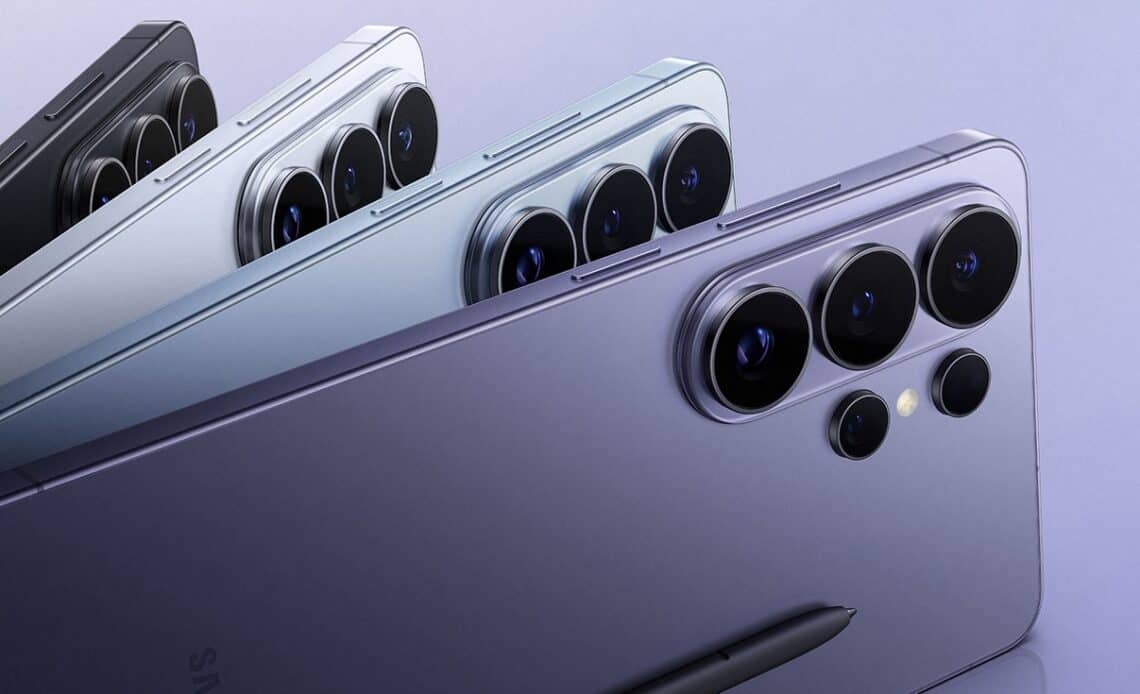
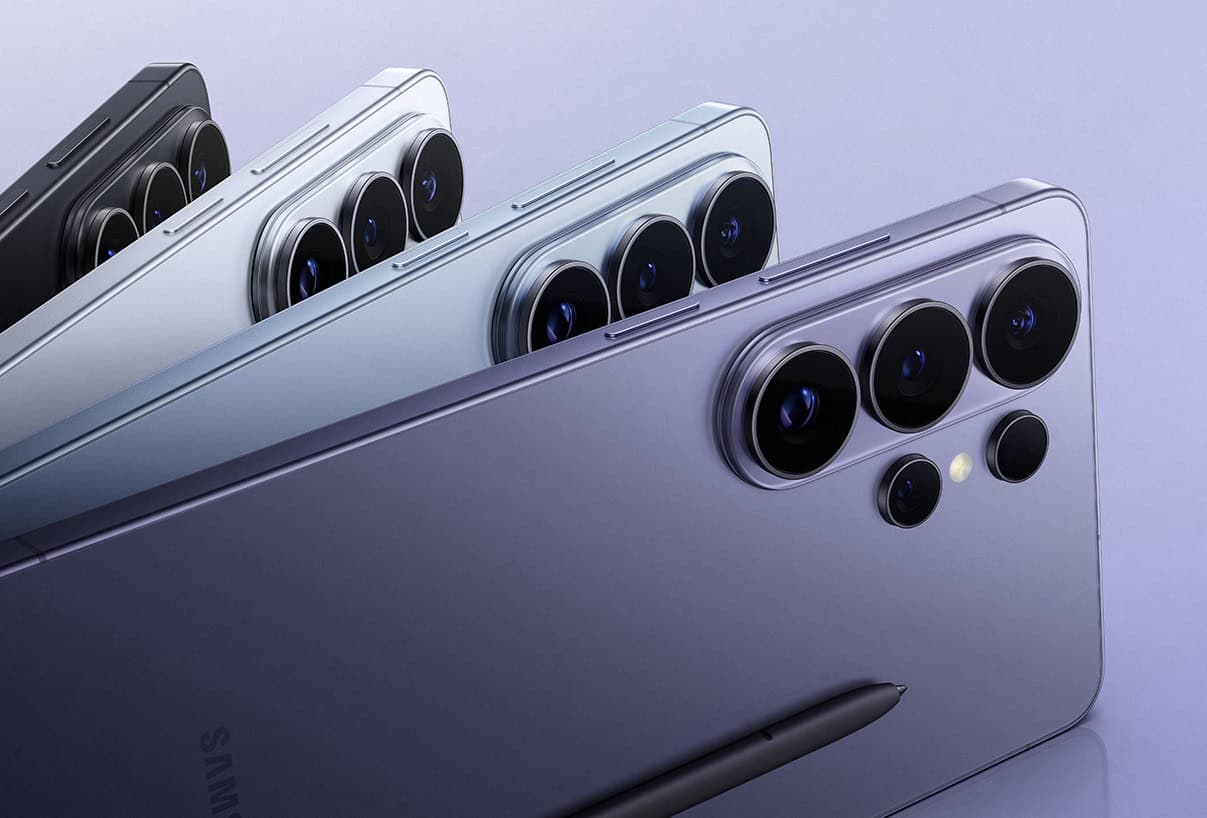
Above: Samsung’s new S26 smartphone. Images courtesy Samsung.
BitDepth 1552 for March 02, 2026
At the launch of Samsung’s new line of premium smartphones, the Galaxy S26 series, the company’s CEO, TM Roh described the design of the phone as supportive of the company’s vision of the role of artificial intelligence (AI) for personal assistance and task enhancement.
“It has to work for everyone, everywhere without friction, across the entire ecosystem,” Roh said at the launch in San Francisco on February 25.
The company is so serious about building AI support into its phones that it is bundling Perplexity into the Samsung Browser, an app that nobody uses when Chrome is available.
AI services pop up everywhere on the S26 and many new features are built around agentic AI, software that operates on its own to link data on a user’s device to set goals, plan actions and execute tasks.
Agentic AI is still very much in the early stages of its development, but the push to include it everywhere is strong. Samsung has partnered with Google to use its Gemini AI product as the core of its agentic AI services.
According to Google’s Sameer Samat, “Android is able to launch the app you need in a virtual window. And then, Gemini 3 uses its reasoning and multi-modal capabilities, to make a plan and navigate the app to get the task done. Just like you would! Turning your intention into action.”
This is a particularly sunny take on a dramatic change in the way data is handled on a personal device.
According to Samsung, its Keep software, an aspect of the internal security system. Knox, app data will be kept sandboxed for agentic AI operations while cybersecurity promises to be more robust with the implementation of post-quantum cryptography for encryption.
Bixby is being pressed back into service as a voice activated agent, though it will achieve its long awaited usability upgrade through integration with either Google’s Gemini or Perplexity. A usable Bixby has eluded Samsung for years.
Some users, including those with data that requires above average security, may not greet these advancements with enthusiasm. It would be great if Samsung included a clear and decisive off switch that would allow S26 users who are capable of maintaining their own daily schedules to turn off agentic AI services entirely.
Such a feature could be accompanied by documentation clarifying what services would either no longer work or work as expected without agentic AI active, placing control more robustly in the hands of owners of the new smartphones.
With what we know about agentic AI at this point, a simple off switch that works decisively to shut down the feature, seems prudent at this point in Samsung’s integration of autonomous software on its devices,
While some buzz is offered over expected improvements in gaming (the GPU is 24 percent faster), hardware improvements are also framed in the context of AI advances.
A new neural processing unit (NPU) promises 39 percent faster AI (that is, after all, what the chip is designed for), and the Snapdragon 8 Elite Gen 5 for Galaxy CPU improves speeds by 19 percent.
The stylus is back, along with a slot in the phone’s body to accommodate it.
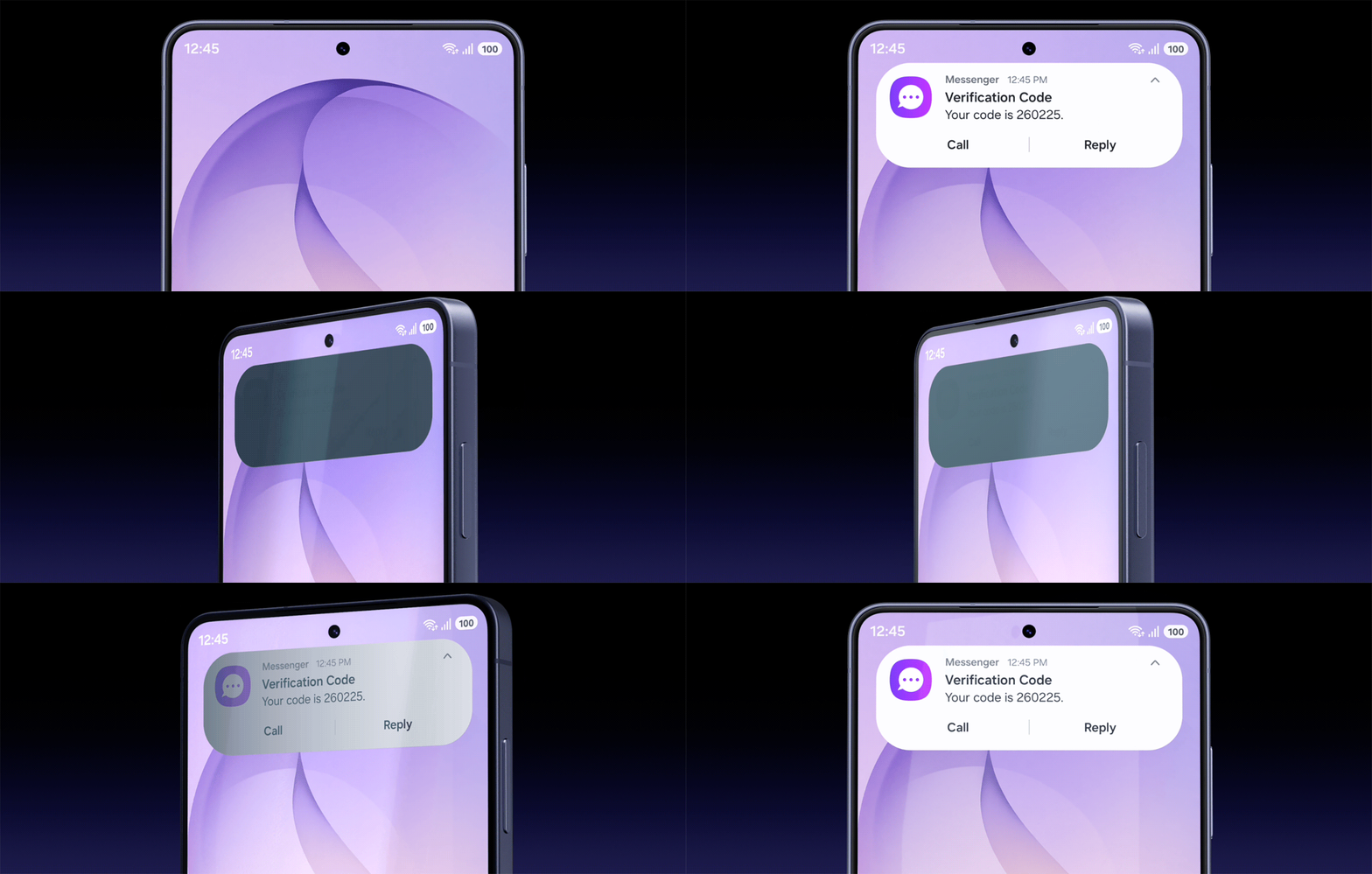
More usefully, the S26 series introduces a new Privacy Display; which uses new black matrix technology to change the way the screen’s pixels distribute light.
In normal mode, the phone is viewable from a range of angles as usual.
When, as Samsung describes them, “shoulder surfers” loom, you can activate the privacy mode and narrow pixels reduce the angle of view dramatically.
Because this is display level technology, with the hardware controlled by software, the feature can be activated for specific apps or even just to make pop-up notifications unreadable. It’s so slick in the promotional videos that it looks like magic and that’s always a good look.
Call Screening may or may not work locally. The feature was introduced on the iPhone last year, but that version required some carrier support. Privacy alerts, which warn of apps seeking access to personal data are another promising feature.
AI infiltrates camera capture more decisively with the introduction of an AI Image Signal Processor, which Mason Page, Samsung’s Director of Digital Experience Innovation promises, “brings out more of the finer details, helping you capture the soft strands of hair and natural skin tones, so your selfies look true to life.”
The larger aperture on the rear-facing wide-angle lens is a welcome addition. A rating of f1.9 on any lens designed to fit on a smartphone is always a hard battle.
I’m less hopeful about what happens next with the new feature, Photo Assist, which builds on the AI Eraser, introduced with the S21 series.
Removing unfortunate objects or undesired people is understandable, but a feature that merges information from other photographs and allows you to use prompts to change the characteristics of identified details in the photo drifts into imagined images, not actual photography.
Such large alterations are supposed to carry a watermark identifying it as made using AI, but that’s one swipe of the AI Eraser away from disappearing.
Metadata level identification of AI engineered images would be more useful, the sort of thing that Adobe has been pushing uphill with its Content Authentication Initiative.
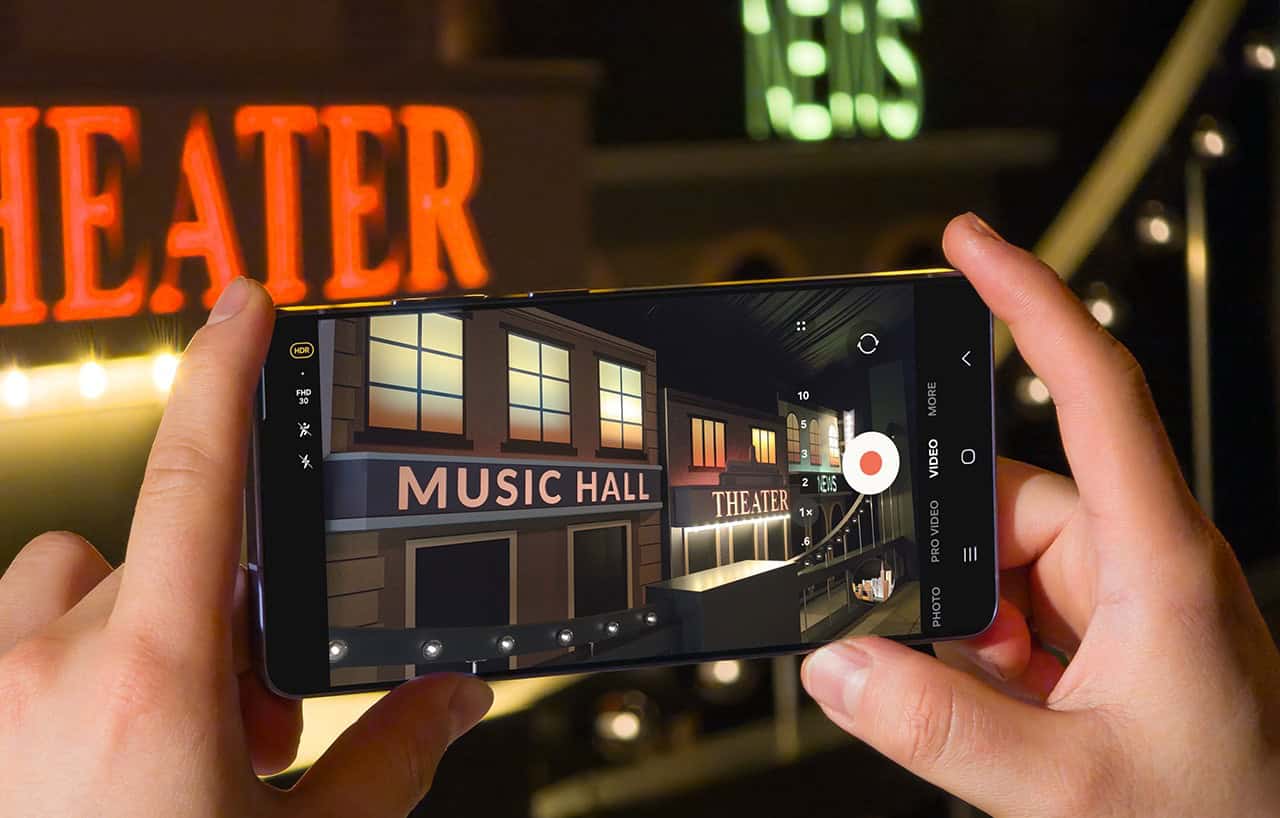
Expert Raw, the downloadable app that every serious smartphone photographer should add to their new S26 phone gets a new feature, Ocean Mode that the company introduced for enable underwater mapping for the S24 Ultra has now been released for widespread consumer use.
If you are serious about optimising the quality you get from the camera system on the S26 series, you should absolutely use Expert Raw to capture your most important images.
The media Gallery app gets an upgrade with the ability to hide selected photos or videos without moving them to a special folder.
S26 smartphones are not single use devices. For every dedicated photographer who wants the ultimate fidelity from their captures, there’s another user who just wants those pixels to be malleable and responsive to their vision for their selfies.
The Galaxy S26 Ultra comes in four colors starting at US$1,299 And the S26 and S26 Plus will be available starting at US$899, and US$1,099 respectively. They will all be available in major markets from March 11.
Availability in the Caribbean region is expected to begin from March 30, according to Samsung.












 The state of ransomware in the...
April 12, 2026
The state of ransomware in the...
April 12, 2026
 Digital döstädning
April 5, 2026
Digital döstädning
April 5, 2026
 The garbage infesting my in-box
March 30, 2026
The garbage infesting my in-box
March 30, 2026
 TSTT’s payments problem (updated)
March 30, 2026
TSTT’s payments problem (updated)
March 30, 2026
 Is Apple’s Neo the One?
March 22, 2026
Is Apple’s Neo the One?
March 22, 2026
 Privacy and your travel information
March 15, 2026
Privacy and your travel information
March 15, 2026
 TATT announces ambitious three-year strategic plan
March 9, 2026
TATT announces ambitious three-year strategic plan
March 9, 2026
 Samsung’s S26 leans in hard on...
March 1, 2026
Samsung’s S26 leans in hard on...
March 1, 2026
 A 2026 manifesto for Carnival
February 23, 2026
A 2026 manifesto for Carnival
February 23, 2026
 A hiss from a rose
February 15, 2026
A hiss from a rose
February 15, 2026
 News is a niche until it’s...
February 9, 2026
News is a niche until it’s...
February 9, 2026
 FT’s second Next Gen News report...
February 9, 2026
FT’s second Next Gen News report...
February 9, 2026
 Ransomware report notes fourth quarter 2025...
February 2, 2026
Ransomware report notes fourth quarter 2025...
February 2, 2026
 Hands-on with Apple’s Creator Studio as...
January 30, 2026
Hands-on with Apple’s Creator Studio as...
January 30, 2026
 Apple flirts with subscription software
January 26, 2026
Apple flirts with subscription software
January 26, 2026
 So long, and thanks for all...
January 19, 2026
So long, and thanks for all...
January 19, 2026
 Cyberedge reports on cybersecurity trends
January 12, 2026
Cyberedge reports on cybersecurity trends
January 12, 2026
 Samsung’s ZFlip 7 shows steady improvement
January 5, 2026
Samsung’s ZFlip 7 shows steady improvement
January 5, 2026
 Digital New Year’s resolutions
December 29, 2025
Digital New Year’s resolutions
December 29, 2025
 WiPay announces new strategy for services,...
December 22, 2025
WiPay announces new strategy for services,...
December 22, 2025