
- Samsung is the only major smartphone manufacturer to focus on the foldable phone market in the Americas and the Caribbean.
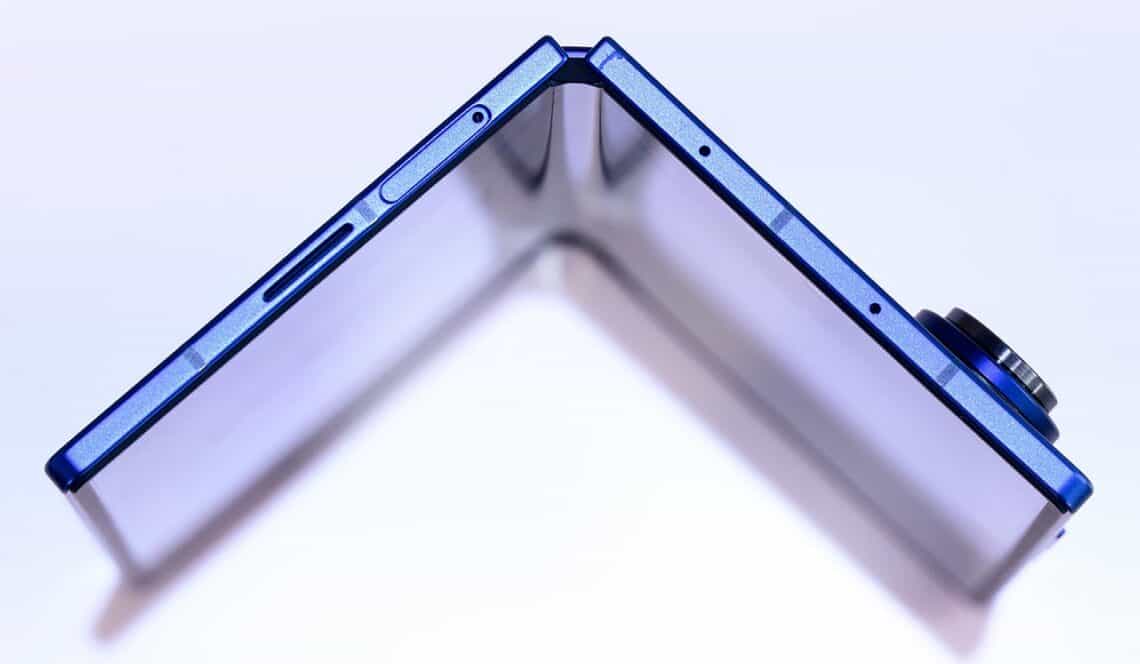
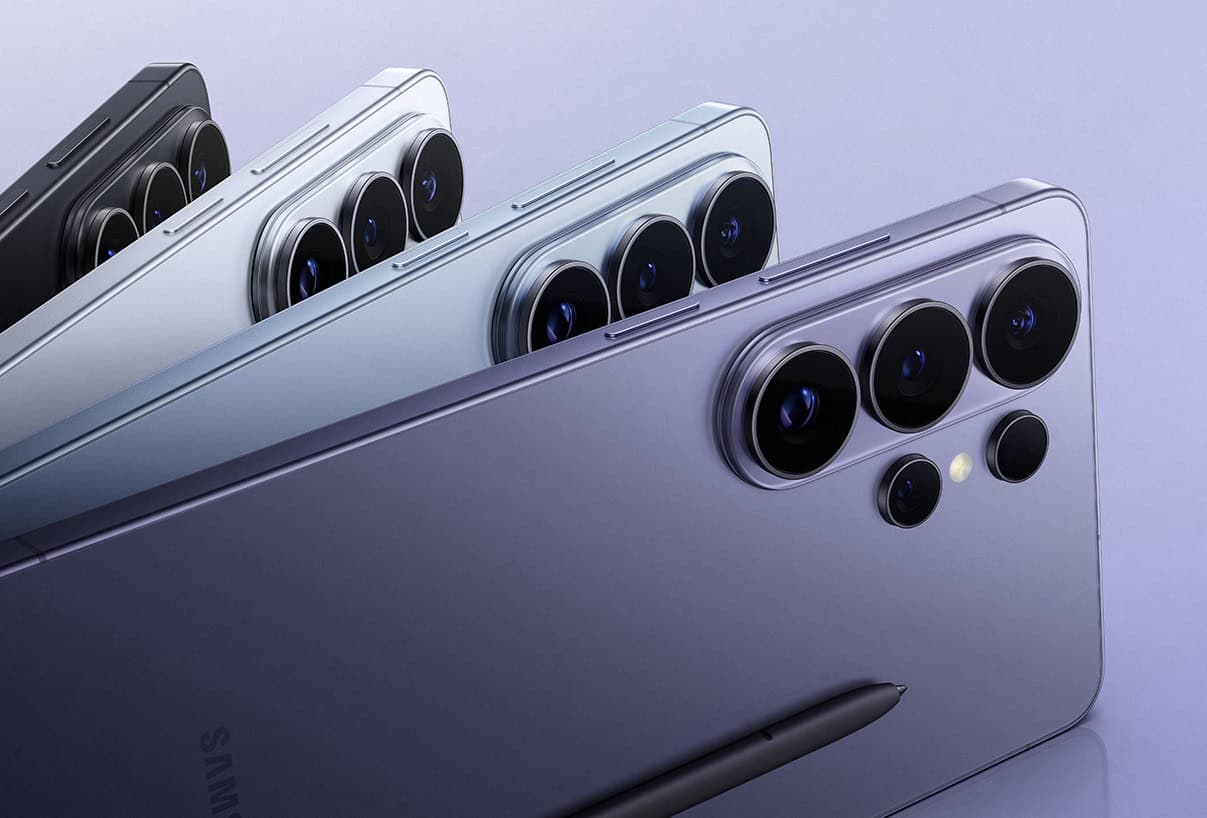
- The Fold’s slim profile is enhanced, but the camera module protrudes.
- Both devices boast impressive main cameras (50MP for Flip, 200MP for Fold) but lackluster ancillary lenses.
Above: Samsung’s ZFold 7. Photos courtesy Samsung
BitDepth#1520 for July 21, 2025
Samsung announced the newest contenders in its folding phone line, the Z Fold 7 and the Z Flip 7 on July 09.
If by some miracle you’ve managed to miss this evolving slice of the smartphone market, a flip-style smartphone is one that folds down to half the size of a regular smartphone but snaps open to become a full-sized smartphone in use.
A foldable phone looks like a standard smartphone when shut and usually has a functional screen on its face, but opens like a book to offer a square of usable smartphone real estate that’s roughly equivalent to a small tablet.
There are several players in this niche, which constituted less than two per cent of the overall smartphone market (premium smartphones command 40 per cent of the market).
That includes challengers from companies like AsusTek, Motorola Mobility (Lenovo), Xiaomi and Huawei, but you are unlikely to know about them, despite their strong presence in the Asia-Pacific market.
Samsung is the only major smartphone manufacturer to choose to carve out a market for these devices in the Americas and the Caribbean.
The Oppo Find N5, for instance, hit many of the design goals of the Fold 7 months ago, but is almost impossible to find outside the Asian market.
Samsung introduced the Fold in 2019 and the Flip in 2020 and since then, has kept the two devices in synchronised release. Both devices use a folding OLED screen to work their magic.
The Z Fold 7 announcement makes much of the size reductions that Samsung has engineered into its newest version of the folding phone. On numbers, it’s clearly a significant improvement over its immediate predecessor, the Z Fold 6, which was a chunky 12.1mm thick folded and 5.6mm open.
The new Z Fold 7 is just 8.9mm thick when folded and 4.2mm when open.
Samsung’s presentation slyly slipped in an iPhone as a comparison, and the thicknesses of the iPhone Pro Max 16 (8.3mm) and the S25 Ultra (8.2mm) bear testimony to Samsung’s achievement in reducing the heft of its Fold phones.
The company has increased the width of each half of the phone, bringing the dimensions of the folded device into better alignment with the aspect ratios we’ve come to expect even max-sized smartphones.
The Fold devices always felt unnaturally slim when folded compared to a standard smartphone.

But there’s a price to pay for that hard-won, svelte profile. The camera array module, always a bit of a wart on the back of any smartphone, sticks out like a small island on the new Fold.
The oddness of this form factor might be addressed by a protective case, though the engineering required to create a case that both tracks the articulation of the folding mechanism and offers real world protection has resulted in probably functional but almost universally ugly cases that seem out of place on a phone that has consistently entered the market at a baseline of US$1,999.
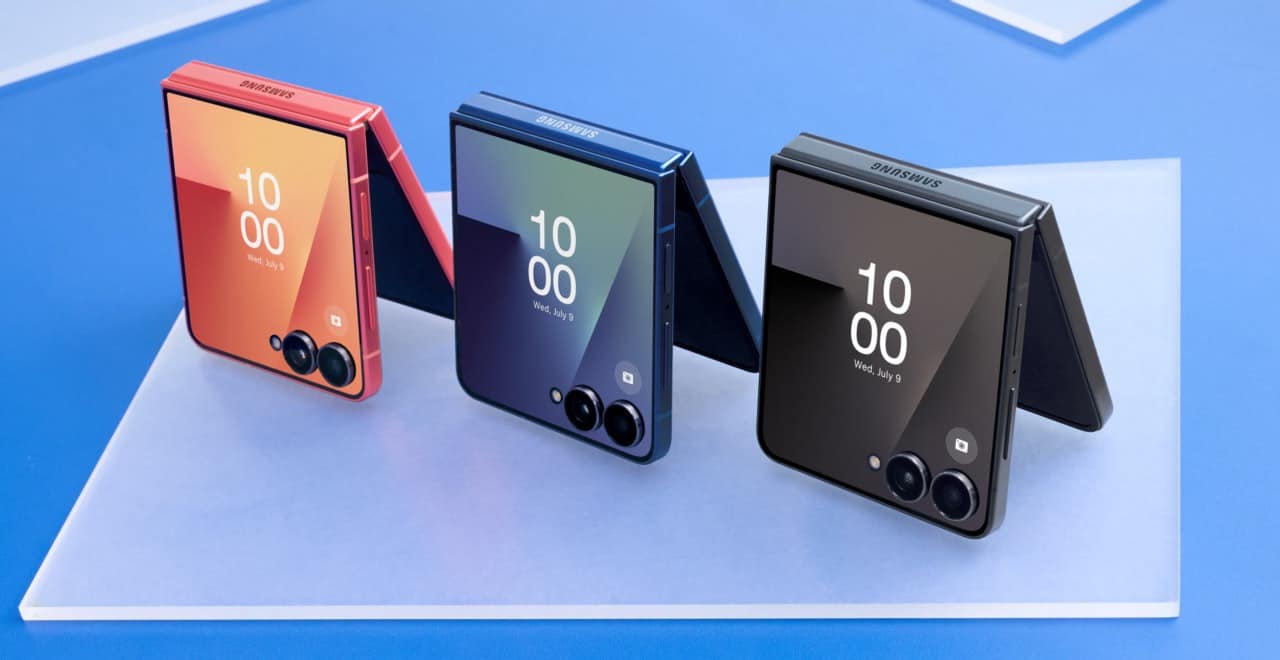
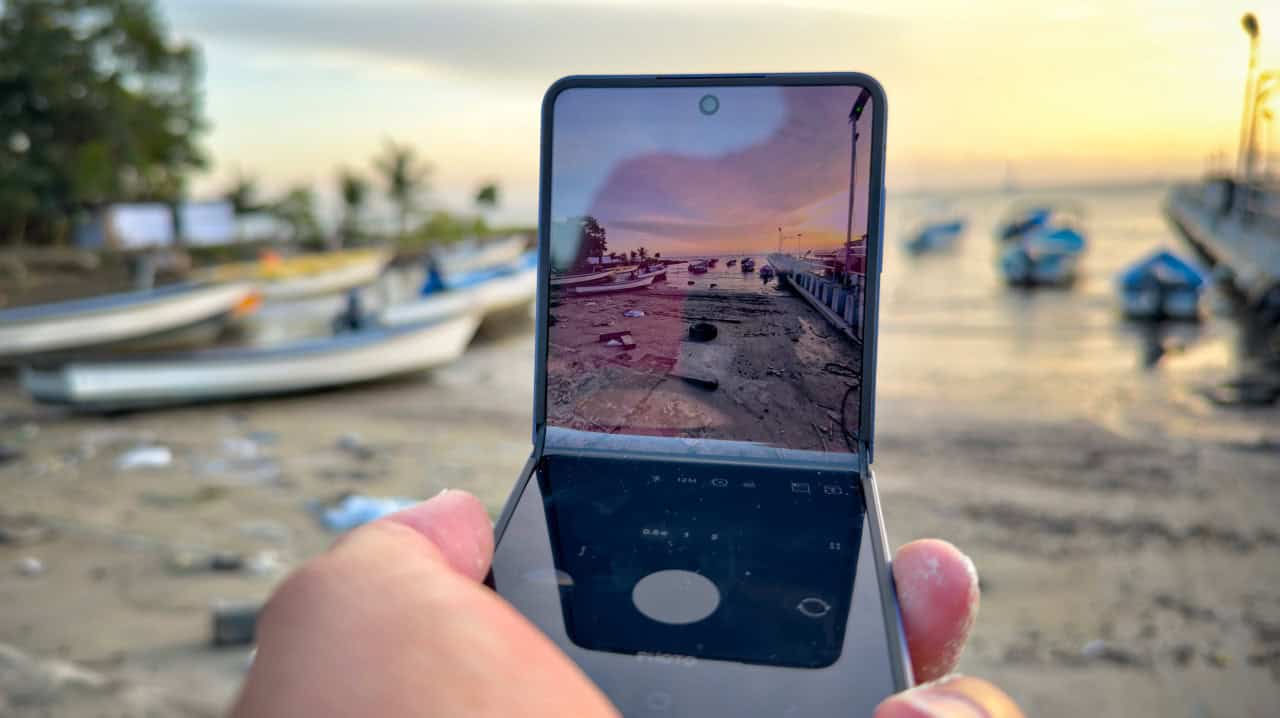
The Z Flip 7 is a continued evolution of the modern flip phone. The “face” screen, which is active when the device is folded, now spans the entire available area, a 4.1 inch diagonal.
Unfortunately that also includes the twin camera modules, and Samsung acknowledges that by offering whimsical wallpapers that use lenses to have a bit of visual fun.
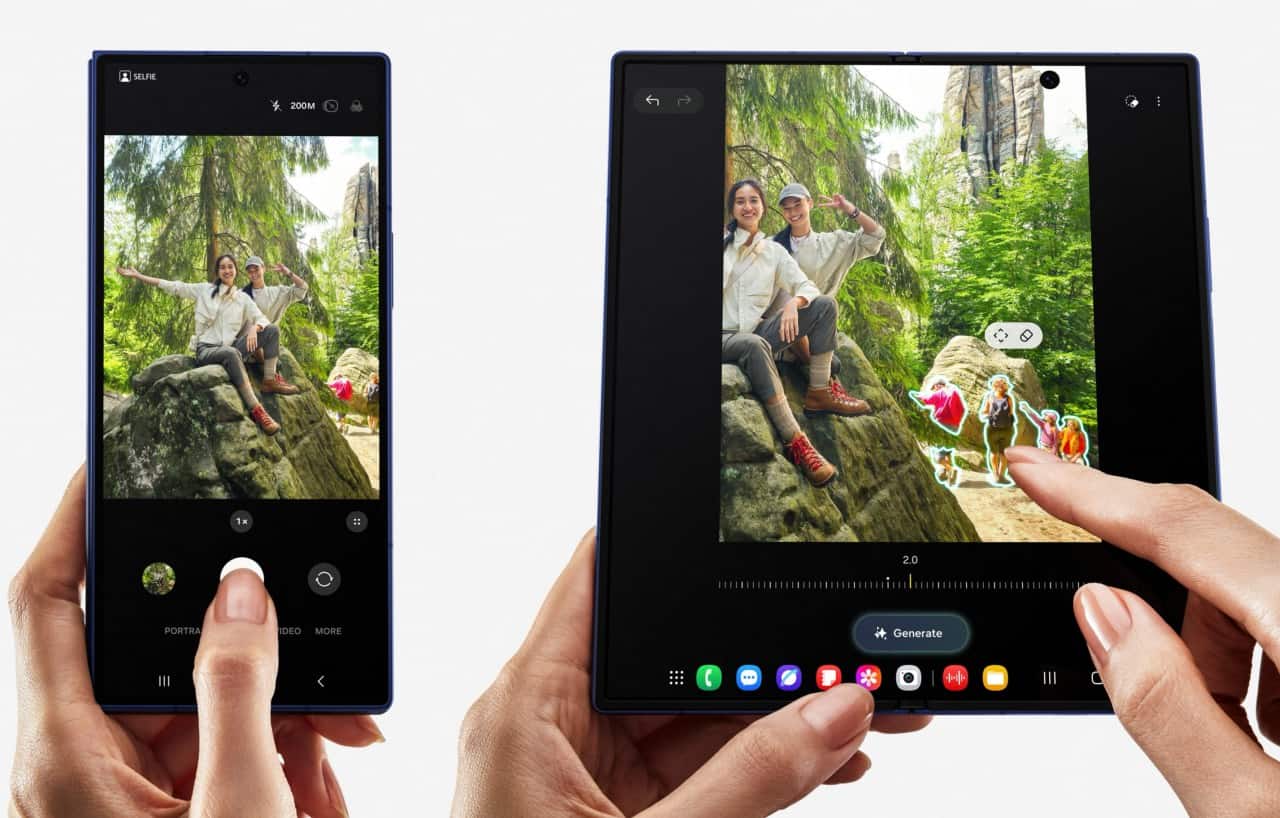
Both devices sport impressive main camera specifications, 50 MP on the Flip, 200MP on the Fold, and equally uninspiring specifications for their ancillary lenses.
The Flip continues to be pitched as the exciting, action-oriented smartphone for young people, but the price at US$1,099 targets only young people who can afford to visit the picturesque places it’s designed to capture.
Samsung seems to have understood that some, less deep-pocketed users might crave the utility of the Flip over its panache, and a lower price point might win them over.
So for the first time, Samsung has announced a Fan Edition at launch, the Z Flip 7FE in sober black or white colorways at US$899.
AI continues to be a selling point for Samsung as it announced improvements to its on-device LLM and “multimodal AI,” promising greater utility in AI interventions for the user and integration with Google’s Gemini Live, which allows interaction with an AI while using the smartphone’s camera.
All the new foldables ship with six months of free Gemini Pro to tempt users to embrace the enhancements that Google’s AI will bring to their smartphone use.
“AI is the new UI,” promised Won-Joon Choi, President and Chief Operating Officer of Samsung’s mobile business.
The market will decide what that means.












 Is Apple’s Neo the One?
March 22, 2026
Is Apple’s Neo the One?
March 22, 2026
 Privacy and your travel information
March 15, 2026
Privacy and your travel information
March 15, 2026
 TATT announces ambitious three-year strategic plan
March 9, 2026
TATT announces ambitious three-year strategic plan
March 9, 2026
 Samsung’s S26 leans in hard on...
March 1, 2026
Samsung’s S26 leans in hard on...
March 1, 2026
 A 2026 manifesto for Carnival
February 23, 2026
A 2026 manifesto for Carnival
February 23, 2026
 A hiss from a rose
February 15, 2026
A hiss from a rose
February 15, 2026
 News is a niche until it’s...
February 9, 2026
News is a niche until it’s...
February 9, 2026
 FT’s second Next Gen News report...
February 9, 2026
FT’s second Next Gen News report...
February 9, 2026
 Ransomware report notes fourth quarter 2025...
February 2, 2026
Ransomware report notes fourth quarter 2025...
February 2, 2026
 Hands-on with Apple’s Creator Studio as...
January 30, 2026
Hands-on with Apple’s Creator Studio as...
January 30, 2026
 Apple flirts with subscription software
January 26, 2026
Apple flirts with subscription software
January 26, 2026
 So long, and thanks for all...
January 19, 2026
So long, and thanks for all...
January 19, 2026
 Cyberedge reports on cybersecurity trends
January 12, 2026
Cyberedge reports on cybersecurity trends
January 12, 2026
 Samsung’s ZFlip 7 shows steady improvement
January 5, 2026
Samsung’s ZFlip 7 shows steady improvement
January 5, 2026
 Digital New Year’s resolutions
December 29, 2025
Digital New Year’s resolutions
December 29, 2025
 WiPay announces new strategy for services,...
December 22, 2025
WiPay announces new strategy for services,...
December 22, 2025
 Old Mac, new OS
December 15, 2025
Old Mac, new OS
December 15, 2025
 Regional cybersecurity faces fire
December 8, 2025
Regional cybersecurity faces fire
December 8, 2025
 Unfinished symphonies
December 1, 2025
Unfinished symphonies
December 1, 2025
 Do you know who your child...
November 24, 2025
Do you know who your child...
November 24, 2025