

- Traditional news media is struggling to connect with the public, with declining engagement, low trust, and stagnating digital subscriptions.
- Changes in first-world media tend to impact Trinidad and Tobago after a delay of one to three years.
- Consumers are increasingly turning to personality-driven, on-demand content on platforms like YouTube and TikTok.
Above: Illustration by fill_ser4/DepositPhotos
BitDepth#1518 for July 07, 2025
The 2025 Reuters Institute report on journalism charts the precarious future of professional reporting with data gathered from 100,000 survey respondents covering 48 markets.
The information remains thin on the experiences of the Global South, with just six South and Central American countries represented, Peru, Mexico, Colombia, Chile, Argentina and Brazil.

Serbia makes its debut in this edition, the fourteenth such evaluation of the journalism landscape.
The impact of first world media changes tend to take anywhere from twelve months to three years to begin to have an impact in the Caribbean generally and in TT specifically, which gives local media houses an opportunity to build a runway to manage established trends.
Unfortunately, such initiatives tend to be half-hearted and starved for money.
It does no good to acknowledge that change is necessary without establishing a budget and staffing to implement it.
In May 2012, BitDepth#832 pondered the impact of fast mobile internet on news consumption. Local media houses were still caught flatfooted. Most sites weren’t tuned for small screens for years after the introduction of 4G (really, 3.5G at the time), while social media optimised for smartphones, was providing another leak point for original reportage.
The Reuters report stated it bluntly.
“Evidence-based and analytical journalism should be thriving, with newspapers flying off shelves, broadcast media and web traffic booming. But as our report shows, the reality is very different. In most countries we find traditional news media struggling to connect with much of the public, with declining engagement, low trust, and stagnating digital subscriptions.”
Probably the most important thing that local media houses could do right now is to stop pretending that they are in competition with each other.
The real competition is conversational reporting that drags off the fumes of primary news and growing disinterest in the faceless, unattractive funneling of information by news organisations.
Identifiable personalities are becoming as important as the news itself. Anyone who thinks that the Joe Rogan effect was a Trump one-off is deluding themselves.
Personality dovetails into concerns about trust, which is reinforced when the audience identifies with the source of information particularly in video, which is increasingly preferred by media consumers.
These consumers aren’t turning to traditional broadcast channels, though, they are consuming on-demand streams on YouTube and Tik Tok.
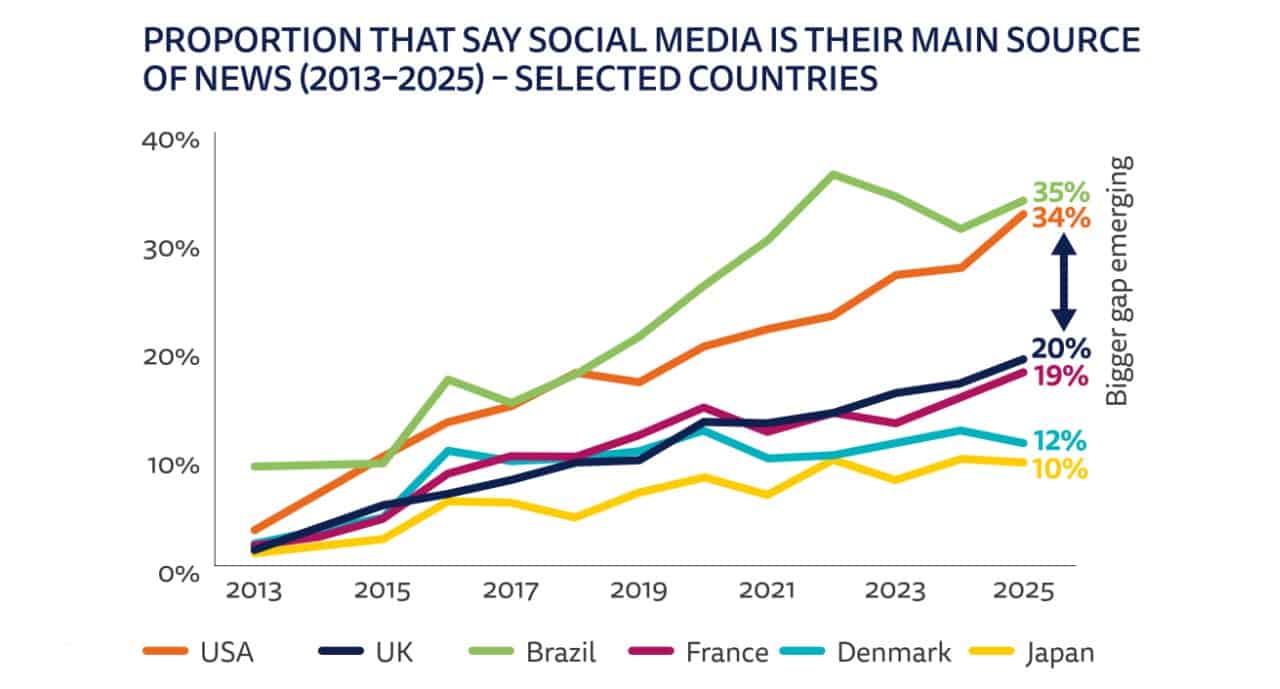
The “creator-ficiation” of news is still in its infancy in the region, but there is no reason to believe that the trend won’t find root here.
The growth of creator-driven reporting is demonstrated by the surge in Substack newsletters offering professional reporting by established journalists and strong newcomers as subscriptions.
Last year was the point at which viewership on YouTube surpassed that of broadcast media. That trend will accelerate if a good reason for consumers to consider mainstream media isn’t being actively developed.
Trust in traditional media channels remains stable at an average of 40 per cent of those surveyed by Reuters.
Some of the findings are maddening. Respondents complained that news media push an agenda and don’t present evidence in a balanced way. Yet they prefer personality-led online news in which the biases of presenters are often blatant.
News media are considered the most trusted source for timely information, but 62 per cent of respondents do not consider it to be their first source
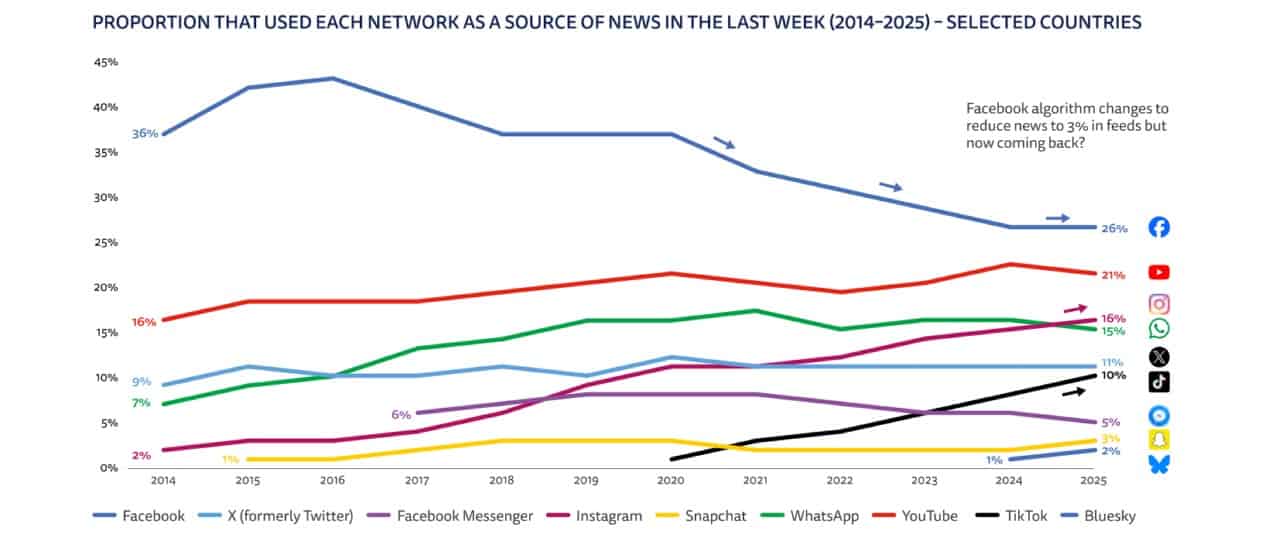
Hard news is viewed at a source of worry, insecurity and toxic discussions. Finding a balance between the hard facts of difficult investigative stories and positive, hopeful angles and outcomes is likely to become a part of the reporting package.
Are we ready to assign a happiness reporter or a healthy eating reporter to news-you-can-use beats?
The smartphone is clearly the window through which audiences will find their information. Legacy formats, including TV, radio and print are the choice of over-55 news consumers and they are ageing out fast.
Media houses must prepare to be not just digital first, but smartphone savvy.
Media houses can’t only post and stream to the next generation audience, they need to be present or at least available in comments sections, where robust debates can erupt around stories without media professionals engaging at all.
The local default has been to shut down commenting. It’s difficult and costly to manage, but it also represents a significant opportunity to forge engagement with the wider news audience and reinforce both engagement and trust.
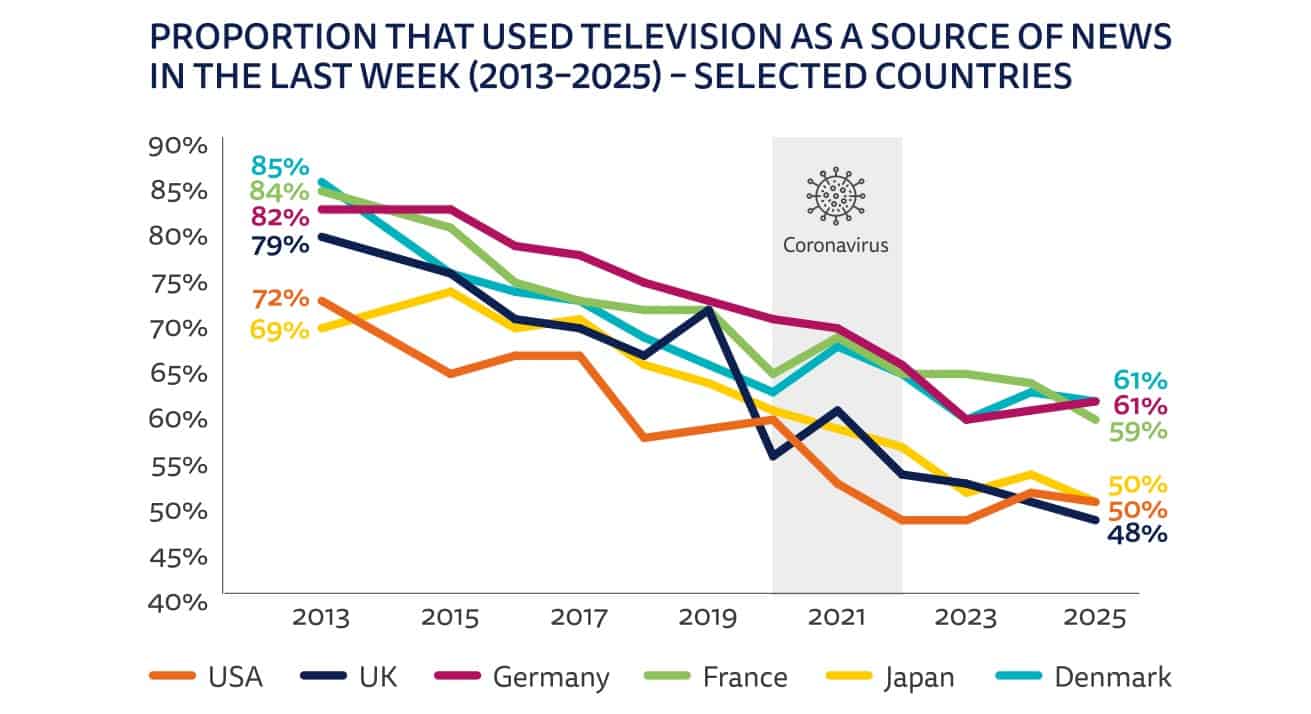
By abdicating discussion of news to social media, media houses further divorce their work from their audience and lose a useful nexus point for engaging dissenting perspectives at source.
The era of news production as a dark art is over. Everyone is both a potential news publisher and consumer today. There is no obvious distinction.
Emphasising the difference between hearsay and reporting, transparency in news production and delivery, de-emphasising end products in favour of process while engaging the audience will be critical to any advances in local media.
It’s also important to note that when measuring TT or even Caribbean news output against global trends, it might be tempting to measure local gains against media giants, but a most realistic comparison is local news operations.
In the online news environment, nobody is coming to a local news house for perspectives on international trends, but robust and relevant local news reporting should emphasise regional authority and authoritative depth of coverage.
That will become even more important as the social media de-prioritisation of news deepens. Regional news has proven temporarily immune to that because Caribbean news sharing tends to happen in circles of community, inclusive of the diaspora, instead of through any prioritisation of platform algorithms.
Revenue collection in this environment continues to be a challenge, and it will remain that way until a persuasive value proposition for mainstream media becomes clearer.
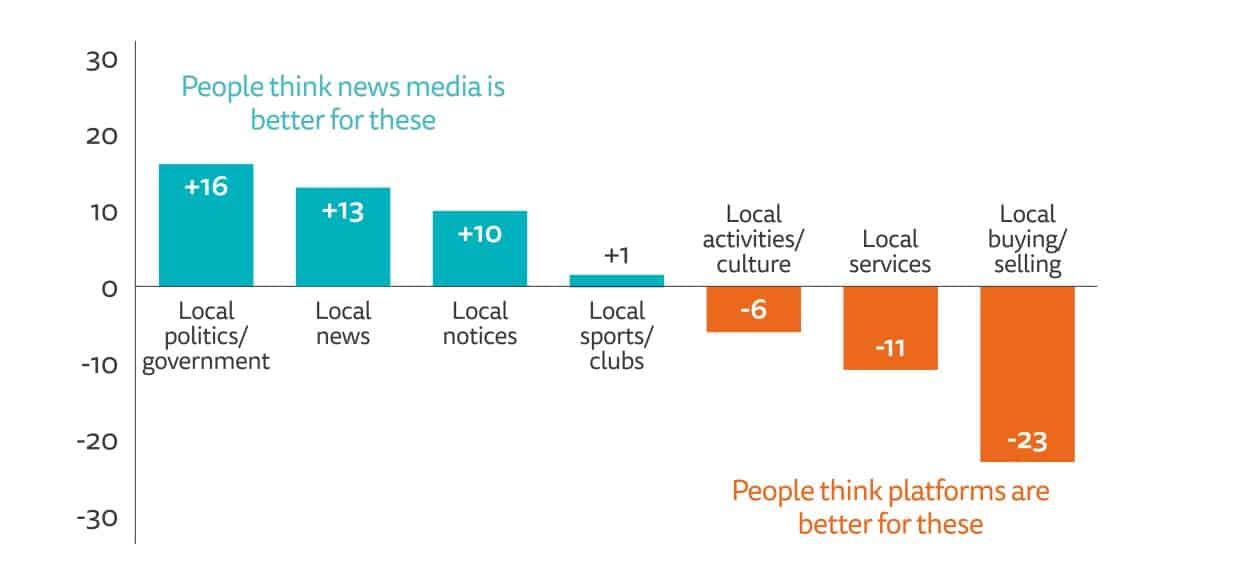
The region should use this lead time before global trends bleed into the archipelago to craft an effective response to the free alternatives that plunder primary reporting sources.
The next generation of news consumer will also demand multiple points of engagement, consume news on multiple devices, often simultaneously, and expect significantly more than they can get glean from pass-along sources before granting the most elusive of gifts, customer loyalty.
The Reuters survey found that respondents wanted more disclosure of sources, more prominent corrections, clearer distinctions between news and opinions, transparency on media house funding and disclosure of conflicts of interest.
The assignment of specialist reporters to beats was also considered an asset.
Meeting consumer interests means understanding the consumer. Knowing what they want and supplying it in a trustworthy environment should be a core part of the journalism mission.













 Is Apple’s Neo the One?
March 22, 2026
Is Apple’s Neo the One?
March 22, 2026
 Privacy and your travel information
March 15, 2026
Privacy and your travel information
March 15, 2026
 TATT announces ambitious three-year strategic plan
March 9, 2026
TATT announces ambitious three-year strategic plan
March 9, 2026
 Samsung’s S26 leans in hard on...
March 1, 2026
Samsung’s S26 leans in hard on...
March 1, 2026
 A 2026 manifesto for Carnival
February 23, 2026
A 2026 manifesto for Carnival
February 23, 2026
 A hiss from a rose
February 15, 2026
A hiss from a rose
February 15, 2026
 News is a niche until it’s...
February 9, 2026
News is a niche until it’s...
February 9, 2026
 FT’s second Next Gen News report...
February 9, 2026
FT’s second Next Gen News report...
February 9, 2026
 Ransomware report notes fourth quarter 2025...
February 2, 2026
Ransomware report notes fourth quarter 2025...
February 2, 2026
 Hands-on with Apple’s Creator Studio as...
January 30, 2026
Hands-on with Apple’s Creator Studio as...
January 30, 2026
 Apple flirts with subscription software
January 26, 2026
Apple flirts with subscription software
January 26, 2026
 So long, and thanks for all...
January 19, 2026
So long, and thanks for all...
January 19, 2026
 Cyberedge reports on cybersecurity trends
January 12, 2026
Cyberedge reports on cybersecurity trends
January 12, 2026
 Samsung’s ZFlip 7 shows steady improvement
January 5, 2026
Samsung’s ZFlip 7 shows steady improvement
January 5, 2026
 Digital New Year’s resolutions
December 29, 2025
Digital New Year’s resolutions
December 29, 2025
 WiPay announces new strategy for services,...
December 22, 2025
WiPay announces new strategy for services,...
December 22, 2025
 Old Mac, new OS
December 15, 2025
Old Mac, new OS
December 15, 2025
 Regional cybersecurity faces fire
December 8, 2025
Regional cybersecurity faces fire
December 8, 2025
 Unfinished symphonies
December 1, 2025
Unfinished symphonies
December 1, 2025
 Do you know who your child...
November 24, 2025
Do you know who your child...
November 24, 2025