

- Copyright is a collection of rights that automatically vest to someone who creates an original work of authorship
- Copyright is crucial for professional creators, as it guides negotiations, pricing, and subsequent use of their work
- Copyright encourages the preservation of creative works
Above: Winston Bayley, The Shadow, performing at Dimanche Gras in 2001. Photo By Mark Lyndersay. Shadow would threaten to stop making albums in 2003 because of his frustration with “Musical Pirates.”
BitDepth#1513 for June 02, 2025
At the heart of the fuss over copyright and image rights is a deep rooted misunderstanding of what copyright is and what it protects.
The Copyright Alliance describes copyright as “A collection of rights that automatically vest to someone who creates an original work of authorship like a literary work, song, movie or software. These rights include the right to reproduce the work, to prepare derivative works, to distribute copies, and to perform and display the work publicly.”
For most people, the very idea of copyright, particularly in a sharing-crazy social media environment, is simply irrelevant.
What most people produce as writing and photographs are a kind of extended, open-air journaling of their thoughts, observations and concerns. Sharing it widely is the point and anything that might stand in the way of that is simply counterproductive.
But everyone is protected by copyright, and in our local jurisdiction, that protection begins when a thought is written or an image is snapped. The right to that fixed form of the creative work might never be exploited, but it exists.
For professional creators, of music, of writing and in the visual arts, those rights are front and centre in negotiations. Discussing the terms under which work is produced and used should guide the pricing of the work and inform its subsequent use.
That value isn’t always enumerated in cash.
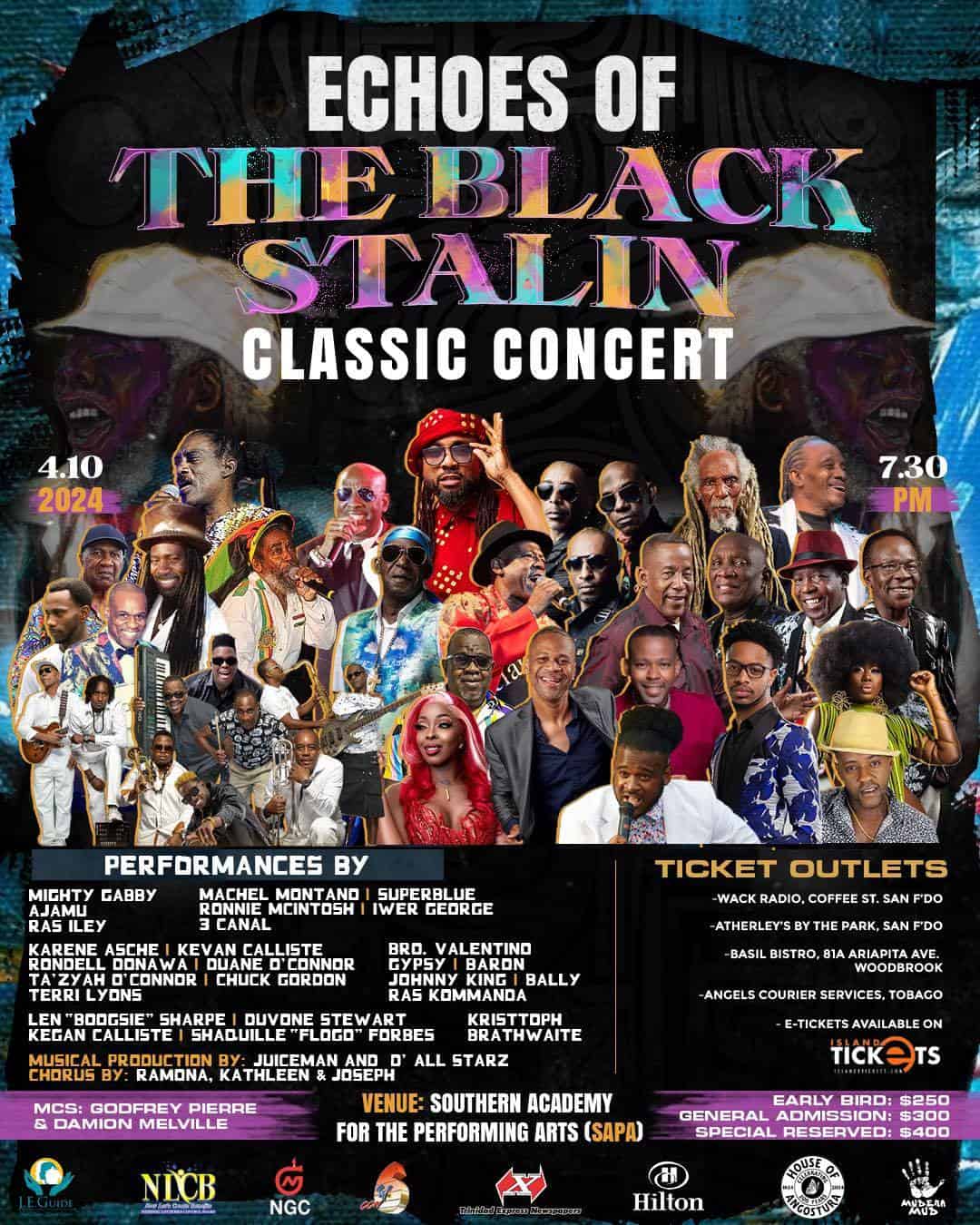
After the announcement of the particulars of the infringement case against the Calliste family, a copy of the offending promotional poster was shared with me.
Among the large group of featured cast are photographs of six calypsonians I’d photographed over the last five years for a personal project.
This discovery did not particularly surprise me. Before photographing each of the 170 calypsonians featured in the project, I let them know that in exchange for their time, the image I selected of them could be used for professional promotional use.
While just three of the calypsonians asked for their image in high resolution, the photos show up in Google searches, and graphic artists routinely take them, in a roundabout way, for their intended use.
I am not that indifferent with third parties who attempt to use these images in other ways and some infringers have had to pay for unauthorised use, having referenced neither photographer nor subject.
But consider what happens without copyright, which creates a value for otherwise ephemeral creative works.
If the author of a creative work cannot earn residual income from the work they create, there is little point to keeping it after its initial use.
In environments in which I have done work made for hire, work where my employer owned the copyright, those works have almost universally disappeared.
In every instance, the value of the created work was believed to be the initial use or publication.
Even if the unpublished or unused works were assumed to have little or no value and were either deliberately or inadvertently discarded, then at least the published works would be secured.
That doesn’t happen either.
Original negatives and transparencies owned by these employers were stored in wholly unsuitable spaces, in one notable case, under the nesting space of a colony of bats.
That is how a visual history dies, under droppings capable of dissolving concrete.
Decades of original programming at TTT were erased because it was deemed too expensive to preserve the tapes. Erasing and reusing them was considered good business.
A huge win for the accountants. A inestimable loss of the country’s broadcast history.

Despite these tragedies, people keep trying to not just hold on to their work, but to bring it forward in usable form.
Christopher Laird painstakingly migrated hundreds of hours of Banyan programming and source captures to digital format only to be confronted with a near universal lack of interest in supporting the resulting digital library.
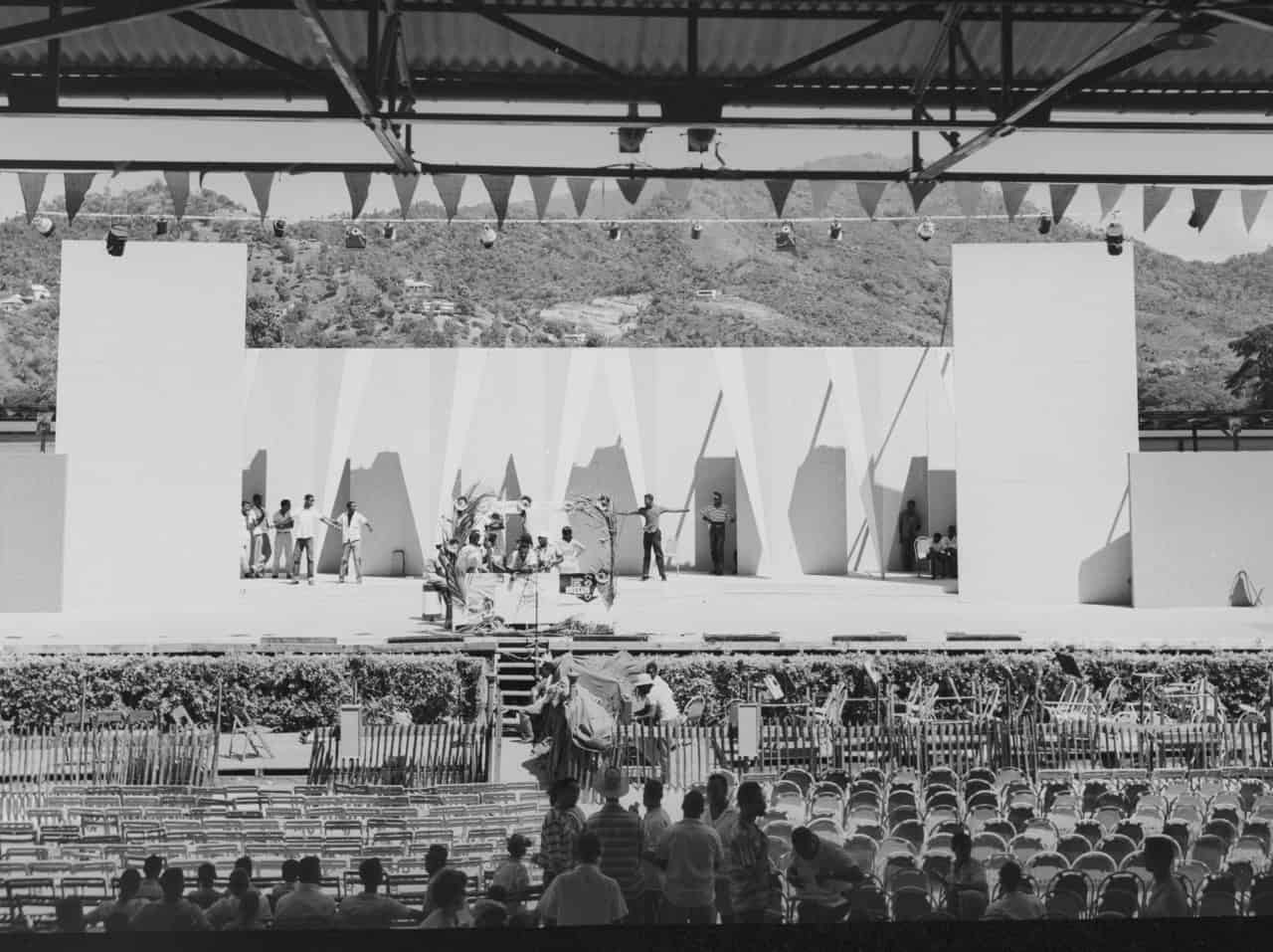
Noel and Mary Norton showed me the value of an organised archive. They had a system for identifying images by the film roll from capture on the Queen’s Park Savannah stage.
I’d only fully understand the value of what’s now called metadata, or data about data, in this century. The Nortons knew what’s what decades before.
But moving image archives forward from film to digital is harder than ever before. Film scanners are either rare or rubbish.
A DIY camera-scan system is my go-to now. Digital storage systems can’t be trusted for longer than five years and must be double or triple duplicated and migrated to new media on a planned schedule because paranoia is merited.
And all of it is for naught if there is no opportunity for recompense for this considerable investment.
A decade ago I approached a local bank that I’d done work for over ten years. I offered them my collected contact sheets of that slice of their history for review with a view to an all rights corporate acquisition of at least a selection of the work. There was no interest.
Last week, I went through tens of thousands of those negatives, selecting a few because of their general interest value or because of nostalgia. The rest I cut in half with scissors and dumped.
If there is no interest in or respect for creative works, they will end up destroyed or mortally abandoned.
So if you encounter something rare and valuable that someone took the time, effort and expense to preserve and decide to use it without permission, consider the work that went into keeping it available and don’t be surprised if the wrath of creation falls upon you.















 Is Apple’s Neo the One?
March 22, 2026
Is Apple’s Neo the One?
March 22, 2026
 Privacy and your travel information
March 15, 2026
Privacy and your travel information
March 15, 2026
 TATT announces ambitious three-year strategic plan
March 9, 2026
TATT announces ambitious three-year strategic plan
March 9, 2026
 Samsung’s S26 leans in hard on...
March 1, 2026
Samsung’s S26 leans in hard on...
March 1, 2026
 A 2026 manifesto for Carnival
February 23, 2026
A 2026 manifesto for Carnival
February 23, 2026
 A hiss from a rose
February 15, 2026
A hiss from a rose
February 15, 2026
 News is a niche until it’s...
February 9, 2026
News is a niche until it’s...
February 9, 2026
 FT’s second Next Gen News report...
February 9, 2026
FT’s second Next Gen News report...
February 9, 2026
 Ransomware report notes fourth quarter 2025...
February 2, 2026
Ransomware report notes fourth quarter 2025...
February 2, 2026
 Hands-on with Apple’s Creator Studio as...
January 30, 2026
Hands-on with Apple’s Creator Studio as...
January 30, 2026
 Apple flirts with subscription software
January 26, 2026
Apple flirts with subscription software
January 26, 2026
 So long, and thanks for all...
January 19, 2026
So long, and thanks for all...
January 19, 2026
 Cyberedge reports on cybersecurity trends
January 12, 2026
Cyberedge reports on cybersecurity trends
January 12, 2026
 Samsung’s ZFlip 7 shows steady improvement
January 5, 2026
Samsung’s ZFlip 7 shows steady improvement
January 5, 2026
 Digital New Year’s resolutions
December 29, 2025
Digital New Year’s resolutions
December 29, 2025
 WiPay announces new strategy for services,...
December 22, 2025
WiPay announces new strategy for services,...
December 22, 2025
 Old Mac, new OS
December 15, 2025
Old Mac, new OS
December 15, 2025
 Regional cybersecurity faces fire
December 8, 2025
Regional cybersecurity faces fire
December 8, 2025
 Unfinished symphonies
December 1, 2025
Unfinished symphonies
December 1, 2025
 Do you know who your child...
November 24, 2025
Do you know who your child...
November 24, 2025

[…] Trinidad and Tobago – At the heart of the fuss over copyright and image rights is a deep rooted misunderstanding of what copyright is and what it protects… more […]