
- The case sparked public debate, with some arguing that the calypsonian’s actions were justified while others supported the photographer’s right to compensation.
- High-profile individuals may have image rights, but not all jurisdictions recognize post-mortem publicity rights.
- Google is a search engine, not a royalty-free image service.
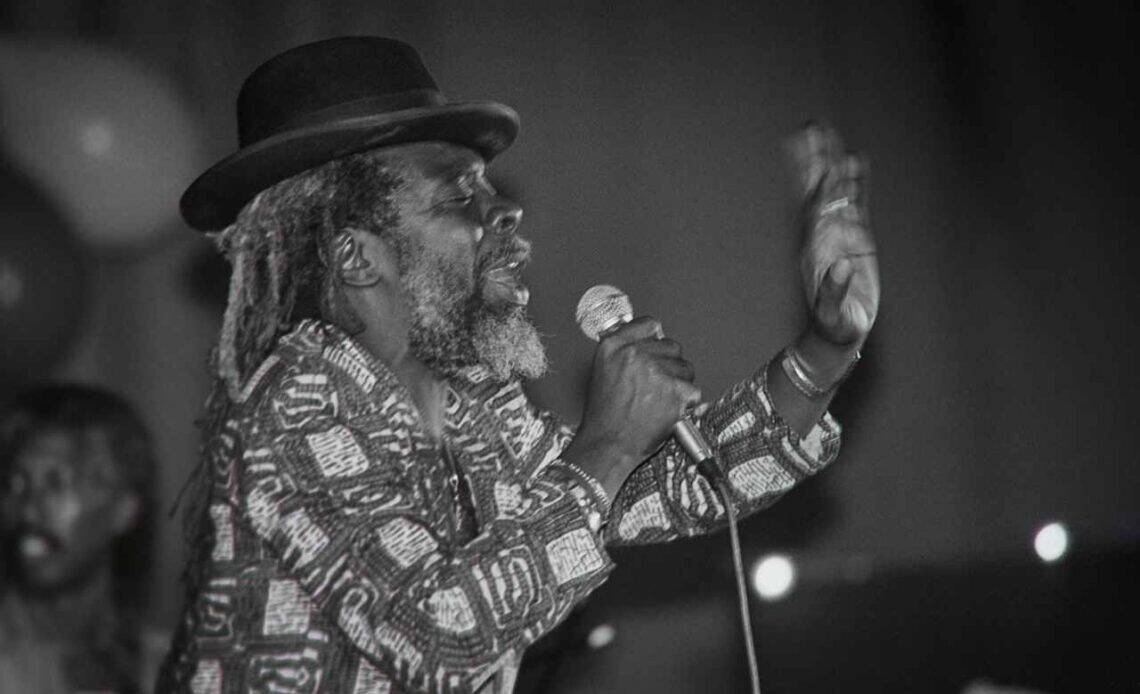
Above: Black Stalin, Leroy Calliste, performing in 1992. Photo by Mark Lyndersay.
BitDepth#1512 for May 26, 2025
By now, everyone has heard the calypsonian copyright story. Many have a strong opinions about it, pro and con.
A freelance photographer took a picture of a calypsonian and published it in 2011.
The producers of a fundraising event ignored the photographer’s requests for payment for the use of his photo in promotions.
The case went to court. The calypsonian’s family did not mount a defence. A default judgement in the sum of $360,550 was announced a week ago.
Understanding the issue might be clearer if we consider it in more tangible and familiar terms…
“Mr Smith, you were arrested driving your neighbour’s vehicle after it was reported stolen.”
“Your honour, what happened was, I had arrangements to do some rideshares for people and I needed a car. My family needed the money bad, sir, we had no groceries in the fridge.”
“Where was your car, Mr Smith?”
“I doesn’t have one your honour.”
“So the solution to your problem was to steal the car, Mr Smith?”
“Not as such sir, I did take it without asking and did plan to bring it back with gas in the tank, sir. No harm done.”
“Taking without asking is actually a definition of theft, Mr Smith, and harm was done. You caused your neighbour distress; you deprived him of his property for your own gain. You didn’t even try to ask permission. You ignored him when he asked if you knew anything about his car. As a first time offender, you will have five years in prison to think about the wisdom of your actions.”
Overheard in the resulting uproar in the courtroom…
“But he is a good boy; he was just trying to help his family.”
“Five years! That judge is a beast! He have no heart.”
“Why that neighbour so? He doh even use the car that often.”
In court filings in the matter pending an appeal, Ernest Koylass, SC, explained, regarding the case, “The defendant is a 77-year-old widow in uncertain health, and her failure to file an appearance and later defence was unknowing of the consequence and not intentional.”

Copyright is regularly contemplated in this space, and image infringement considerations are not new. Laura Ferreira sought legal redress when her highly produced image of a model was used as decoration at a party hosted by the rapper TI.
There was considerable support for Ferreira, who was seen as a victim in the infringement.
Photographers covering Carnival-related events are perceived to be getting a free ride while profiting significantly from covering shows and parties.
Maria Nunes offered her own perspective on the reality of covering Carnival in 2019.
Last week’s online outrage was further fueled by the size of the judgement, but the case is also complicated because it involves the likeness of a deceased and widely loved artist and by the event itself, held to raise funds to meet medical costs incurred over his long illness.
But, the court is more likely to consider the fact that the event promoters were told of their infringement and chose to ignore it.
That they were unwilling to negotiate with the photographer and ultimately, by the fact that the defendant didn’t show up to tell their side of the story.
At the precise point that online comment threads collapsed into participants posting “Bun he” as a solution to the issue at hand, it became clear that any effort to clarify points comment by comment was doomed to be drowned out reflexive vitriol and fury.
Clarifying some pervasive misunderstandings about the situation might help though. I’ve written about this many times, but these are pertinent summary points.
The calypsonian and a photo of the calypsonian are two different legal entities.
A photograph is copyrighted to the photographer on creation.
A photograph of a person in a public place does not require their permission or consent and they need not be consulted if the photo is being reproduced non-commercially in the general public interest.
The exchange of money does not define commerce when it comes to copyright. Commercial use in photography happens when the photograph is used to sell a product or service.
In some jurisdictions, image rights or likeness rights can protect high-profile individuals (Marilyn Monroe, Elvis Presley and Frank Sinatra come to mind), but not all have post-mortem publicity rights or “dead celebrities bills.” TT has no image rights laws, though some protections are provided under moral rights.
Google is not a royalty free image service; it is a search engine. Finding a picture on Google is not a freeness, it is a reference point to establish copyright ownership and negotiate.
Clearly there needs to be more artiste education on these matters, particularly since cooperation among local creatives will provide the only sensible and effective path forward.








 Is Apple’s Neo the One?
March 22, 2026
Is Apple’s Neo the One?
March 22, 2026
 Privacy and your travel information
March 15, 2026
Privacy and your travel information
March 15, 2026
 TATT announces ambitious three-year strategic plan
March 9, 2026
TATT announces ambitious three-year strategic plan
March 9, 2026
 Samsung’s S26 leans in hard on...
March 1, 2026
Samsung’s S26 leans in hard on...
March 1, 2026
 A 2026 manifesto for Carnival
February 23, 2026
A 2026 manifesto for Carnival
February 23, 2026
 A hiss from a rose
February 15, 2026
A hiss from a rose
February 15, 2026
 News is a niche until it’s...
February 9, 2026
News is a niche until it’s...
February 9, 2026
 FT’s second Next Gen News report...
February 9, 2026
FT’s second Next Gen News report...
February 9, 2026
 Ransomware report notes fourth quarter 2025...
February 2, 2026
Ransomware report notes fourth quarter 2025...
February 2, 2026
 Hands-on with Apple’s Creator Studio as...
January 30, 2026
Hands-on with Apple’s Creator Studio as...
January 30, 2026
 Apple flirts with subscription software
January 26, 2026
Apple flirts with subscription software
January 26, 2026
 So long, and thanks for all...
January 19, 2026
So long, and thanks for all...
January 19, 2026
 Cyberedge reports on cybersecurity trends
January 12, 2026
Cyberedge reports on cybersecurity trends
January 12, 2026
 Samsung’s ZFlip 7 shows steady improvement
January 5, 2026
Samsung’s ZFlip 7 shows steady improvement
January 5, 2026
 Digital New Year’s resolutions
December 29, 2025
Digital New Year’s resolutions
December 29, 2025
 WiPay announces new strategy for services,...
December 22, 2025
WiPay announces new strategy for services,...
December 22, 2025
 Old Mac, new OS
December 15, 2025
Old Mac, new OS
December 15, 2025
 Regional cybersecurity faces fire
December 8, 2025
Regional cybersecurity faces fire
December 8, 2025
 Unfinished symphonies
December 1, 2025
Unfinished symphonies
December 1, 2025
 Do you know who your child...
November 24, 2025
Do you know who your child...
November 24, 2025

Your “more tangible and familiar terms” story is a masterclass in capturing Trini ethos. “But he is a good boy; he was just trying to help his family.” is golden! No one wants to learn. Emotionalism over facts prevails here in T&T.
[…] is where the TechNewsTT article on copyright hits hardest. We are in a full-scale war over who owns information. AI systems don’t generate […]
[…] Trinidad and Tobago – The case sparked public debate, with some arguing that the calypsonian’s actions were justified while others supported the photographer’s right to compensation… more […]