

- Dominic Smith aims to leverage emerging technologies like 5G, AI, and IoT to enhance digital adoption
- Core infrastructure, interoperability, and public service reform are crucial foundations for digital governance, Unfinished and partially planned projects need attention, particularly infrastructure initiatives.
Above: Dominic Smith at the CTU Spectrum seminar. Photo courtesy CTU.
BitDepth#1511 for May 19, 2025
Dominic Smith is the new Minister of Public Administration and Artificial Intelligence, a ministry that reintegrates public administration with the digital transformation ministry established in 2021.
That bold, but ultimately underwhelming effort to create a purpose-built ministry to drive technology adoption in government did not have the impact that anyone might have hoped for.
Some of that is because the MDT was, to put it bluntly, terrible at communicating what it was actually doing, choosing to parade its achievements as a series of completely forgettable openings and reopening of community centres with technology components.
The most visible MDT project was D’Hub, which is still online, but about which little is known. That’s certainly not the fault of the new minister.
The Digital Transformation Ministry last issued a comprehensive press release about the competition announcing its proof of concept awards in September 2023. Winners in the categories were announced, sotto voce, in April 2024.
The MDT Facebook page mentions that a pilot project for the Noise Tracker app was launched last month for residents of Woodbrook.
What’s happened to those projects since? Where is the code? Is there a plan to make use of the solutions commissioned to enable digital government?
And this is only one complication that the new minister faces.
Dominic Smith spoke for the first time publicly about his plans for the digital arm of the ministry on May 13.
While that speech leaned in heavily on the subject matter of the conference, spectrum management, Smith made it clear that current buzzwords are receiving his attention, promising to, “embrace emerging technologies such as fifth generation or 5G networks, AI, and the Internet of Things (IOT), ensuring Trinidad and Tobago and the rest of the region [will] become leaders in economic growth through digital adoption.”
He further promised to improve TT’s ranking on the ICT Development Index.
Ministerial speeches aren’t generally designed to deliver clarity about the governance mission and Smith has barely had a chance to warm his new chair.
We can glean some insight based on who he’s been meeting in his first two weeks on the job. That roster includes the CEOs of iGovTT and TATT, who will probably fall under the AI Ministry.
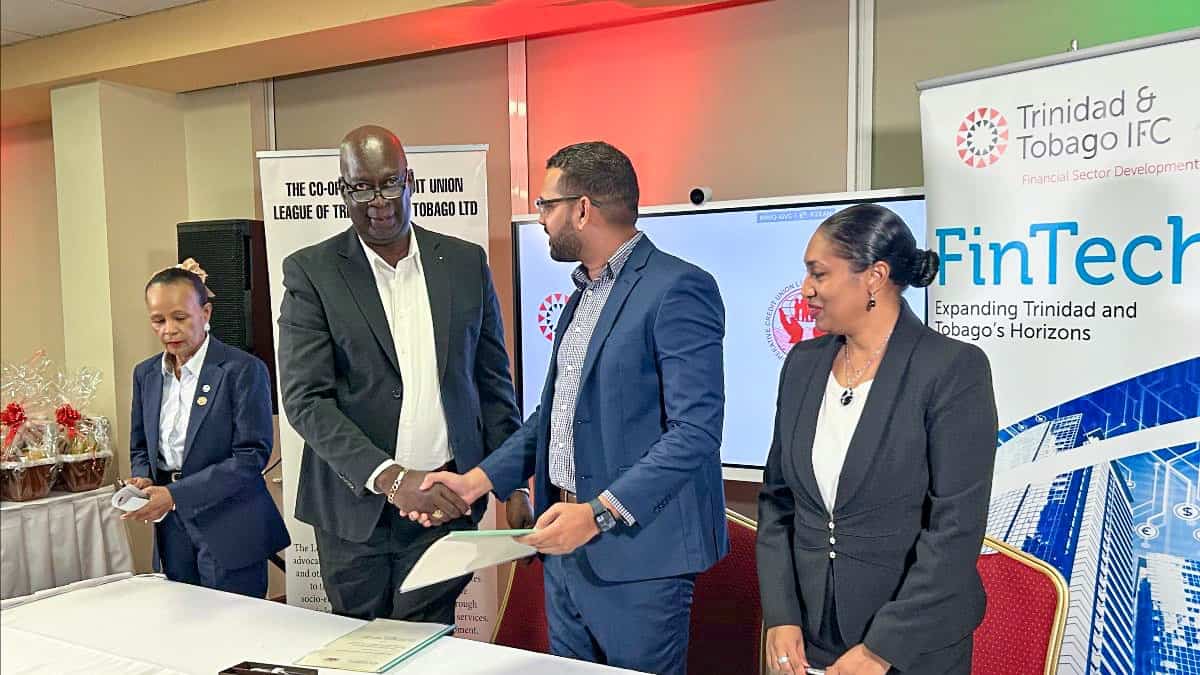
But what of the TTIFC, which has largely abandoned any pretence of being any kind of financial institution in favor of enabling digital technology in governance and for financial institutions? Will it remain in Finance with a fuzzy mission or find direction as a technology enabler for fintech in the AI Ministry?
Other hot button issues include the new Education Minister’s mandate to provide laptops for students. Does the Education Ministry have the expertise and manpower to specify equipment, plan connectivity and learning delivery (when it will also need to be busy working on curriculum design) and provide support for that deployment?
While I broadly champion the reinstatement of the device initiative, the lessons of 2010-2015 when laptops were shared with enthusiasm and 2020-2021, when devices were gathered and distributed in desperation, remain within recent memory.
Every school that allows access to smartphones as part of their learning experience has horror stories about what children can get up to. Laptops without controls, monitoring regimes and trained teacher support can bring as many problems as opportunities into local schools.
The emphasis on AI feels like a more decorative than performative mandate, given the need for core infrastructure and interoperability to create a functional backbone for digital governance. How will the new ministry integrate its operations with other ministries seeking digital governance?
How will the AI-PA Ministry drive a mandate for digital governance in public administration itself, which won’t happen without public service reform.
Gordon Draper was the first minister with responsibility for the public service and his attempt at reform between 1991 and 1995 didn’t find traction. That particular top remains firmly mired in the mud, notably unspun to this day.
It remains unclear what, exactly, Allyson West did in the role during her term of office beyond stoutly resisting work from home efforts through bullish evasion.
The new AI Minister will face a rat’s nest of unfinished, partially planned and executed projects that represent all the thinking of some bright local minds over the last half-decade.
Some of these projects are, honestly, unexciting. They are the buried plinth on which ambitious digital architecture can be built, but without serious attention to completing these infrastrucure initiatives, nothing lasting and valuable to serve the public can be properly built.
Long before Facebook, Amazon, Apple, Netflix and Google became the digital powerhouses they are today, concrete was poured by the ton. Server racks assembled in the thousands and miles of cabling were run.
It never made sense, for instance, for the MDT to commit so much of its time and resources to planning a dedicated government cloud. Why not finally end the farce of TSTT, which is neither proper public utility nor independent business, acknowledge that nobody is ever going to buy 49 per cent of it, buy out the shareholder (Liberty Global) and starting an effective cloud on TSTT’s existing infrastructure, co-locating hardware for optimal security?
An electronic ID system, in development for years, can’t be realistically implemented without a commitment to a secure backend, but there’s no need to get into the cloud business to achieve that.
Smith must forge an effective partnership with the legal ministries to advance laws that target technology development, put teeth into cybersecurity and lubricate fintech. Coming to grips with the sprawl of this will be Smith’s first responsibility. Untangling and executing effectively must follow.



















 Is Apple’s Neo the One?
March 22, 2026
Is Apple’s Neo the One?
March 22, 2026
 Privacy and your travel information
March 15, 2026
Privacy and your travel information
March 15, 2026
 TATT announces ambitious three-year strategic plan
March 9, 2026
TATT announces ambitious three-year strategic plan
March 9, 2026
 Samsung’s S26 leans in hard on...
March 1, 2026
Samsung’s S26 leans in hard on...
March 1, 2026
 A 2026 manifesto for Carnival
February 23, 2026
A 2026 manifesto for Carnival
February 23, 2026
 A hiss from a rose
February 15, 2026
A hiss from a rose
February 15, 2026
 News is a niche until it’s...
February 9, 2026
News is a niche until it’s...
February 9, 2026
 FT’s second Next Gen News report...
February 9, 2026
FT’s second Next Gen News report...
February 9, 2026
 Ransomware report notes fourth quarter 2025...
February 2, 2026
Ransomware report notes fourth quarter 2025...
February 2, 2026
 Hands-on with Apple’s Creator Studio as...
January 30, 2026
Hands-on with Apple’s Creator Studio as...
January 30, 2026
 Apple flirts with subscription software
January 26, 2026
Apple flirts with subscription software
January 26, 2026
 So long, and thanks for all...
January 19, 2026
So long, and thanks for all...
January 19, 2026
 Cyberedge reports on cybersecurity trends
January 12, 2026
Cyberedge reports on cybersecurity trends
January 12, 2026
 Samsung’s ZFlip 7 shows steady improvement
January 5, 2026
Samsung’s ZFlip 7 shows steady improvement
January 5, 2026
 Digital New Year’s resolutions
December 29, 2025
Digital New Year’s resolutions
December 29, 2025
 WiPay announces new strategy for services,...
December 22, 2025
WiPay announces new strategy for services,...
December 22, 2025
 Old Mac, new OS
December 15, 2025
Old Mac, new OS
December 15, 2025
 Regional cybersecurity faces fire
December 8, 2025
Regional cybersecurity faces fire
December 8, 2025
 Unfinished symphonies
December 1, 2025
Unfinished symphonies
December 1, 2025
 Do you know who your child...
November 24, 2025
Do you know who your child...
November 24, 2025

Interesting.
You are right about stressing the need for a solid backbone, but not only of the tech, it also requires some process, trained staff and planned rollout.
After 20+ years in IT and Telco I can say that the buzzwords fuel excitement and expectation (not necessarily a bad thing) .. but the devil is in the delivery.
That requires very clear goals and focus in execution.