
- Despite similar numbers of male and female students taking IT exams at CXC level, the disparity widens to three male students for every female student at university level in the Caribbean.
- Women possess natural problem-solving, social empathy, and creative thinking skills, which are valuable in the IT sector.
- While technical knowledge is important, the ability to translate that knowledge into real-world environments is equally vital.
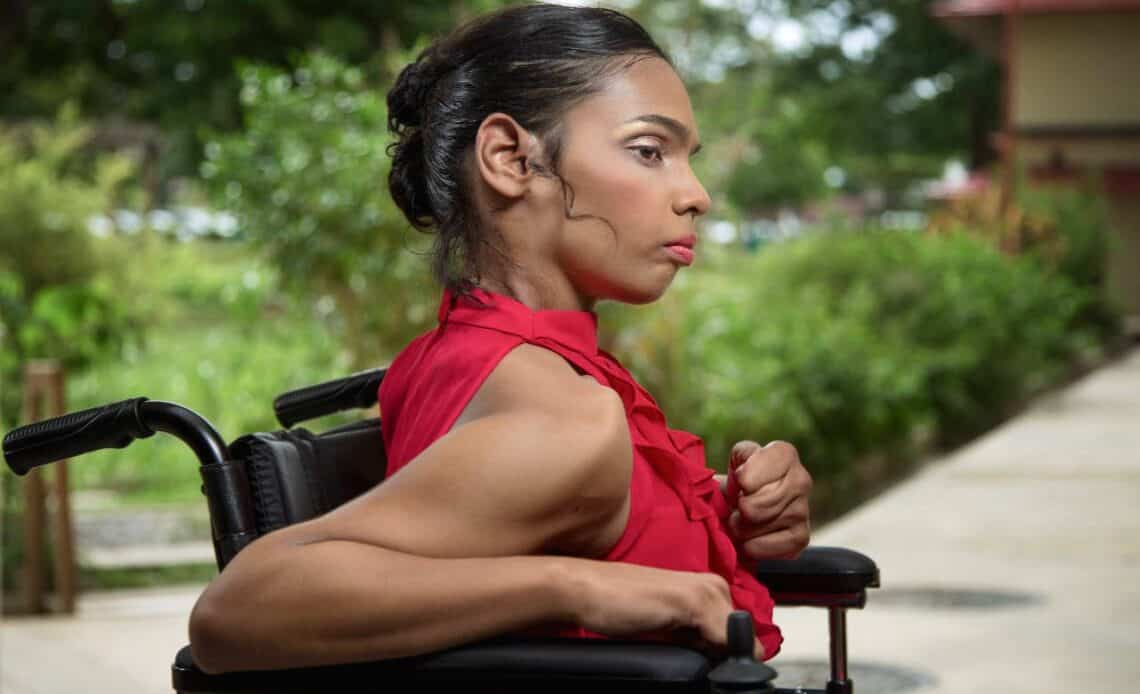
Above: Shamla Maharaj photographed at UWI, St Augustine in October, 2016. Photograph by Mark Lyndersay/Cause an Effect
BitDepth#1508 for April 28, 2025
On Thursday, the Caribbean Telecommunications Union hosted its annual Girl in ICT day online.
This year’s theme was “Girls in ICT for inclusive digital transformation” and the CTU chose Shamla Maharaj, a disability advocate, as the event’s featured speaker before breaking out an informative panel for discussion of the topic.
Despite events marking this annual attempt to correct gender imbalance in STEM related jobs and technology work specifically, gender disparity continues to be an issue in the region.
A 2018 Jamaican study, “An Examination of Gender Balance in ICT
at Educational Institutions” found that while the gender mix of students sitting the IT examination at CXC was roughly equal, the disparity in gender widened to three male students for every female student enrolled at university level.
Success ratios across genders at graduation evened the disparity only incrementally, with roughly 2.25:1 being the ratio of male to female students graduating.
The results of this study are dramatically better for female IT students in Jamaica than it is for their counterparts in the US and EU.
A 2020 research study at Nicholls University investigating “Gender Disparity in Students’ Choices of Information Technology Majors” found that while female graduates dominate universities, enrollment by and success for female graduates in ICT trails their male counterparts.
The situation is the same in the European Union, where more than half of the university population is female, but just 20 per cent of women graduate with ICT-related qualifications.
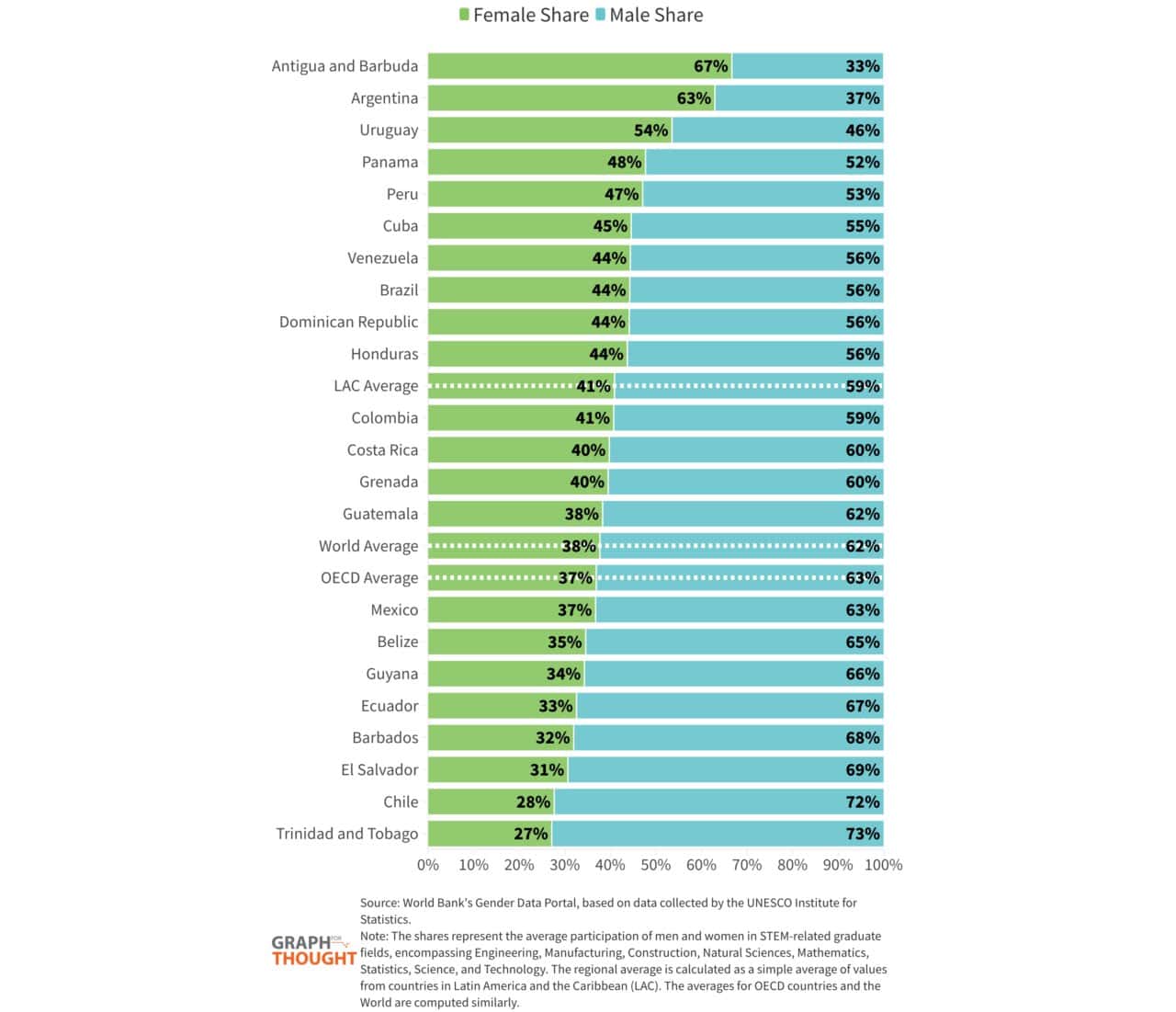
A 2024 UNDP Latin America and the Caribbean report places TT at the bottom of the region by percentage of women pursuing STEM studies at university with 27 per cent, but those researchers worked from 2002 statistics.
A 2022 UNDP analysis of regional planning documents examined TT documents from 2003 to 2020 and found that none of them identified girls and women as a disadvantaged sector in ICT.
For Shamla Maharaj, who now works as a Product Delivery Analyst for Scotiabank’s English Caribbean region, technology made all the difference.
“Imagine what your life would be would be without ICT, no internet, no devices, no digital learning, no apps, no access to knowledge opportunity or to each other?” she asked attendees at the CTU webinar.
“Now imagine chasing the world with limited mobility or navigating education with barriers at every turn. This was my reality once and for many it’s still the case.”
“As a woman who was born into a world where I had few opportunities, as someone who has had to innovate, I’ve come to see technology as a lifeline for all of us. I live with severe physical disability, but even as a child I didn’t want to wait on the world to create space.”
“I believed then, as I do now that if I wanted to move forward, I had to create my own facility. My earliest experience with technology began when I was seven, learning to use a typewriter. Back then, I had no idea how deeply the simple act of typing would change my life. It was a doorway, allowing me to transition smoothly into the digital world as computers became more commonplace.”
“I’m able to execute my responsibility remotely, delivering results, leading a region-wide initiative and driving inclusion with the same professionalism as if it were seated in any corporate office.”
“Speech recognition, language translation and image description software are changing how people with disabilities interact with the world, increasing accessibility and opening doors.”
“Our schools must access technology but must also teach students how to think. What’s is the problem to be solved and how to imagine the solution. Technology should be part of our curriculum, but so should social inclusion, resilience and courage.”
“We need to have the right mindset, support system and opportunities as we look to the future. One thing is clear. Inclusive innovation is non-negotiable.”
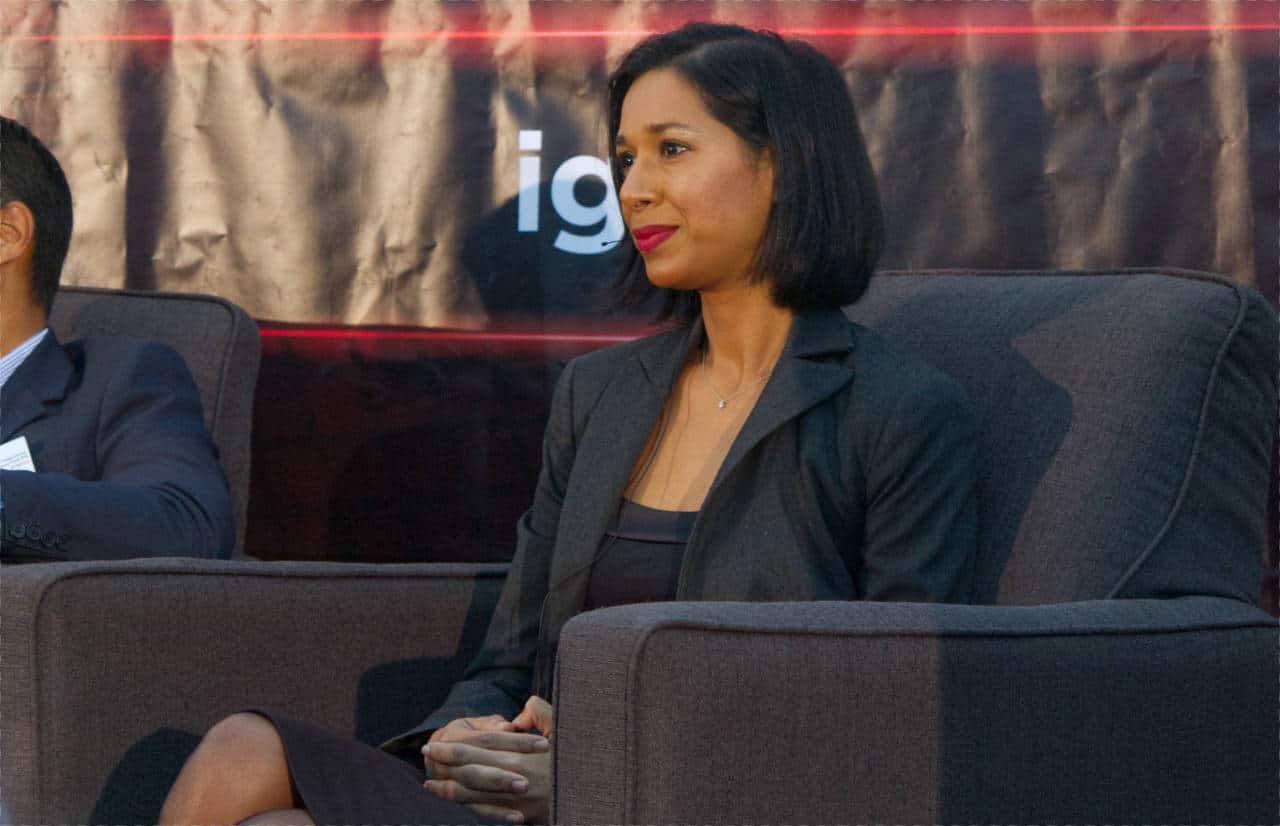
“Globally, women only represent 25% of those who work in STEM,” said Vashti Maharaj, Adviser, Digital Trade Policy at the Commonwealth Secretariat.
“Culturally and socially, boys are thought to be problem solvers and the boys are the ones who would get into tech; the boys are the ones who do engineering. But that is changing, and I would encourage everyone to see these challenges as opportunities, particularly for women and girls.”
“Many women have a natural advantage. We are the natural problem solvers. We have natural social empathy. We are natural, creative thinkers and that’s because of how we are brought up. Those skills would help you rise and shine within the IT sector. It is up to us to build that confidence, create our pathways and even when challenged, have confidence in our ability to make that difference.”
For Esther Callender-George, president of ISACA Trinidad & Tobago, technology is only part of the challenge in ICT leadership.
“What has helped me throughout my career is not technical skills,” Callender-George said, “it was being able to think critically.”

“You are going to encounter challenges. You are going to encounter difficult people. Those things are not going to go away, as an individual you have to learn how to adapt to situations, adapt to change, to maneuver so critical thinking and self-awareness is critical.”
“You’re going to enter spaces where there are biases. You have to know how to recognize that and not let it get to you. You have to be able to say, I’m not going to respond to this. I will focus on the message and not the messenger [particularly] in situations where you need to have that personal strength, that mental fortitude, that self-awareness.”
“The technical things you can learn. You can get a degree, but people’s brains work differently. Someone could cram and pass an exam. How do you translate that into the actual environment that you’re going to be in?”











 Is Apple’s Neo the One?
March 22, 2026
Is Apple’s Neo the One?
March 22, 2026
 Privacy and your travel information
March 15, 2026
Privacy and your travel information
March 15, 2026
 TATT announces ambitious three-year strategic plan
March 9, 2026
TATT announces ambitious three-year strategic plan
March 9, 2026
 Samsung’s S26 leans in hard on...
March 1, 2026
Samsung’s S26 leans in hard on...
March 1, 2026
 A 2026 manifesto for Carnival
February 23, 2026
A 2026 manifesto for Carnival
February 23, 2026
 A hiss from a rose
February 15, 2026
A hiss from a rose
February 15, 2026
 News is a niche until it’s...
February 9, 2026
News is a niche until it’s...
February 9, 2026
 FT’s second Next Gen News report...
February 9, 2026
FT’s second Next Gen News report...
February 9, 2026
 Ransomware report notes fourth quarter 2025...
February 2, 2026
Ransomware report notes fourth quarter 2025...
February 2, 2026
 Hands-on with Apple’s Creator Studio as...
January 30, 2026
Hands-on with Apple’s Creator Studio as...
January 30, 2026
 Apple flirts with subscription software
January 26, 2026
Apple flirts with subscription software
January 26, 2026
 So long, and thanks for all...
January 19, 2026
So long, and thanks for all...
January 19, 2026
 Cyberedge reports on cybersecurity trends
January 12, 2026
Cyberedge reports on cybersecurity trends
January 12, 2026
 Samsung’s ZFlip 7 shows steady improvement
January 5, 2026
Samsung’s ZFlip 7 shows steady improvement
January 5, 2026
 Digital New Year’s resolutions
December 29, 2025
Digital New Year’s resolutions
December 29, 2025
 WiPay announces new strategy for services,...
December 22, 2025
WiPay announces new strategy for services,...
December 22, 2025
 Old Mac, new OS
December 15, 2025
Old Mac, new OS
December 15, 2025
 Regional cybersecurity faces fire
December 8, 2025
Regional cybersecurity faces fire
December 8, 2025
 Unfinished symphonies
December 1, 2025
Unfinished symphonies
December 1, 2025
 Do you know who your child...
November 24, 2025
Do you know who your child...
November 24, 2025