
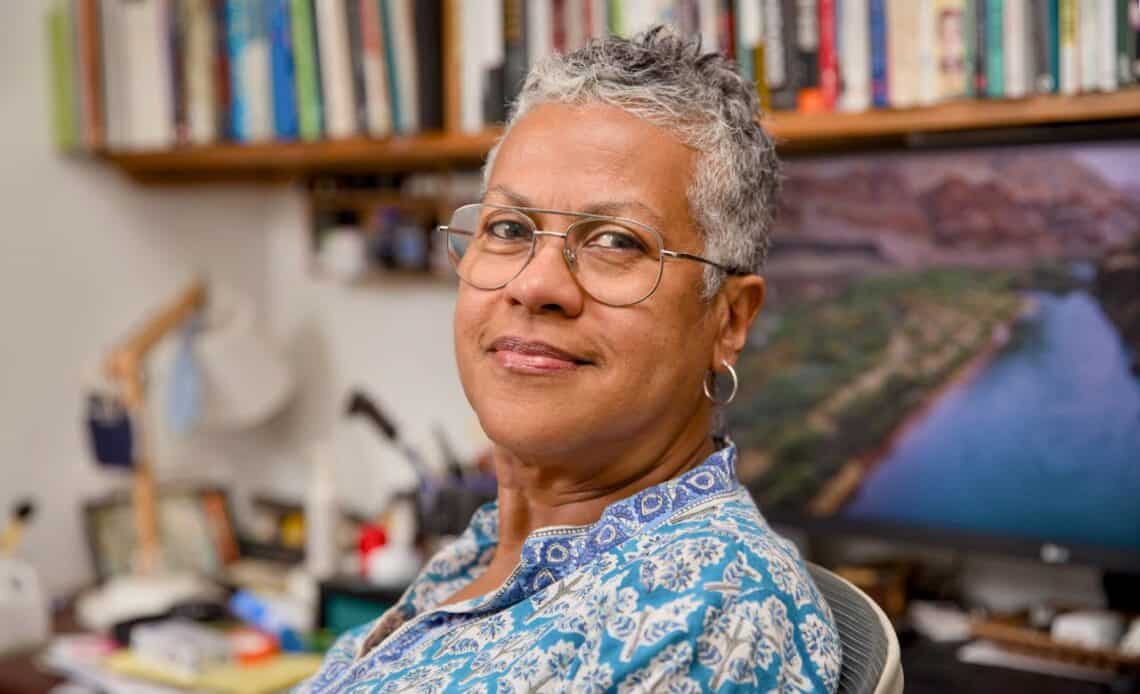
- Georgia Popplewell is stepping down as Managing Director of Global Voices after 16 years.
- Global Voices has adapted to the changing internet landscape by focusing on translation, advocacy for free speech, and training for underrepresented communities.
- GV is now network of bloggers to a diverse community with translators, researchers, and media developers.
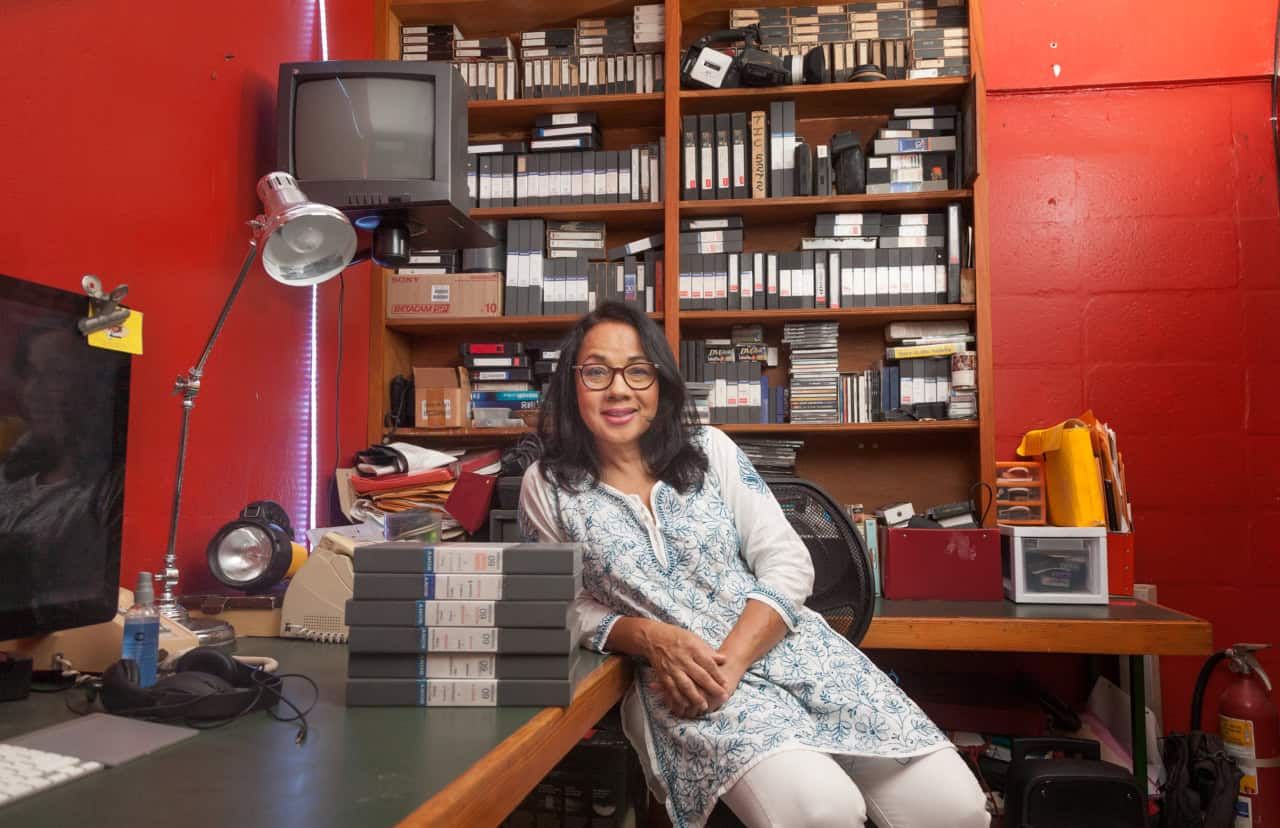
Above: Georgia Popplewell in her Diego Martin home office. Photo by Mark Lyndersay
BitDepth#1505 for April 07, 2025
Georgia Popplewell is coming to the end of a 16-year stint as Managing Director with Global Voices (GV). Popplewell began engaging with the project five years before that when her blog, Caribbean Free Radio began to get global traction through GV’s surfacing of her work.
In a 2009 interview with BitDepth, the project was described as, “A way of using the internet to aggregate the many blogs and postings about countries that go unheard from when there isn’t a war or disaster putting them in the news.”
The changing landscape of the internet and the growth of corporate interests and walled gardens that thrive on harvesting personal data has changed the way that GV and the news business itself operates.
Today, the operation is “An international, multilingual community of writers, translators, and human rights activists founded in 2004.”
The core mission remains unchanged and Global Voices continues to leverage the internet to raise the profile of underreported stories.
Doing that has meant defining its role more clearly amid the hubbub of conversation online. Its Lingua corps of volunteers translate stories into dozens of languages. Spanish and Malagasy top the list of more than 20 sub-sites, each offering a direct translation of the English website.
The Advox team advocates for free speech, with a particular eye on legal, technical and physical threats to internet users speaking in the public interest. Rising Voices offers training and mentorship to local, underrepresented communities who want to tell their own stories.
“Initially, media outlets were super skeptical,” Popplewell said. “We used to go to conferences and journalists would accuse us of stealing jobs, a lack of credibility. There’s no fact checking!”
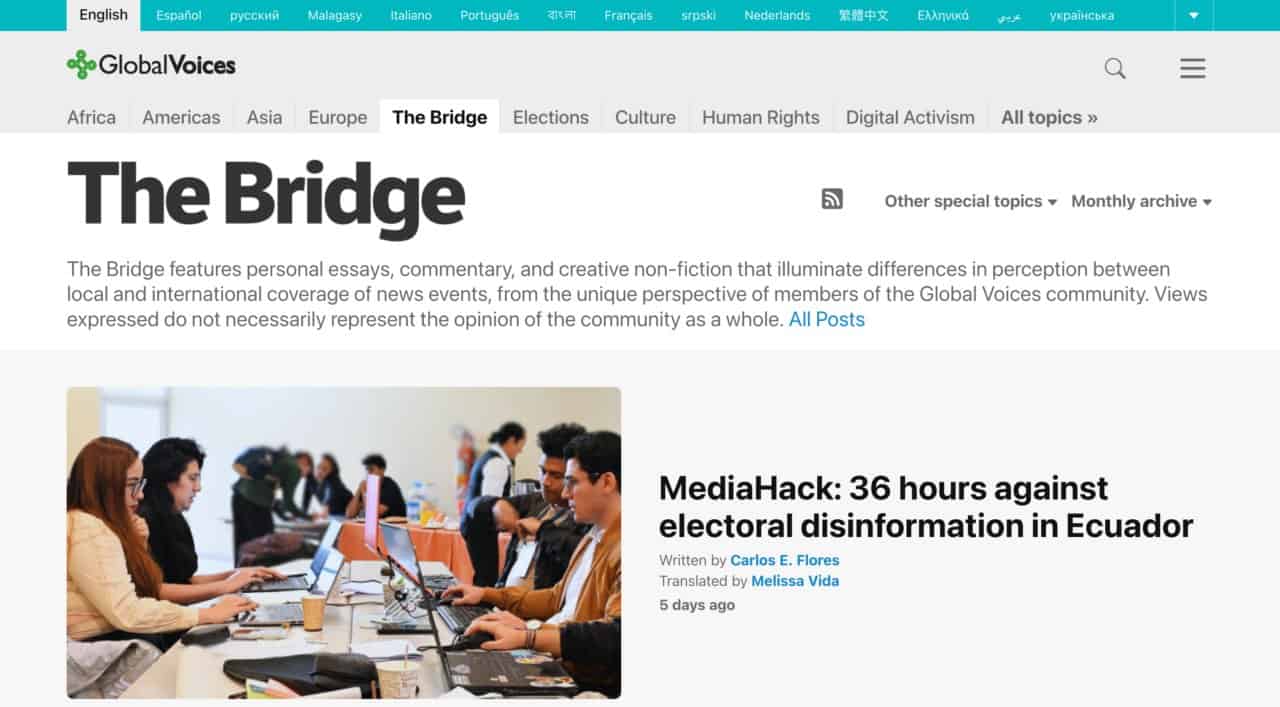
Popplewell recalls the work that Global Voices did on tracking and advocating for Ethiopia’s Zone9 bloggers, four of them members of GV, and the first story in English about Russia’s Alexei Navalny.
“We focused more on underrepresented voices, giving space to people whose stories are not normally told online. Our community has changed. Practically all of us who joined in the early days had blogs and many of us discovered Global Voices because the platform was linking to us.”
“We had link-backs and RSS and all the things that the open internet permitted. You were able to discover who was talking about you and there are all these conversations going on.”
Translation of stories for a wider audience has become a significant part of the GV mission today.
“Over time, more translators came on board who were interested in purely translating material that they identified with. But we do have people coming because they want to learn to translate and develop their skills and build a portfolio.”
“We are primarily volunteer. If a translator is doing something of their own volition, you do it as a volunteer. If we ask you to do something, we probably pay you, so translators are coming to the community with particular interests that may range from a personal interest to wanting to see certain stories in a certain language.”
“There also people who are interested in certain topics. There’s lots of people who are coming who are interested in human rights and they want to translate everything that relates to human rights or women’s issues.”
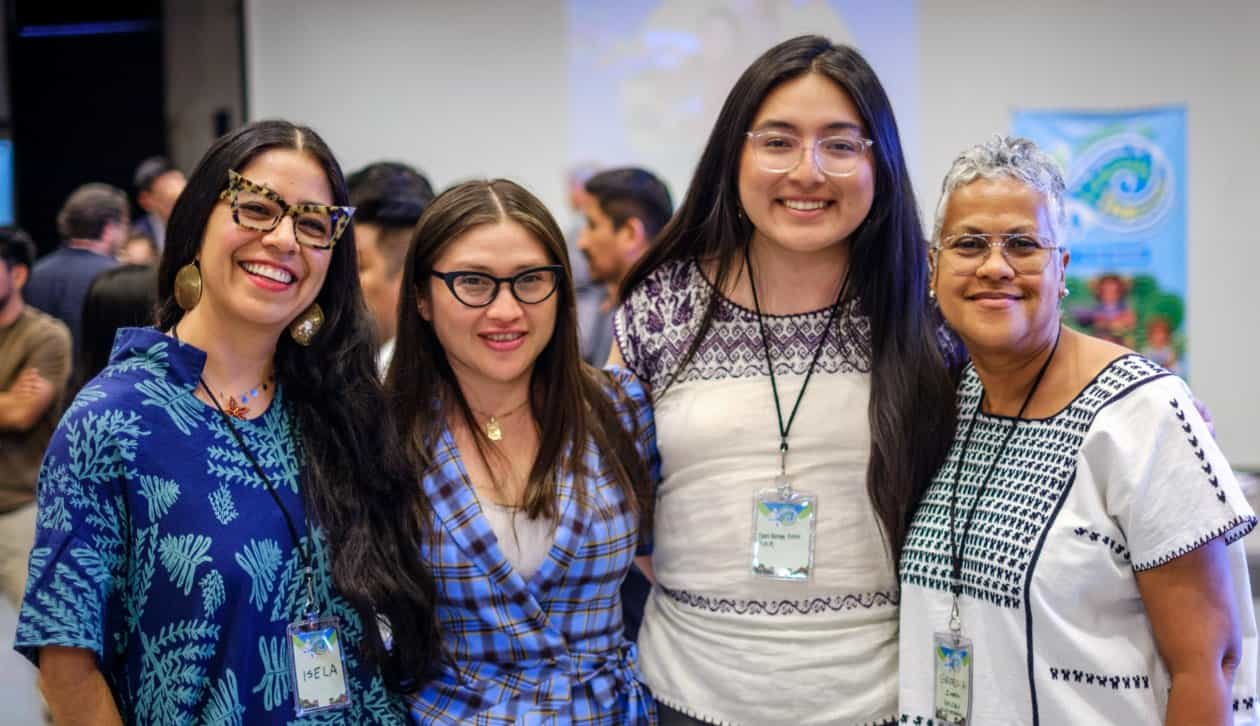
“We also have more researchers. We’ve been doing research on narrative frames and authoritarianism, so that’s another cohort. We have a media development arm that’s working on indigenous languages. We have many young people who want to speak indigenous languages, who are enthusiastic about getting online.”
“We have looked at indigenous languages on several continents, and much of our work is in Latin America, particularly in Mexico, but we also work in European languages, Native American languages, African languages. The organizing principle being minority or indigenous. This is the UN’s decade of indigenous languages.”
Global Voices has begun, with limited scope, to commit to its own reporting on subjects that are invisible to traditional media.
The Bridge was introduced in 2012 after considerable internal discussion and hosts features that go beyond the crowdsourced aggregation stories that have been the site’s norm.
“These are stories that other people probably aren’t covering, or they were covered in local newspapers, but they might not be available in English or easily found. It’s also about allowing people to discover a wider range of stories of, you know, voices.”
Popplewell came to the end of more than 20 years with Global Voices at the end of March, but is holding on until her successor is named.
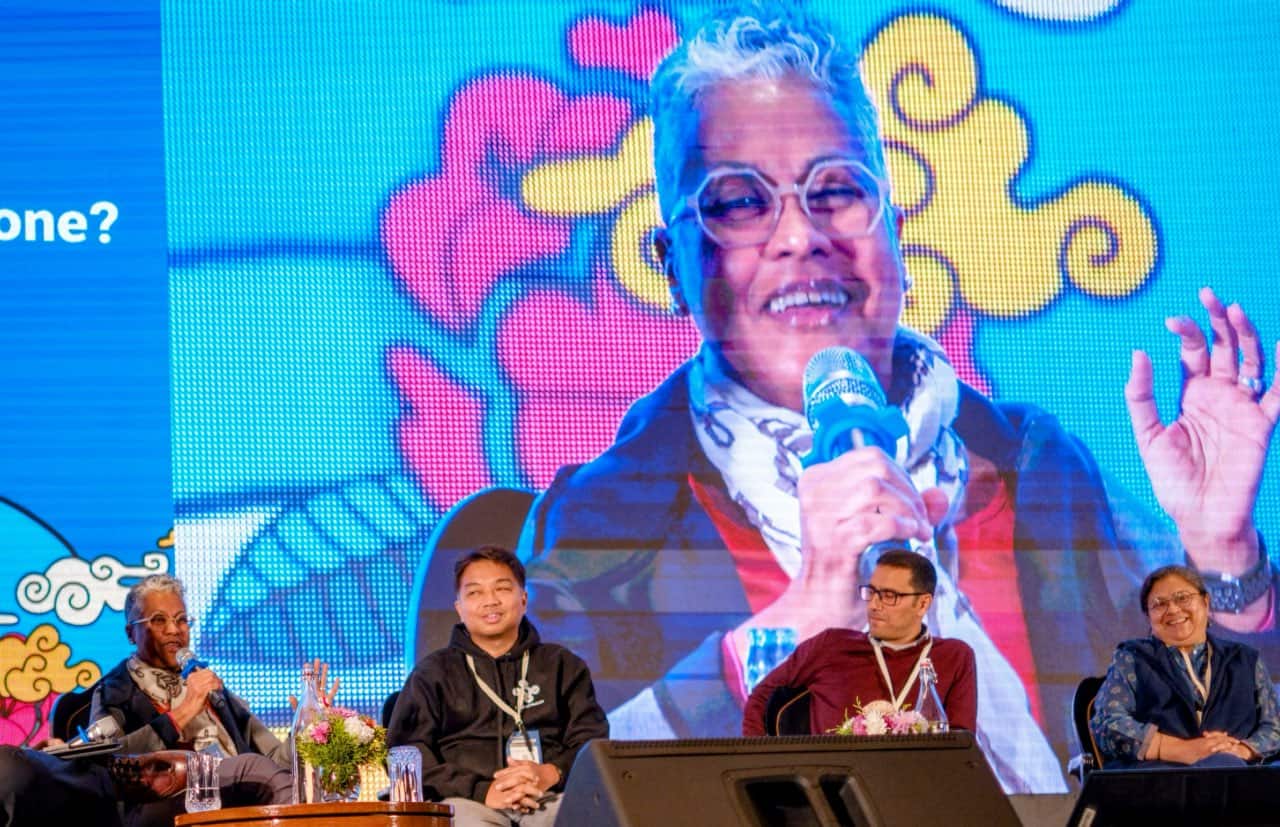
“I’m stepping down from the Managing Director role, but I’m not leaving. The executive director and I made a commitment that after certain number of years we would hand over leadership to other people. He stepped down in September last year. I describe it as Butch and Sundance, but with a big delay between the jump. I will revert to being a volunteer, which is the way I started.”
“I would say it’s the best job in the world. If I’d had to invent a job, it’s probably the job I would have invented. It allowed me to work from home. It allowed me to travel widely. Most of my close colleagues are now very good friends and probably will be for the rest of my life.”
“I’m kind of wanting to write again, not the best time to be doing that, and I’m glad that I’m not doing it as a 20-year-old. I did not plan this life. I’m doing more in real life things. I’ve started sewing because in high school we never learned to make anything useful. I’ve grown to like sewing.”
“I think one of the many consistent things [about Global Voices] is that it remains a place of kindness and decency. If you want to have good conversations on the internet where people are listening to you and not fighting, we actually kind of consider that one of our key values.”
“It’s hard to gauge the impact of the work of the last 21 years. What is the kind of metric that you use? I don’t know that we could. We could look at visitors to the site, but our traffic has been down like everybody’s because so much news is actually sifted through social media.”
“We know that the trends of traffic have been consistent with people in our field. It’s not as if we have more traffic today than we did before. How does that awareness manifest as well? It can manifest in the world, and the way people behave or what they think.”











 Is Apple’s Neo the One?
March 22, 2026
Is Apple’s Neo the One?
March 22, 2026
 Privacy and your travel information
March 15, 2026
Privacy and your travel information
March 15, 2026
 TATT announces ambitious three-year strategic plan
March 9, 2026
TATT announces ambitious three-year strategic plan
March 9, 2026
 Samsung’s S26 leans in hard on...
March 1, 2026
Samsung’s S26 leans in hard on...
March 1, 2026
 A 2026 manifesto for Carnival
February 23, 2026
A 2026 manifesto for Carnival
February 23, 2026
 A hiss from a rose
February 15, 2026
A hiss from a rose
February 15, 2026
 News is a niche until it’s...
February 9, 2026
News is a niche until it’s...
February 9, 2026
 FT’s second Next Gen News report...
February 9, 2026
FT’s second Next Gen News report...
February 9, 2026
 Ransomware report notes fourth quarter 2025...
February 2, 2026
Ransomware report notes fourth quarter 2025...
February 2, 2026
 Hands-on with Apple’s Creator Studio as...
January 30, 2026
Hands-on with Apple’s Creator Studio as...
January 30, 2026
 Apple flirts with subscription software
January 26, 2026
Apple flirts with subscription software
January 26, 2026
 So long, and thanks for all...
January 19, 2026
So long, and thanks for all...
January 19, 2026
 Cyberedge reports on cybersecurity trends
January 12, 2026
Cyberedge reports on cybersecurity trends
January 12, 2026
 Samsung’s ZFlip 7 shows steady improvement
January 5, 2026
Samsung’s ZFlip 7 shows steady improvement
January 5, 2026
 Digital New Year’s resolutions
December 29, 2025
Digital New Year’s resolutions
December 29, 2025
 WiPay announces new strategy for services,...
December 22, 2025
WiPay announces new strategy for services,...
December 22, 2025
 Old Mac, new OS
December 15, 2025
Old Mac, new OS
December 15, 2025
 Regional cybersecurity faces fire
December 8, 2025
Regional cybersecurity faces fire
December 8, 2025
 Unfinished symphonies
December 1, 2025
Unfinished symphonies
December 1, 2025
 Do you know who your child...
November 24, 2025
Do you know who your child...
November 24, 2025