
- Granger used LinkedIn as a diary to share his cancer journey, finding healing in sharing and observing the impact of his posts.
- Storytelling for Brands, released on July 01, 2025, explores the art and science of using storytelling in marketing.
- The book covers content strategy, literary-based storytelling, character development, and the impact of storytelling on the human body.
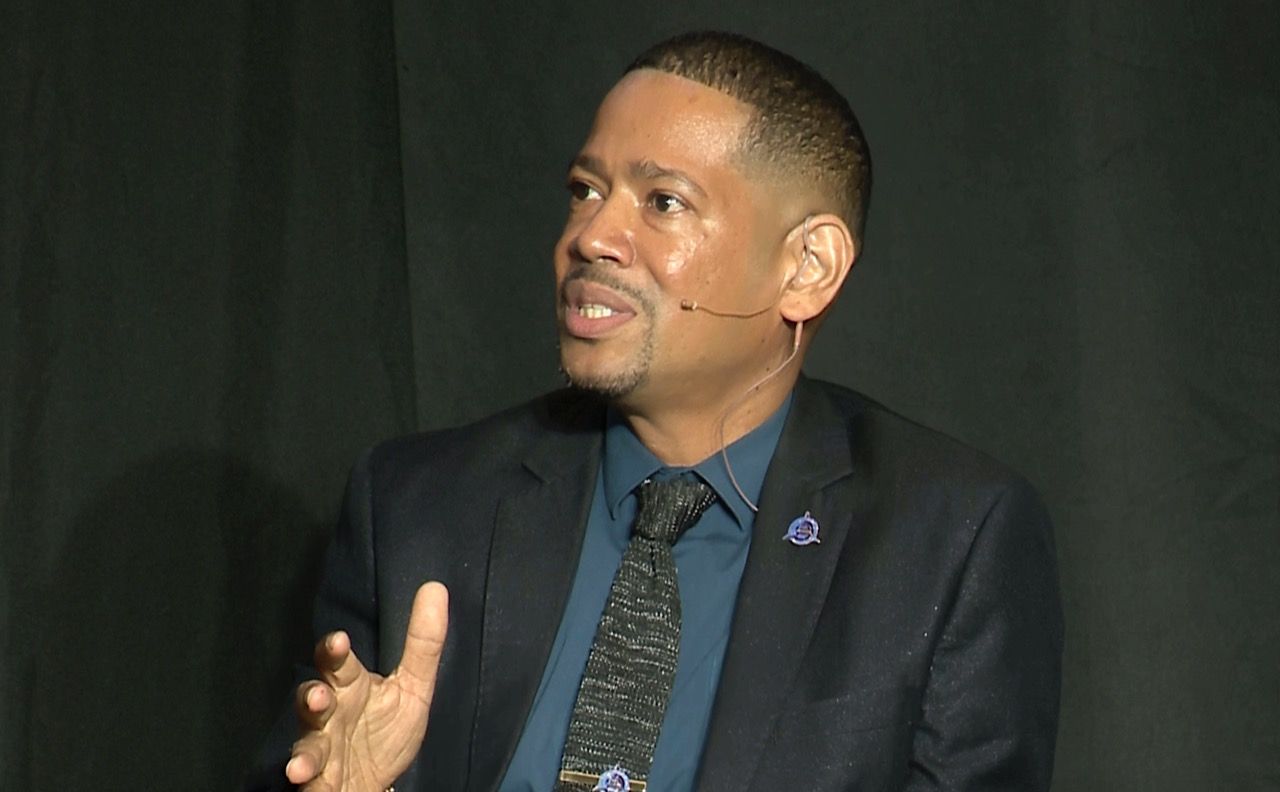
Above: Kris Granger.
BitDepth#1519 for July 14, 2025
In 2024, Kris Granger, a Trinidadian digital marketing specialist found himself in a difficult place. He was an immigrant living in Gothenburg, Sweden battling a terminal illness, divorced and co-parenting a two-year-old girl.
At that point in his life, he explained, “Administering chemotherapy would be life threatening, because my body was not strong enough to withstand it, but it was the only option available. I had to agree to risk dying by chemo, or risk dying by cancer. I chose to have faith.”
He began using LinkedIn as a kind of diary, sharing stories about his journey fighting stage four cancer, living and working in Sweden.
“As I grew more consistent in my writing, sometimes I would post something that, in the writing of it, had made me cry, or felt physically like a punch to my gut. Other times I would reflect on a productive day with students. Now although the sharing in itself was healing, it was hard to ignore the hits of
dopamine that the content’s performance on LinkedIn would provide.”
“One day, a post that brought me to sobbing tears surpassed every other post one hundred fold. Did that mean that if I could feel it (physically feel it), that my readers would feel it too? So much so that they would be moved to reshare it? What was it exactly that made this post go viral?”
“So, being a curious academic, I began to test various forms of emotive content, to see what type of response I could get from the LinkedIn audience, based on my deliberate recollection and evocation of particular emotions. Armed with the intention to ‘gut punch’ my audience, one by one, all my content started going viral. Then, I dug into the literature and found that the rabbit hole went quite far.”

Granger had already been a marketing professional working on a range of local products and lecturing at UWI’s graduate school of business, designing programmes for today’s marketing reality. I met him, rather rockily as I recall, during the launch of the failed F1RST project.
“At the time, I was Head of the Digital Marketing Division at Lonsdale Saatchi and Saatchi (LSS), and we forged a partnership between the GSB and LSS to ensure that real-world applications were always present in the classroom,” Granger said.
“In addition to helping design the programme, I facilitated a workshop called Content Creation, which later became Storytelling for Brands. The course initially focused on content strategy and planning structures, providing templates and a foundational understanding of how content is used in marketing.”
“Over eight years of evolving the course, my interest in the topic deepened significantly, introducing literary-based storytelling and character development models and examples of how they are used in the marketing world. In 2025, we ran the programme again, this time with research-based insights on how the human body is affected by storytelling.”
That evolved into a new book on the subject, Storytelling for Brands, released on July 01, 2025 as a paperback and Kindle e-book available on Amazon.
Granger describes it as “as fundamental reading for those seeking to understand the art and science of using storytelling as a tool.”
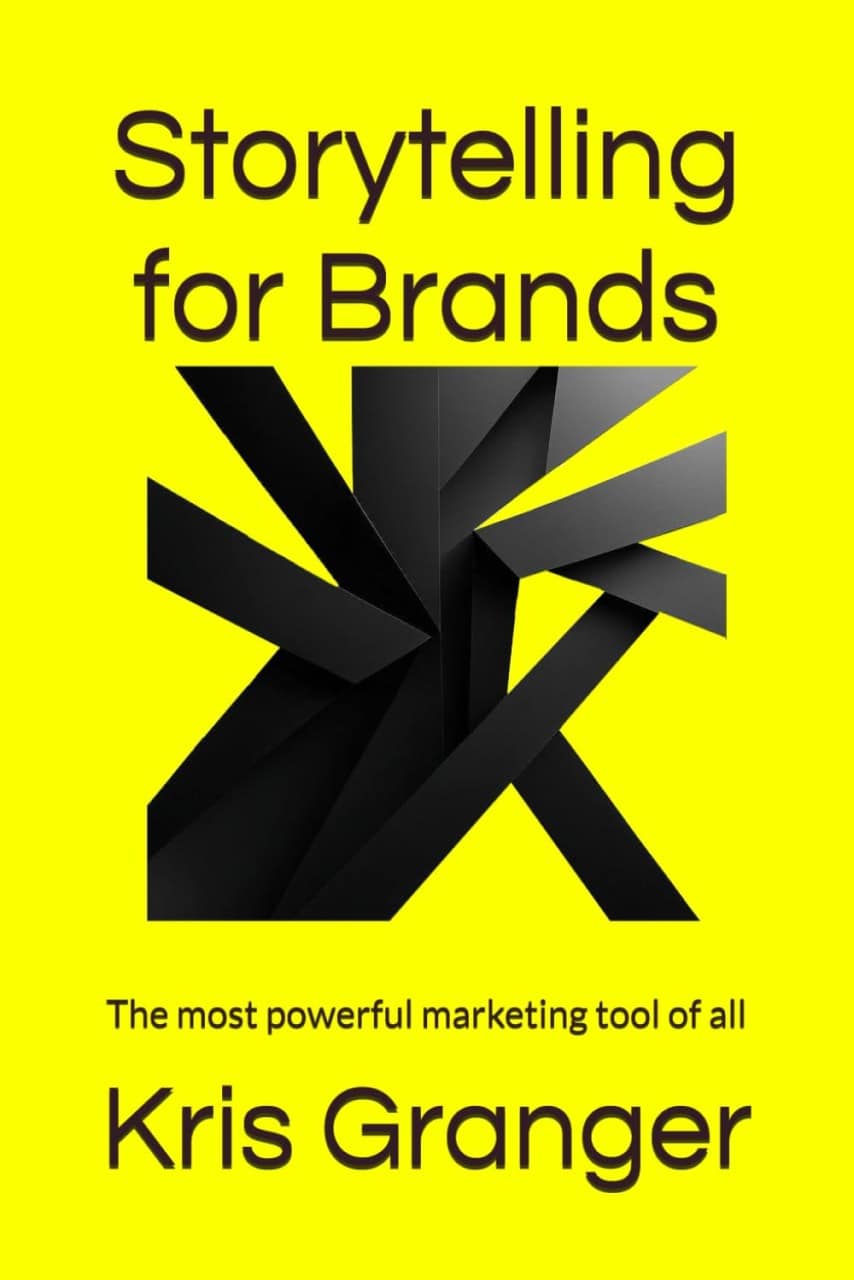
It’s a tightly written, concise consideration of the principles of storytelling marketing as Granger has evolved them and if the book sometimes has the flavour of a thesis about it, it’s probably because he’s been teaching the concepts to tertiary students since 2017.
It’s possible to read the entire book in a day. I did, making notes to cross-examine Granger, but that isn’t its real value. If it seems brief at 151 print pages, the reader’s challenge is not in cramming information but in finding relevance and sparking practical inspiration points.
It’s possible to nitpick. Granger identifies five story models he sees as directly relevant to brand storytelling, renaming some for greater relevance (Voyage and Return becomes The Hero’s Journey) and dropping comedy and tragedy, which are arguably more matters of character and tone in modern marketing’s micro-narratives.
He notes the hormonal changes triggered by targeted storytelling, the chemicals that alter mood and response, oxytocin, dopamine and cortisol, which are triggered with careless abandon by social media engineered algorithms designed to lure users into continuously doomscrolling.
Make no mistake, these are potentially dangerous skills to acquire and nobody should be blind to the way these techniques are used to trigger social change beyond a choice of deodorant.
So it’s heartening to see the author choosing generally benign marketing campaigns that use these techniques effectively to improve the social commons.
Even reading the book from the perspective of journalistic evaluation and review, I found myself considering its application to this work, applying these techniques to market reporting, something every journalist should concern themselves with because as is demonstrably clear, our newspapers are, in fact, not going to sell themselves.
I asked him how journalists might use these marketing principles to their advantage in a crowded, increasingly sophisticated and sometimes irresponsibly cutthroat digital consumption environment, because, y’know, free advice.
To his credit, he took a hearty stab at the question and while I can’t quote all his suggestions here for reasons of space and pacing, you can find his full response here.
In a brief summary, he noted, “For responsible journalism to make an impact, it would not only have to be true, but it would also have to be anchored in the emotional, social and cultural contexts of its readers.”
Noting that most of his marketing examples are recent, I wondered if marketing techniques age out.
“I’d argue that successful marketing is closely related to an understanding of human biology and sociology,” Granger responded.
“The endocrine system and neurotransmitters are enduring throughout history. However, cultural norms change and evolve. Social behaviour also evolves. We’re currently living through a significant evolution of human social mores with advances in social media and Gen AI. This question cannot be answered with a simple yes or no. Some aspects of marketing are timeless, and some are time full.”

















 Is Apple’s Neo the One?
March 22, 2026
Is Apple’s Neo the One?
March 22, 2026
 Privacy and your travel information
March 15, 2026
Privacy and your travel information
March 15, 2026
 TATT announces ambitious three-year strategic plan
March 9, 2026
TATT announces ambitious three-year strategic plan
March 9, 2026
 Samsung’s S26 leans in hard on...
March 1, 2026
Samsung’s S26 leans in hard on...
March 1, 2026
 A 2026 manifesto for Carnival
February 23, 2026
A 2026 manifesto for Carnival
February 23, 2026
 A hiss from a rose
February 15, 2026
A hiss from a rose
February 15, 2026
 News is a niche until it’s...
February 9, 2026
News is a niche until it’s...
February 9, 2026
 FT’s second Next Gen News report...
February 9, 2026
FT’s second Next Gen News report...
February 9, 2026
 Ransomware report notes fourth quarter 2025...
February 2, 2026
Ransomware report notes fourth quarter 2025...
February 2, 2026
 Hands-on with Apple’s Creator Studio as...
January 30, 2026
Hands-on with Apple’s Creator Studio as...
January 30, 2026
 Apple flirts with subscription software
January 26, 2026
Apple flirts with subscription software
January 26, 2026
 So long, and thanks for all...
January 19, 2026
So long, and thanks for all...
January 19, 2026
 Cyberedge reports on cybersecurity trends
January 12, 2026
Cyberedge reports on cybersecurity trends
January 12, 2026
 Samsung’s ZFlip 7 shows steady improvement
January 5, 2026
Samsung’s ZFlip 7 shows steady improvement
January 5, 2026
 Digital New Year’s resolutions
December 29, 2025
Digital New Year’s resolutions
December 29, 2025
 WiPay announces new strategy for services,...
December 22, 2025
WiPay announces new strategy for services,...
December 22, 2025
 Old Mac, new OS
December 15, 2025
Old Mac, new OS
December 15, 2025
 Regional cybersecurity faces fire
December 8, 2025
Regional cybersecurity faces fire
December 8, 2025
 Unfinished symphonies
December 1, 2025
Unfinished symphonies
December 1, 2025
 Do you know who your child...
November 24, 2025
Do you know who your child...
November 24, 2025